Showing posts with label Egypt. Show all posts

Tuesday, March 18, 2014

take a tour with joanna lumley

Isn't that Patsy from Absolutely Fabulous? Yes, it is. Joannna Lumley has calmed down her signature beehive and put aside the endless glasses of bubbly and taken on the role of travel guide for two very watchable documentaries from Athena, Joanna Lumley's Nile and Joanna Lumley's Greek Odyssey. Both two-disc DVD sets feature four episodes and Lumley's delightful observations on the local sights and history. In Joanna Lumley's Nile the host lays out her plan of attack, to travel the entire length of the north-flowing Nile, considered the longest river in the world, with a length of 4,132 miles (6,650 km). Like most travelers, she intends to take the trip "backwards," starting in Egypt, where the river's mouth spills into the Mediterranean, and ending at its source, at the Rwanda-Tanzania border.
...

When Lumley finally reaches the source of the Nile she is visibly moved, and viewers may regret that their journey and hers has come to an end. But not to worry, Lumley is on the move again, in Joanna Lumley's Greek Odyssey. This trip seems a bit more personal, as Lumley has traveled to Greece many times before, since her first visit at the age of 20, and has a real love and rapport with the country. Once again she tours some of the most-visited and familiar sites, like the Acropolis in Athens, the Oracle at Delphi, the almost inaccessible monasteries of Meteora, and even climbs a bit of Mount Olympus, but there are always surprises in store. Some of the more offbeat destinations include the fabled the Gates of Hades, the site of a former leper colony, and a remote village where the remaining inhabitant speak in their own strange language of whistles.

Joanna Lumley, with friend
At the Parthenon

You can read my complete review on Cinema Sentries.

Friday, March 14, 2014

favorite song friday: egyptomania

Katy Perry's latest monster hit, "Dark Horse" has been predictably dominating the pop music charts lately. Is its popularity justified? Yes and no. Perry has delivered her usual cliché-ridden lyrics and even enlisted the help of Memphis-born (Tennessee, not Egypt) Juicy J for one of the worst inserted raps in a long time. But the song does have some atmosphere to it, and if you can ignore the predictable warnings from Perry's siren ...


Here, kitty, kitty ... Apart from the hot pink, they get the colors of Ancient Egypt pretty right
So you wanna play with magic
Boy, you should know what you're falling for
Baby do you dare to do this?
Cause I’m coming at you like a dark horse
Are you ready for, ready for
A perfect storm, perfect storm

Teen and tween girls will be copying this make-up — you've been warned

... Or Juicy's J's embarrassing rhymes ...

She’s a beast
I call her Karma (come back)
She eats your heart out
Like Jeffrey Dahmer (woo)
Be careful
Try not to lead her on
Shorty’s heart is on steroids
Cause her love is so strong

Love the sculpture queen come to life

... The tune can pull you in.

What "Dark Horse" really has going for it is its music video. Like other pop artists like The Bangles ("Walk like an Egyptian") and Michael Jackson ("Remember the Time")


Perry has realized the eternal appeal of ancient Egypt, and the colorful and creative video, directed by Mathew Cullen, is a lot of fun to watch. It's up to you to decide whether to turn the sound up or not.

Monday, March 26, 2012

khan al-khalili

Article first published as Book Review: Khan al-Khalili by Naguib Mahfouz on Blogcritics.


Khan al-Khalili, first published in 1945, was the first of Egyptian author Naguib Mahfouz's contemporary novels set in his beloved Cairo.


The story is set in 1942, and the African campaign during World War II has started to directly affect the inhabitants of Egypt, as the Germans bomb the city. Ahmad Akif, a civil servant who hates his going-nowhere job, has had to move his parents and himself from a more prosperous neighborhood to the Khan al-Khalili — where they believe the holy site and mosque of al-Husayn will protect them from any future bombing sorties. Not the case.

Ahmad is a difficult protagonist to like at first, as he is so disdainful of everyone and everything around him. Profoundly insecure, he considers himself a genius and is constantly having an internal dialogue about how bad luck has held him back from any success in life. But the rich culture of the Khan al-Khalili bazaar is about to change his life in many ways. He will meet a young girl, Nawal, who touches his heart. He will make friends who open his eyes to thinkers like Sigmund Freud and Karl Marx. And he will realize exactly how much his younger brother Rushdi really means to him.

Nobel Prize-winning author (1988) Mahfouz paints a compelling picture of Cairo during the war — from an angle that many readers have probably never encountered before. The men that Ahmad spends time with at the Zahra Cafe are constantly debating politics and ideas. Some are sympathetic to Hitler and the Germans, some to the Russians, but most are not fond of the British, who occupied Egypt from the 1880s until the 1930s. But nothing, especially political sympathies, are simple for Ahmad or his circle. Cairo is caught in the crossfire, and there are as many criticisms of the Germans as hopeful thinking that they will banish the Brits and end the war.

Egyptian food and religious festivals, especially Ramadan, provide backdrop and texture for many of the emotional events in the novel. Soon the interpersonal tragedies of the Akifs far outweigh the fear and inconvenience of being rousted out of bed and having to go to a bomb shelter in the middle of the night. The war is always there in the background, but it is Ahmad's growth, the opening of his heart, that is the main focus of the novel. The war and other circumstances all join to drag Ahmad from his classical and familiar Arabic texts into a more modern, if irrevocably changed, world. Khan al-Khalili is a great introduction to the work of Naguib Mahfouz and the rich and complicated life of modern Egypt and Egyptians.
Enhanced by Zemanta

Monday, September 19, 2011

the mistress of nothing by Kate Pullinger

Sally Naldrett is lady's maid to Lady Lucie Duff Gordon, who is suffering from tuberculosis. She gets one day off a month and usually spends it going to London to see Egyptian artifacts at the museum. She avoids all male advances, even multiple proposals of marriage, because she feels dedicated to "My Lady" as she calls her employer, but it is clear as one reads The Mistress of Nothing by Kate Pullinger that Sally enjoys her situation.

Many opportunities are available to her, uncommon to someone in her position in 1862. She travels with Lady Duff Gordon and has a certain amount of autonomy in her mistress's household. Sally's dreams really come true when Lady Duff Gordon's condition worsens and she is ordered to leave England for two years for the warmer climes of Egypt. They travel up the Nile, visiting ancient temples, but Sally and Lady Duff Gordon (and Pullinger) seem more interested in the people of Egypt than its antiquities. They soon settle into The French House, in Luxor.


"The 'French House,' Luxor, " from A Thousand Miles up the Nile, by Amelia B. Edwards, 1890. p 452.
"My lady had come to Egypt to evade death, but in Egypt I found life."
Sally has been in service since the death of her parents in a railway accident when she was very young. She wears hand-me-down clothes from Lady Duff Gordon and lives at her beck and call. She cares for her employer and is worried about her health, but she is also thrilled at the prospect of taking the trip of her dreams. She can barely believe her luck. The Mistress of Nothing is told from her perspective, in the first person. As their travels progress, Sally gradually becomes more of a companion and nurse to Lady Duff Gordon than lady's maid, with the two women, on the surface at least, becoming closer, relaxing the class separations between them while living in a strange country. They both discard their restrictive European clothing, especially their stays and tight voluminous dresses in heavy fabrics, in favor of lighter, looser, Egyptian garments more suited to the climate.

Pullinger, a Canadian author who lives in London, writes well. The Mistress of Nothing won the 2009 Governor General's Literary Award (Canada). 1860s Egypt is described quite lovingly by her protagonist. It is hard not to get caught up in Sally's excitement as they begin their journey, even when plot turns are obvious from the first few lines in the introduction — Sally, a spinster of 30, will fall in love and have a falling out with her employer. The Mistress of Nothing is a love story, but less between Sally and her beloved, Lady Duff Gordon's dragoman Omar Abu Halaweh, than between Sally and Egypt.

Omar Abu Halaweh, from Wonders and Marvels

To complicate matters, Omar already has a wife, Mabrouka, and a little girl. He explains to Sally that he is allowed to have more than one wife and she accepts this quickly, calmly, meekly. She seems to have easily abandoned her English upbringing, viewpoint, and any cautions she may have had towards men. When Sally and Omar not only have an affair they conceal from their employer, but a baby, all hell breaks loose.
"I'm not surprised Sally Naldrett, to find you capable of this." 

Lady Duff Gordon is cast as a villain-of-sorts in the latter part of the book. She helps deliver Sally's baby with Omar, but afterward wants to see neither her nor the baby. Omar she just gathers closer to her, having him fill in for Sally as well as continue with everything he was doing previously. She insists that Sally is to blame for the affair and that she must give the child up to be raised by Omar's parents and his Egyptian wife and be sent back to England in disgrace, with no references. It is extremely hard-hearted, surely, but how could Sally be so naive of the time she lived in, her place in society, and Lady Duff Gordon's ideas of propriety to be surprised at this outcome? But a good many pages are devoted to her lamenting being shunned and her continued disbelief in her situation.


"Lucie, Lady Duff Gordon" by Henry Wyndham Phillips, oil on canvas, 1851, National Portrait Gallery, London


Lady Duff Gordon's drama — she has had to leave her home and her family, including a three year-old daughter, to die — is a poignant one. It is always there, in the story, hovering in the background, but when Sally is deep in the throes of her love affair and subsequent birth of her baby she suddenly seems incapable of seeing anything from her employer's perspective. Lady Duff Gordon may never see her family again. Her husband has drifted away, trying to distance himself from her illness and impending death. And there is Sally, in love and with a baby, just starting out. It's too much for her. And to make matters worse, Sally has lied to her, concealing her affair and her pregnancy. For someone like Lady Duff Gordon, who prides herself so highly on her own intelligence, she feels duped. Lady Duff Gordon was an aristocrat, but not rich. There may also be a financial aspect to her dilemma that Sally hasn't contemplated.

Omar's wife Mabrouka is offstage for the first part of the novel, living with his parents in Cairo. Since the story is being told from Sally's perspective, Mabrouka is not exactly a villain, but she is a presented as a negative character. But then we meet her. Not only is she sympathetic to Sally and her predicament, but she is a well-rounded enough character to be portrayed as jealous and competitive for her husband's attention. Pullinger had a great chance to really run with a story of unlikely female solidarity. Sally could have healed herself with such a friendship, especially after her illusions of shared intimacy with Lady Duff Gordon have been so shattered. Instead of pursuing this plot thread, Pullinger lets Omar make the rules, but never with any good reason why he will not support Sally, except that he doesn't want to lose such a great position with Lady Duff Gordon. Sally and everyone else in his life go along with him, even when he is essentially a weak character.

When I was traveling in Egypt in 1993 I bought a book, Khul-Khaal, Five Egyptian Women Tell Their Stories, a collection that focused on five contemporary ('70s-'80s) Egyptian women. The stories featured women who lived both in villages and cities, and how they dealt with women's issues such as motherhood, sex, the after-effects of female circumcision, leaving home to make a career. It was clear in all of the stories that even in the most dire circumstances other women in their lives were able to help them get through whatever challenges they faced. The Mistress of Nothing would have been a far better story if Pullinger let Sally and Mabrouka raise their children together, with neither the "permission" of Lady Duff Gordon nor their shared husband Omar. Sally does make a life for herself in Egypt, but she is still buffeted by circumstance, as she has been all her life.

Sally, Omar, and Lady Duff Gordon were all real people. Pullinger has incorporated quotes from Lady Duff Gordon's letters (which she obviously read very closely), and which are still available to be read today, Letters from Egypt:
"Omar took Sally sightseeing all day while I was away, into several mosques; in one he begged her to wait a minute while he said a prayer. They compare notes about their respective countries and are great friends; but he is put out at my not having provided her with a husband long ago, as is one’s duty towards a ‘female servant,’ which almost always here means a slave."
Sally disappears from the letters mid-June 1864 (to deal with her child?), and Pullinger exercises her artistic license. in her version of their lives But after traveling up and down the Nile with the trio through the compact book, there is no afterword or notes telling what happened to anyone. In Sally's case, no one is quite sure, but Omar did stay in Lady Duff Gordon's employment, as he is mentioned throughout her letters. What became of him after she eventually died? What about Lady Duff Gordon's family in England?

The story, and the book, peters out at the end. As disappointing as the last third of The Mistress of Nothing may be, it is still worth a read, if just for a glimpse of mid-19th century Egypt, and to awaken interest in the real Lady Duff Gordon and her travels in Egypt and Africa.
Enhanced by Zemanta

Saturday, January 29, 2011

Egyptian art under siege

Article first published as Egyptian Art Under Siege on Blogcritics.

When I went to Egypt in 1993 it was truly the trip of a lifetime. As an artist who also loves mythology, I was in heaven in a place like Egypt. What I didn't realize until I got there, was how far the most famous sites were from one another—The Pyramids, Abu Simbel, Karnak, King Tut's tomb. We saw it all.

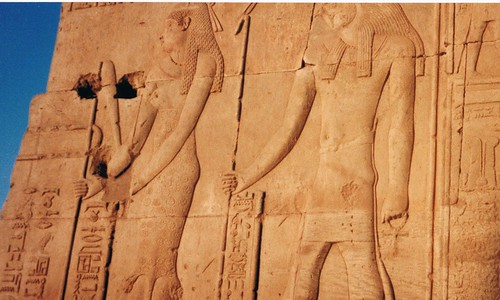
Relief sculpture at Abydos

One of the highlights of our trip, after we had cruised up the Nile, was our return to Cairo and a visit to the Egyptian Museum to see King Tut and all of the beautiful objects that had once resided in the empty tombs and temples we had spent the last ten days exploring.

Ozymandias?
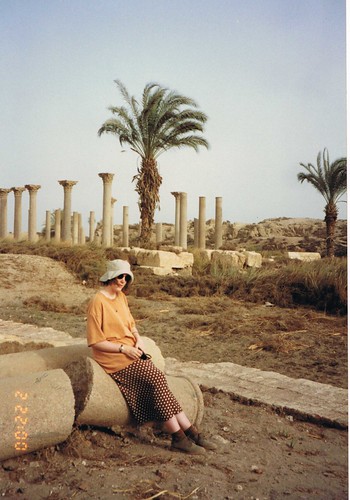
Sitting at the foot of Ozmandias
"My name is Ozymandias, king of kings:
Look on my works, ye Mighty, and despair!"
Nothing beside remains. Round the decay
Of that colossal wreck, boundless and bare
The lone and level sands stretch far away.—Percy Bysshe Shelley
Which is why it is so hard to look at the images coming out of Egypt over the last 24 hours. Mummies defiled, exhibit cases shattered. This is not the way to protest President Mubarak's policies and government. Egypt and its treasures have a long history of being ransacked, mostly by Egyptians themselves. It is a shame the tradition is being continued with this latest attack on its culture coming from within.

More photos of the looted Egyptian Museum at Hyperallergic
Enhanced by Zemanta

Saturday, August 29, 2009

very fine arts

We spent a very museum day in this rainy town of mourning. Ted's funeral procession passed by our hotel on Tremont Street.

We cabbed our way through the wet streets, first to
the Isabella Stewart Gardner Museum, which was a little like the Frick or the Barnes Foundation—an incredible house, with the proviso that the collection always be displayed exactly as Mrs. Gardner originally laid it out. This made some works difficult to see, and included oddities like the empty frames where canvases that had been stolen were left hanging ion their original spots on the walls.

No photography was allowed unfortunately, so you will just have to take my word for it that the collection included the best Veronese ceiling painting that can be seen outside of Italy. What a treat.

We pushed onward to the Museum of Fine Arts, where we raced through treasures including Italian renaissance, Spanish masters Velasquez and Zurbarán, Impressionist gems by Degas, Monet and Manet, Greek, Roman and Egyptian art—and these are just the highlights. I had as much fun checking out these masterworks as I did playing with my iPhone camera special effects. A damp but good day.

Monday, April 13, 2009

ten commandments

I was watching the glorious Charlton Heston/Yul Brynner Hollywood cheesefest The Ten Commandments the other night - my holiday tradition, along with the dyeing of eggs. We used to watch it almost every Easter when I was a kid. Not sure why the annual telecast was bumped forward one night, but nothing stays the same, does it? When I was ten I think I was overcome by Brynner's and Heston's hotness and decided that Easter to read The Bible. I made it all the way through the first three or four books and then got really bored with all the begats and the extremely misogynistic portrayal of women. So let it be written.

Watching the movie the other night I was struck by two things. First, the only thing missing were song and dance numbers. The whole movie is so saturated in color, at least in the Egyptian sequences, which are of course, the best part, and all the acting is so completely over-the-top that a break for a musical number with Gene Kelly and Donald O'Connor wouldn't have seemed out of place. It's impossible not to smile when Nefretiri/Anne Baxter intones, "Moses, Moses, Moses!" Brynner, of course, steals the entire movie and when the camera fades out on him for the last time, all the fun is gone, despite the still-to-come big fifties state-of-the-art parting of the Red Sea special effect. Brynner is bigger-than-life as he is with all of his performances, but somehow in just the right way. The movie tries in vain to keep up with him. He made such an impact on me in this film that when I visited Egypt, no matter where we saw a statue or depiction of Ramses, I always pictured him.

The other thing that really struck me was a scene about halfway through the epic, where Moses has been cast out of Egypt and has settled down for a little domestic bliss with Sephora, played by Yvonne DeCarlo of Lily Munster fame. They are looking at Mt Sinai ("it's only a model!") and he asks the crucial question:

Moses: Does your god live on this mountain?
Sephora: Sinai is His high place, His temple.
Moses: If this god is God, he would live on every mountain, in every valley. He would not be the god of Ishmael or Israel alone, but of all men. It is said he created all men in his image. He would dwell in every heart, every mind, every soul.
Sephora: I do not know about such things, but I know that the mountain trembles when God is there, and the earth trembles, and the clouds are red with fire.


O.K., game over. You lost me. Moses/Heston asked a completely profound question, one that I ponder frequently, and was blown off by an "I drank the Kool-aid" speech of "I don't know, I just believe." Cue the music and bring in the Busby Berkeley dancers.

I know that I have to view the film in the context of when it was made, but I think it's interesting that a movie that is shown every year, possibly watched by some for its religious content, would have such a nugget of a philosophical question embedded, however deeply, under all the other layers of schmaltz, pageantry, melodrama and Technicolor.

This exact question posed by Heston's character is what gets to the heart of my problems with organized religion. Why every sect thinks theirs is the only "right" way is just darn crazy to me. Anyone who has done just the tiniest bit of reading of other cultures' creation and other mythologies has to realize that all humans tell the same stories. Each sect might give the heroes and heroines different names and back stories, but the essential lessons are the same. So what is the problem? Why can't we get past this "my way or the highway" attitude about religion? So let it be done.

Tuesday, July 22, 2008

Stonehenge!


Why do we find it so hard to believe that "ancient" people were able to build massive monuments, perform surgeries, etc., etc.? Do we really think that mankind has evolved so much, that we are so much smarter?

We eat better, live a little cleaner - maybe. But is the accuracy, invention, and innovation that is required to come up with computer chips and Velcro really all that different from what was accomplished by the folks who were able to precision-align Stonehenge or Abu Simbel?

I'd like to get back to Stonehenge. It's been the subject of a lot of new attention lately, as it appears to be even older than anyone originally thought. Evidence of settlements, and possible uses of the site are constantly being explored. Which again argues for the smarts of people, no matter what the century. But no one can come up with a definitive answer for how or why it was created. Sort of like the pyramids.

People like mysteries. As for the how of Stonehenge, probably the easy answer is that a lot of strong folks spent a lot of time pulling and pushing huge stones. But I guess that isn't a sexy enough answer. As for the why? You might as well ask why any human being does anything. Build cathedrals, pyramids, the Empire State Building - just reaching for the stars, baby.

p.s. Turn your volume up to 11 and enjoy the genius of Spinal Tap, Nigel Tufnel's eyeliner, and "Stonehenge"...