"... All of my kindness
Is taken for weakness ..."
The first single to be released from Rihanna's upcoming LP has been released. It is a laid-back emotional track that features Rihanna duetting with Kanye West and backed by rock legend Paul McCartney on acoustic guitar.
The video for the song, directed by fashion photographers Inez van Lamsweerde and Vinoodh Matadin is as stripped down as the music, and features the jeans-clad trio in striking black and white. Rihanna will debut "FourFiveSeconds" live on Sunday's 57th annual Grammy Awards, joined onstage by McCartney and West. Looking forward to hearing it performed live.
Based on the Italian film Stanno tutti bene, 2009's Everybody's Fine, a thoughtful family drama starring Robert De Niro, follows widower Frank Goode in his quest to reconnect with his grown children. When all four cancel on a trip home to visit their father, Frank decides to take a road trip and visit each of them on their own turf. Because of his pulmonary fibrosis, air travel is out, so Frank takes buses and other ground transportation to get where he needs to go.
No planes, but trains, buses, and automobiles help get De Niro on his way.
In New York City he can't find his son David, an artist, so he moves on to Chicago, where his daughter Amy (Kate Beckinsale) lives with her family. She seems more than a little hesitant to spend time with him. Something is awry, but he can't put his finger on what exactly is wrong. With each successive visit he discovers that his kids all have something to conceal. In Denver, his son Robert is part of an orchestra, but not the conductor he told his father about, but as a drummer. His daughter Rosie (Drew Barrymore), a dancer who lives in Las Vegas, seems to be the only one genuinely happy to see him, but even she seems to be keeping a secret from him.
Frank must face the fact that his children may have told their mother about their lives but they don't seem to know how, or even want, to communicate with him. And where is David? As the film progresses, Frank and the viewer will be able to unravel most of the family's secrets. The real mystery remains — will Frank ever be able to get closer to his kids?
De Niro is great as the aging patriarch who the more he tries to get closer to his family the farther he gets pushed away. Everybody's far from fine in this introspective film, but fans of De Niro will enjoy watching him play a role that is such a departure from his usual shoot first, ask questions later tough guys.
Everybody's Fine looks fantastic on a large-scale high-definition television screen, with an aspect ratio of 1.85:1. The Blu-ray has a running time of approximately 100 minutes. Extras include some deleted and extended scenes and a "making of" video for Paul McCartney's Golden Globe-nominated song, "(I Want to) Come Home." The widescreen Blu-ray has DTS surround sound, with crisp-sounding dialogue, and subtitles available in English, French, and Spanish.
Before he got cut off during his rambling but heartfelt acceptance speech at last night's Grammy's for Best Rock Performance, Foo Fighter Dave Grohl urged everyone in the audience at the Staple Center and beyond to get back to what matters — real music made with real instruments. There could be no better illustration of his plea than the performance later in the evening of Rolling in the Deep by Adele, who swept every category she was nominated in, taking home six trophies. Rolling in the Deep was one of the most-played songs of last year, but Adele, in her first performance since her vocal chord surgery, made the song sound fresh and new, as if we were all hearing it and her for the first time. She is a true talent, and provided one of many emotional moments during the course of the evening.
The entire Grammy broadcast couldn't help but be touched with sadness, due to the death the previous afternoon of pop icon Whitney Houston. The tributes to the fallen star were woven into the broadcast, and felt sincere and well-placed. There was also a touching tribute to singer Glen Campbell, who recently announced that he is suffering from Alzheimer's and would be putting together a final album and tour before stepping out of the limelight. Campbell appeared onstage and performed his hit "Rhinestone Cowboy" with The Band Perry and Blake Shelton.
Many other people performed, with synchronized dancers and pyrotechnics — Rihanna, Nicky Minaj, Katy Perry, Chris Brown — but it was hard not to be drawn to the more direct performances by Bruce Springsteen and the E Street Band who opened the show, to the Foo Fighters who rocked out on two songs, to Paul McCartney debuting a new love song and singing some Beatles' classics. Jennifer Hudson's straightforward and touching rendition of Whitney Huston's biggest hit, I Will Always Love You also impressed. The most energetic production number of the evening belonged to Bruno Mars, whose energy and enthusiasm was infectious — and whose major special effect was his pompadour and shiny gold bowtie.
Adele thrills the audience with Rolling in the Deep
Katy's Perry's thinly veiled divorce/revenge song came across as more high school taunting than female empowerment. Nicki Minaj's strange production number combined all the worst pretensions of Like A Prayer-era Madonna and Alejandro-esque Lady Gaga. The Gaga herself, bedecked in her usual kooky couture, looked strangely out of place and uncomfortable. The woman, like Adele, can sing. Maybe she needs to rethink the sideshow.
Not everyone will want to record their next album in their garage a la The Foo Fighters, but maybe this Grammy Awards will help some performers get back to what matters, the music. Dave Grohl has certainly issued a call-to-arms. Maybe Whitney Huston's too-early death (and Amy Winehouse's, whose photo led off the "people we lost this year" tribute) will help prevent some performer from letting drugs take over their voice, their talent, their life. Because it really should be about the music.
There was a meme going around recently to name your top 10 or 15 artists. A lot of friends, who also went to art school as I did, listed fabulous painters and sculptors—visual artists. I couldn't do the meme. It got right to the crux of the problems I had way back when at Parsons with how art and artists were defined. I never thought of myself as a painter. Or someone who draws. Or a collagist. I tried to fit myself into one of those categories, Lord knows.
I have always thought of myself as an artist. An artist can do a lot of different things, work in different media. This is a theme I am exploring personally and will write more on in the future. But watching the recent Lennon specials on public television brought it all to the fore. If I was ever to do that meme there would be a painter or two on the list (Edgar Degas, Botticelli, certainly), a sculptor maybe (probably Giuseppe Penone), but also writers and filmmakers and actors and certainly John Lennon. When I was a child my lullaby was Lucy in the Sky with Diamonds. My mom was a huge Beatles fan and passed on her love of the fab four to me. My "favorite Beatle" was George, because I always root for the underdog, but the one that I connected with most as an artist was John.
According to the Masterpiece Contemporary biopic Lennon Naked, John Lennon could be a real prick. As can we all. The difference between John Lennon and the rest of us is that now that he is dead he is an even bigger icon than he ever was alive. A symbol of love, hate, Beatles. Exactly what he never wanted. The movie ends with John and Yoko taking off for the promised land, New York City. We all know what happened there, which is supposed to lend an automatic gravitas. But that's not what this film is about, if it's about anything. It bludgeons us with John's disenchantment with the Beatles and his first marriage. Yawn, we've seen it all before. Any Lennon fan worth their salt knows that part of his resume by heart. It would have been more interesting to just start things off where he met Yoko. Show the sea change, in depth, rather than this t.v.-movie gloss. Why bother writing a weak fictional scene of him meeting Yoko, leaving out how he met her through her art first, a story I've heard him tell in more than one taped interview, and is much more interesting and romantic than any dreamed up scriptwriter's version.
Words that John said in his life are now "quotes," forever floating, to help us try to understand the man. But quotes can be chosen selectively. I love the actor Christopher Eccleston, and he does a good impersonation, but the quotes used and the life snippets shown here seem to have the sole purpose of portraying John as a first-class shit. To his ex-wife, to his son, and in an especially nasty scene, to his childhood friend. There are intimations that most of his bad behavior was drug-fueled, but isn't that a cop-out, or too simplistic? Are we supposed to believe that the man who wrote "Love is all you need" and "Give peace a chance" could never forgive, never reconcile? Maybe that's true. Maybe that was his fatal flaw. Was his constant anger why he wrote these songs—to try to follow his own advice? If so, we'd never know from this depiction. John is depicted as such a flat, negative character, gentle only with Yoko, that the movie seems like a one-note smear.
Things got better the following night with the documentary LennonNYC. This began with John and Yoko's arrival in New York and how they immediately gravitated towards what was considered by the current administration (Nixon) the radical political movement. A more interesting depiction of their lives, LennonNYC used real footage of John as well as talking heads of musicians, contemporaries, and Yoko. It got bogged down when it gets lost, along with John, in druggy and boozy L.A. His separation from Yoko and his battles with drugs were too detailed. Again, it's an old story, old gossip. More interesting would have been an exploration of how he managed to continue to be creative throughout his cliche rockstar bad boy period and how he eventually pulled himself out of the pit. But no.
The tragedy of it all is that when John finally seemed to get all the disparate, battling aspects of his life—his history as a Beatle, his family life, his relationship with his wife, his music—together, his life was cut short by an assassin's bullet. Those are such strong facts that no depiction can be any stronger or more interesting. I was living in the Parsons dorm in downtown New York City for just a few months when it happened. One of my roommates waked me up in the middle of the night, because she knew I loved the Beatles (how kind!), to tell me that he had been shot. I didn't take it in at the time, but when I woke up the next morning, it must have penetrated my subconscious, because I knew as soon as I opened my bedroom door that something awful had happened. I didn't go to the Dakota or do anything of that nature. I just bought the papers, and like everyone else in the world, asked, "Why, why?" We're still asking that question.
One of the things that did come out strongly for me in LennonNYC was that even though John's life was cut short, he managed to pull it together in such a fantastic way it's hard not to feel good about him and his life. To feel happy for him—especially after his second son Sean was born. He was the primary caregiver for his young son. That was an invaluable experience for them both to share, and how lucky for them both that it worked out that way. Not everyone, especially artists, can hit the heights, then hit the skids, and then come back up again. But John did.
No matter what Lennon did, whether it was his music, or his writing, or his drawing, or just his sassy way of being, was honest and true to who he was. He was sometimes brutal, and under the influence damned unpleasant, even dangerous. He was also poetic and gentle. He was always searching, always trying to tell a story about the world, through his eyes. What else is art? Or an artist?
An observation made by one of his fellow musicians in LennonNYC was that "John liked being in a group." This is very interesting, and essential to understanding his personality and his work. He would write songs on his own, but truly finished them collaboratively, once he was in a studio with other musicians, where he could get feedback and inspiration. Yoko was good for him in many ways, the ultimate collaborator and partner. She didn't put up with his crap. She could be momma if he needed. But she was an artist, and easily became the artistic partner he needed once he left McCartney and the Beatles. Not only were the drugs, which may have started out as experimental fun, bad for him (duh rockstar cliche territory), but they caused him to isolate himself from what was (pain) or wasn't (Yoko) around him. Not a good situation for a gregarious personality.
Neither of these films can truly capture Lennon, but the more satisfying one, LennonNYC, does get a bit of his essence, his thought process. He was truly a product of his times. It's always hard to imagine where someone whose life has been cut short would be if they were still alive. Would he and Yoko have continued to have made music together, or would Double Fantasy have been enough for him and would John have gone back to watching his son grow up and baking bread? His death is still such a shock that LennonNYC ends there, abruptly, helpless. It doesn't know what else to say. Not like John. He always had a witty quip or rejoinder at the ready.


 , a thoughtful family drama starring Robert De Niro, follows widower Frank Goode in his quest to reconnect with his grown children. When all four cancel on a trip home to visit their father, Frank decides to take a road trip and visit each of them on their own turf. Because of his pulmonary fibrosis, air travel is out, so Frank takes buses and other ground transportation to get where he needs to go.


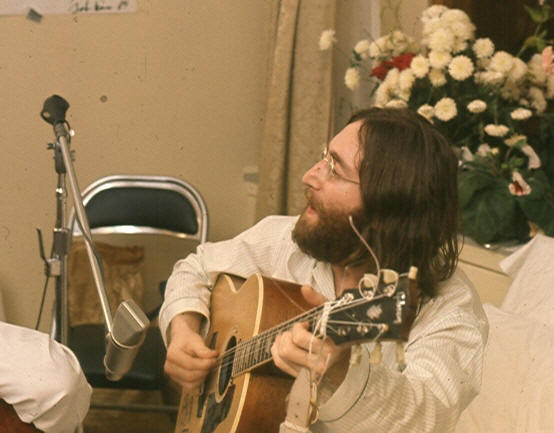
 have been enough for him and would John have gone back to watching his son grow up and baking bread? His death is still such a shock that LennonNYC ends there, abruptly, helpless. It doesn't know what else to say. Not like John. He always had a witty quip or rejoinder at the ready.