Showing posts with label Fairytale. Show all posts

Friday, August 16, 2013

the fairest of them all

Fairy tales have been always been popular with old and young, but recently they have been enjoying a pop culture resurgence, with television programs like Once Upon A Time and films like Snow White and the Huntsman, Mirror, Mirror, and Tangled. Fairy tales are designed to be spun and embellished — there are no definitive versions. At least that is the concept behind The Fairest of Them All, the latest book by Carolyn Turgeon. Turgeon's dark romantic fantasy poses the intriguing question — what if Snow White’s evil stepmother turned out to be another familiar fairytale heroine, like Rapunzel?

Clearly a tale like Snow White's or Rapunzel's is still ripe for retelling, and Turgeon is comfortable in the world of fairy tales, with two previous novels re-imagining favorite heroines Cinderella and the Little Mermaid, in Godmother: The Secret Cinderella Story (2009), and Mermaid (2011). In The Fairest of Them All she writes from Rapunzel's point of view. Rapunzel still lives in a tower in the middle of an enchanted forest, and she has that long, luxurious hair, but she is also a 17 year-old witch-in-training who has not much knowledge of the outside world — especially the ways of men.

Carolyn Turgeon
Rapunzel lives with her guardian, the witch Mathena, who seems to be a more sympathetic creature than the old woman who kidnapped the young Rapunzel from her radish-eating mother in previous versions of the tale. Part feminist, part cautionary tale, The Fairest of Them All examines how Rapunzel's world changes radically when she catches the ear and eye of the handsome prince Josef. But what happens when Rapunzel, with the help of her beauty and more than a little magic, is able to realize her dreams of winning Josef's love and becoming his queen? And it's a package deal, as widower Josef has a beautiful young daughter, named Snow White. Complicating matters, and Rapunzel's world view, is Mathena's wedding gift — a magic mirror.

Turgeon manages to makes all of her heroines' stories engaging, even when they are doing and thinking things they oughtn't. Although the author is clearly familiar with the Brothers Grimm and Disney, The Fairest of Them All is a distinctly adult spin on some classic stories. The lush prose pulls the reader in, as the story takes Rapunzel and then Snow White for some unexpected twists and turns that will still surprise the most avid fan of folklore. Turgeon proves that there are still exciting stories to tell and retell, featuring beloved fictional characters.

Originally published as Book Review: ‘The Fairest of Them All’ by Carolyn Turgeon on Blogcritics


Enhanced by Zemanta

Tuesday, February 26, 2013

tell a fairy tale day

Today is Tell A Fairy Tale Day. My mom read all sorts of books and poems to us when my brother and I were little, from Dr. Seuss to Robert Luis Stevenson, to Winnie the Pooh and beyond. But my favorites were always fairy tales. Not just tales of princesses and witches, but the Greek myths and folklore from many different countries. Here are some of the most wonderful books of my childhood, which I read to (and with) my daughter today. I have to admit that I still enjoy the stories and especially the pictures, as much now as ever.


D'Aulaires' Book of Greek Myths - Husband and wife Ingri and Parin D'Aulaire wrote and illustrated many children's books, but this is their highest achievement. Still in print, even paperback, with their gorgeous, lithographic illustrations.
Untitled

The Tale of The Land of Green Ginger - Noel Langley wrote and illustrated this continuation of Aladdin's story, featuring his son, Abu Ali. If you can, get hold of the original version, unedited (updated), with Langley's wonderful drawings.
Untitled
Untitled

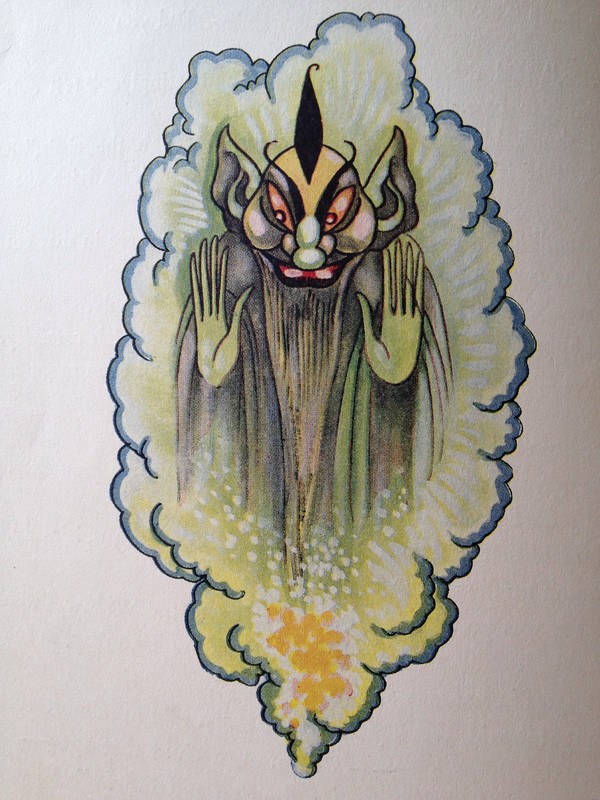
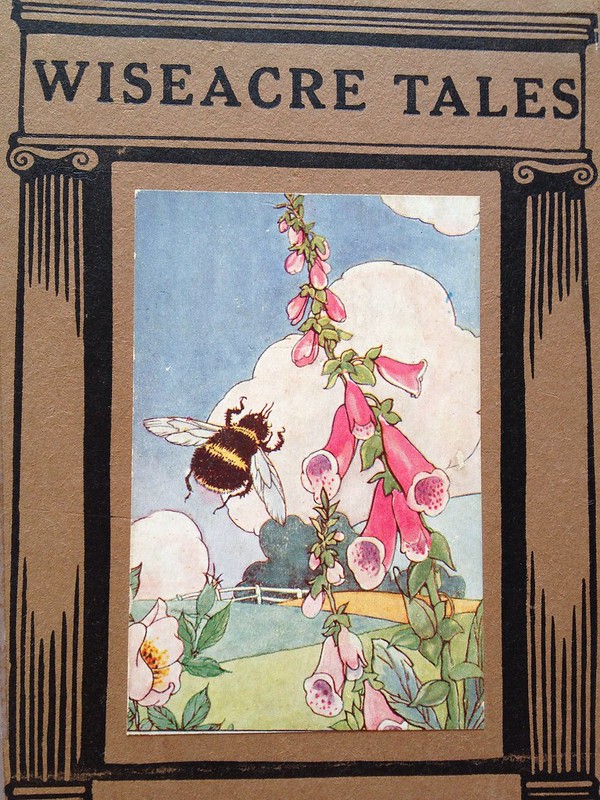
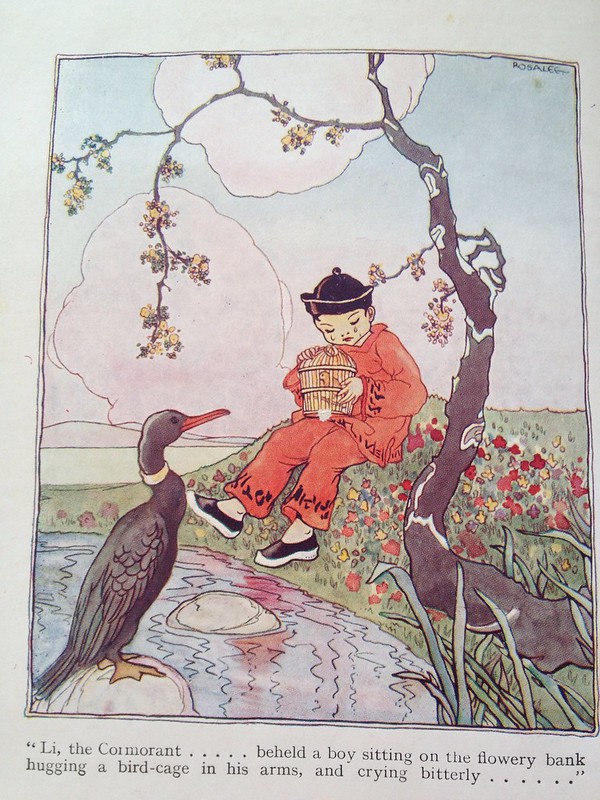
Wiseacre Tales, by Mary Moffat, illustrated by "Rosalee." An out-of-print British collection of fairy tales, originally printed in the 1940s, centered around animals. My favorite was "Hoa Mei (Flowery Eyebrows) The Song Thrush of China."


Many Moons - by James Thurber, illustrated by Louis Slobodkin, this is a sweet story of an ill little princess who wants to capture the moon outside her window.

Some of my favorite individual fairy tales and myths:


"Snow White and Rose Red" - about two very different sisters who share a common trait, kindness (illustration by Arthur Rackham).

Jason and the Argonauts - the ultimate adventure story, with romance, magic, and monsters galore.


And if you want to check out a more adult take on classic Grimm, Angela Carter's The Bloody Chamber: And Other Stories is the best modern fairy tale book out there, with her feminist takes on Litte Red Riding Hood, Beauty and the Beast, Bluebeard, and much more. A modern classic.
Enhanced by Zemanta

Thursday, December 27, 2012

the fairies return

Article first published as Book Review: The Fairies Return: Or, New Tales for Old Compiled by Peter Davies and edited by Maria Tatar on Blogcritics.

In the introduction to The Fairies Return: Or, New Tales for Old, well-known children's literature academic Maria Tatar quotes philosopher Ernst Bloch on fairy tales:

"'Once upon a time' refers not just to the past but points forward to a 'more colorful or easier elsewhere,' the place where courage and cunning can help you change your station in life..."

The Fairies Return is a collection of modern, that is 1930s-era, takes on classic fairy tales collected by Brit Peter Davies, who himself was no stranger to fairy tales. The adopted son of J. M. Barrie, Davies is believed to be the inspiration for Peter Pan. Davies, founder of the publishing house, Peter Davies Ltd., may have grown tired of his association with "the boy who never grew up," as he is reported as referring to Peter Pan as "that terrible masterpiece," but it is clear from this volume that he was very interested in collecting and sharing tales of enchantment.

Peter Llewelyn Davies
Tatar, apart from analyzing the entries in the collection, includes a comprehensive biography of Davies. There is also a nice section at the back of the book with author biographies. Eight women and seven men are the authors of these updated versions of familiar tales. Only E. Arnot Robertson's "Dick Whittington" could not be included in this edition due to copyright reasons. The fourteen tales include:
"Jack the Giant Killer," by A. E. Coppard: Worse than any Blitz, giants Demos, Kudos, and Osmos invade London, eating its inhabitants and only leaving their discarded clothing to tell the gruesome tale. A young Cornish fisherman named Jack with an eye for the Boss's daughter and a knowledge of prawns and fishing with bait has a plan to save the city. 
"Godfather Death," By Clemence Dane (Winifred Ashton): Two generations of Devon doctors, a father and son, form a curious relationship with the Grim Reaper in this powerful tale. 
"The Fisherman and his Wife," by E. M. Delafield (Edmee Elizabeth Monica de la Pasture Dashwood): In an updated version of the classic tale of greed, an increasingly annoyed and magical flounder grants wishes to a diffident man and his unsatisfied and unappreciative wife. 
"Little Snow White," by Lord Dunsany (Edward John Moreton Drax Plunkett, 18th Baron of Dunsany): Lady Clink, jealous of the beauty of her stepdaughter Blanche, schemes to get rid of her. You know how it ends. A gramophone cleverly replaces the magic mirror, as Lady Clink continually sings her question, "Oh gramo, gramo, gramophone, which of us is the fairest one?" 
"Aladdin," by Anna Gordon Keown: In an amusing version set in Scotland the genie is a helpful demon with a long tail, and his master, Mr. Aladdin, an embarrassed undertaker. The demon disguises himself as a bishop to gain the trust of the locals. As much as Mr. Aladdin may be doubtful of his new friend, the genie does help the shy man get what he wants out of life. 
"Sinbad the Sailor," by Eric Linklater: In Baghdad, two men with the same name, Sinbad the Porter and Sinbad the Sailor, trade tales of their adventures. The sailor's eighth and greatest adventure takes him sailing to a strange isle where people play a game with little white balls on fields of green, and a widow named Dalila mercilessly pursues him. What if Sinbad was just an old bore telling (and re-telling and re-telling) outlandish and unbelievable stories, over and over again? 
"Ali Baba and the Forty Thieves," by A. G. Macdonnell: In a fun crime spin on the classic fairy tale, two brothers, Cassim and Alastair, more commonly known as Ally, get some inside financial information that helps to make them rich, but sets a gang of thieves on their tail. 
"Puss in Boots," by Helen Simpson: The updated version still features a loyal and enterprising cat who is determined to help his dullard of a master advance in the world. His solution? Go into politics, of course. 
"The Little Mermaid," by Lady Eleanor Smith: As tragic as the original Andersen story. Beautiful and talented young swimmer Mary pines for an American movie star and gives up everything just to be near him. 
"Little Red Riding-Hood," by E. Oe Somerville: In a very Irish take on the tale, Moira is pursued by local boy Curley Brech Wolfe, who may or may not be a friend to her grandmother. 
"Cinderella," by Robert Speaight: An elderly Cinderella tells a very different version of her story, a cautionary tale of love, to a traveler. 
"O, If I Could but Shiver!," by Christina Stead: Nothing seems to be able to scare Lludd, until he meets the beautiful Esther. Love truly does conquer all. 
"The Sleeping Beauty," by G. B. Stern: When two high-living sybarites, Roy and Queenie, have a little girl named Beauty, they decide to retire to the country and give up their wicked ways. But country life doesn't quite suit them and Beauty becomes bored with her parents and her life in this flapper-era update full of wild parties and curses that do come true. 
"Big Claus and Little Claus," by R. J. Yeatman and W. C. Sellar: In an amusing and increasingly violent tale, Big and Little compete until one can be proclaimed the winner.
Originally published in 1934, the stories reflect the anxieties of life in post-World War I Britain. Many of the tales have a decidedly adult spin, with sex, romance, drugs, and crime making an appearance, but most retain the humor and earthiness of their original inspirations. The Fairies Return is both an entertaining read and a fascinating look at an era's adult take on the timeless tales that children are still being reared on today.
Enhanced by Zemanta