Favorite movies that have had an impact on me - #16 - Singin’ in the Rain (1952) - I will always like Fred Astaire, but Gene Kelly ... so sexy, so talented. This is his masterpiece. The title number. The Hollywood silent movies to talkies backdrop. The amazing cast, songs, dance numbers. The fine art-inspired set design. The dialogue. I could go on and on ...
[After filming a love scene]
Lina Lamont (Jean Hagen): Oh Donny! You couldn't kiss me like that and not mean it just a teensy bit!
Don Lockwood (Gene Kelly): Meet the greatest actor in the world! I'd rather kiss a tarantula.
As we were checking out the DVDs at our local library the other day, the kid's eagle eye caught sight of Gene Kelly: Anatomy of a Dancer, a documentary on the star originally broadcast by PBS on American Masters. What can I say, the kid has taste and knows what her mommy likes.
I have been a fan of Gene Kelly since I was my daughter's age. So many years later he still impresses. His grace and athleticism are unparalleled in movies. And the man was not just skilled, but sexy. Although he was possessed of a sunny grin, there was frequently a dark side to the characters he played onscreen. His daughter, Kerry, is quoted as saying that he was the only one of his Hollywood friends not in analysis. He worked his demons out in his choreography, and many of his most well-known dances are dreamscapes.
The film, narrated by actor Stanley Tucci, covers Kelly's career from his youth in Pittsburgh to his meteoric rise on Broadway and then Hollywood. I knew Kelly got his first big break on Broadway in Pal Joey, and his life-long love of sports (including the New York Yankees). What I didn't know was that when he went to Hollywood soon after Pal Joey and made his first musical, with Judy Garland, For Me and My Gal, that Garland helped him immeasurably in transferring his "exaggerated" stage moves to the more intimate screen. I also learned that back in Pittsburgh his brother Fred taught him to tap dance — their mother had all of her children take years of dance training and the family started a dancing school to help make ends meet. Gene Kelly: Anatomy of a Dancer includes previously taped interviews with Kelley and the usual talking heads, including actress Betsy Blair (first wife), lyricists Betty Comden and Adolph Green and dancers Cyd Charisse and Donald O'Connor (Singin' in the Rain), actresses Leslie Caron and Nina Foch (An American in Paris), composer Andre Previn (It's Always Fair Weather), Betty Garrett (Take Me Out to the Ball Game, On the Town), and co-director Stanley Donen (On the Town, Singin' in the Rain, It's Always Fair Weather).
There is much discussion of his being a stern taskmaster and a demanding perfectionist. Actress Debbie Reynolds tells us that "The two hardest things I did in my life was childbirth and Singin' in the Rain." But she also admits that her experience with Kelly and the film taught her a lot. The included clips confirm that all his hard work and attention to detail was well worth it. Kelly was the ultimate American dancer, and ex-wife Blair insists that "he wanted to democratize dance."
Kelly was the was only star working in musicals who was also choreographing, writing, and directing as well. He was constantly testing himself, and dance on film. He created some of the most innovative numbers in movie musicals, and he started early. In his fourth film, Thousands Cheer, his first film with MGM, he did a solo dance with a mop and broom. Two years later in 1945 found him dancing with Jerry the mouse in Anchors Aweigh.In 1949 he co-directed On the Town with Stanley Donen, and opened up the movie musical by insisting that it be filmed in real New York City locations. He memorably tap danced on roller skates in 1955 in It's Always Fair Weather.
What may not be known about Kelly is how the Hollywood blacklist affected his life. His wife Betsy Blair was blacklisted because of her left-wing politics and almost lost her most famous role, as Clara, Ernest Borgnine's girlfriend, in Marty. Kelly threatened to pull out of It's Always Fair Weather if she was denied the role and she got the part. Because of the political climate, the Kellys moved to Europe for a while and he made a pet project, Invitation to the Dance. But the studio shelved it for four years and it flopped with U.S. audiences when it was finally released.
Blair speaks in her interviews very fondly and proudly of Kelly and happy about their time together. She can't really explain why she asked him for a divorce. She and Kelly were close to Donen and his wife Jeanne Coyne (who was also Kelly's choreographic assistant). Coyne and Donen divorced after only a few years of marriage and Kelly married Coyne three years after Blair divorced him. Close quarters.
Kelly in The Pirate
Romantic complications aside, Gene Kelly: Anatomy of a Dancer is chock-full of wonderful footage of Kelly, and it will be impossible not to want to see one of his classic films after checking out this entertaining documentary. Kelly's performances still give so much joy. Just watching him do the title number from Singin' in the Rain can't help but bring a smile to your face. The only difficult decision will be which film to watch. An American in Paris for the amazing paintings coming to life sequence. On the Town for the kinetic dance routines. Cover Girl for his good/guy bad/guy persona and Phil Silvers and Rita Hayworth. The Pirate for his amazing, athletic spoof and homage to Douglas Fairbanks Jr. — the list goes on and on.
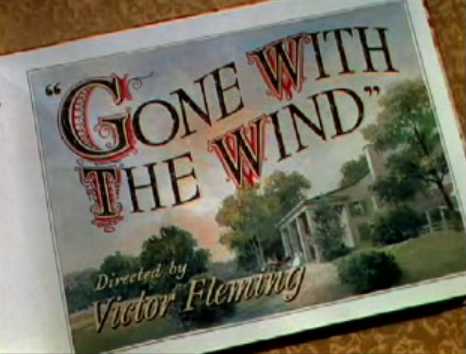
I just want to state here and now that I have never read the book, so this is a critique solely of the film. I watched part of Gone With the Wind for the umpteenth time the other night and was finally able to say without a shadow of doubt that it is a far from great movie. A phenomenon, for sure. A huge undertaking. But a film classic? Hmmm . . .
Voted the number one movie was CITIZEN KANE, Orson Welles' 1941 classic, which he directed, produced, wrote and starred in at the age of 25. The rest of the top ten, in order, are: CASABLANCA (#2), THE GODFATHER (#3), GONE WITH THE WIND (#4), LAWRENCE OF ARABIA (#5), THE WIZARD OF OZ (#6), THE GRADUATE (#7), ON THE WATERFRONT (#8), SCHINDLER'S LIST (#9) and SINGIN' IN THE RAIN (#10).
I actually think #4, GWtW and #5, Lawrence of Arabia are epics and definite must-sees, but both fall short of making it onto my greatest films list. Apart from a few shots of Peter O'Toole in the desert, his eyes the color of the sky and his hair the color of sand and the magnificent score, the rest of the movie is forgotten. There is a difference between a great movie to watch (The Ten Commandments) and whether it also qualifies as a great piece of cinema. At least that's what all those film theory books I read in college said and I agree with. Plus, no Hitchcock in the top ten? Already the list is shot. There are plenty of movies I adore, but only a few of them I think have crossed over into the great art category. Casablanca and Singin' in the Rain definitely.
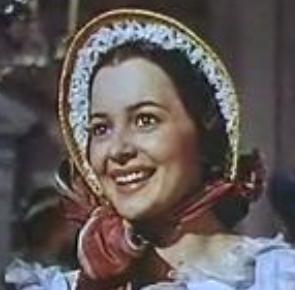
I am not resistant to all of GWtW's charms. There is an amazing crane shot of Scarlett making her way through the thousands of wounded soldiers. Olivia de Havilland gives a truly great performance as Melanie and is the only reason I have toyed with someday reading the book. Clark Gable is Clark Gable, and that is always a good thing. "Frankly, my dear, I don't give a damn." Vivien Leigh does the best she can with a truly impossible character, but her beauty and raised eyebrow can only do so much.
Why am I being so resistant to calling GWtW a great film? Because its plot drags it down, down, down. Underneath all the sets and costumes it is the typical Hollywood romance where men and women do or say impossibly dumb things to keep each other apart for the sake of dragging this thing out for hours (and in the case of GWtW, for hours and hours and hours and hours.) I hate that. Don't get me wrong, much of the movie is fun and entertaining. Scarlett's oblivious cruelty. Rhett's amusement at everything she does (before he marries her). Any scene with Olivia de Havilland. Mammy and the red petticoat. "I don't know nuffin' 'bout birfin' no babies!" But there are also all of the horrible plot points that surround these scenes. Scarlett's stupidity about Ashley & Rhett. The fate of Bonnie Blue Butler. Scarlett's fall down the stairs. Yeesh. Leslie Howard has been great in many things, but apart from looking great in A-1 Hollywood lighting, his Ashley Wilkes is insufferable and it's inexplicable why anyone would want him.
So why does GWtW show up so high on that AFI list? I have to go back to phenomenon. GWtW should be remembered for its box-office power and it's sheer length and ambitions. Hattie McDaniel winning an Oscar. The fuss about selecting its leading lady. But all these things can't help it through those painful scenes while you are actually watching it. At least with a television viewing you can get up and walk away through the dull parts. I remember seeing GWtW in a big theater in New York many years ago, thinking that maybe I'd like it more, experiencing it as it was meant to be, rather than cut up by commercials as I had originally seen it as a kid. Nope, the stuff that I listed above was really the stuff that I liked. The stuff I didn't like I really didn't like. And an intermission was very necessary. It was a test of endurance to view the movie in a theater.
Rather than best film, I prefer how TCM is listing it (and other films)—as an influential classic
7. GONE WITH THE WIND (1939)
If one film epitomizes the Hollywood blockbuster, it's Gone With the Wind. Made in Hollywood's annus mirabilis, 1939, it remains the most popular film of a sterling crop. Not only has it sold more tickets than any other American made film, but with its box-office adjusted for inflation, it remains the highest-grossing film of all time. Something in the tale of the Southern belle fighting to save her beloved Tara has struck a chord for generations of audiences, from the U.S. of World War II to post-war Europe to Japan in the '80s. Scarlett O' Hara has inspired a legion fiery females caught in the sweep of history, like Nicole Kidman in Cold Mountain and Kate Winslet in Titanic. Gone With the Wind is the definitive producer's film. David O. Selznick defied conventional wisdom to purchase the rights to Margaret Mitchell's novel, personally supervised every detail of the film and spearheaded three years of publicity to raise public interest to a fever pitch. He spent the rest of his life trying—and failing—to top it. And decades of Hollywood blockbusters have drawn on his work to create and sell romantic dreams writ large on the screen.
So will I ever watch GWtW again? Probably. It's impossible not to enjoy watching Vivien Leigh transform from spoiled brat to strong woman of Tara and back again. At least up until Bonnie Blue takes her fateful ride. But when you ask me to compile my greatest films list you'll see Victor Fleming's other film from 1939, The Wizard of Oz, not GWtW. Clark Gable may turn up via It Happened One Night. Vivien Leigh in A Streetcar Named Desire. Olivia de Havilland in A Midsummer Night's Dream or maybe The Adventures of Robin Hood. But that's another post, and a very different list.
“I got started dancing because I knew it was one way to meet girls”
Last night I was flipping channels and landed on An American in Paris. It has never been one of my favorite Gene Kelly movies, at least I have always told myself that, much preferring Singin' in the Rain. On the Town is always fun, too. But after the kid was long asleep I stuck with it, just past this part or that number that I remembered that I really loved—Embraceable You (just how Kelly holds his shoulders in that dance with Leslie Caron is amazing), Stairway to Paradise, etc. The cap to, and truly, excuse for the entire movie is the spectacular end piece by Gershwin. The concept, costumes and set design to bring to life paintings by Dufy, Rousseau and Van Gogh is wonderful, but my favorite section would have to be the one set in Toulouse Lautrec's Moulin Rouge. Not only has Kelly never looked sexier (except maybe in that fantasy scene from The Pirate), but the lighting and make-up of the extras in the scene are spot-on. Someone did their homework to create art from art. Wonderful.
No offense to his pal Sinatra, but I would have loved to see Gene Kelly in the movie version of Pal Joey, the role he originated on Broadway. Apparently MGM prevented him from appearing in the film due to contractual blah-blah-blah, so we wuz robbed.
“I wanted to invent some kind of American dance that was danced to the music that I grew up on: Cole Porter and Rodgers and Hart and Irving Berlin. So I evolved a style that certainly didn't catch on right away—but I had some good mentors in New York who encouraged me.”
There is always something a little dark to Kelly—a quality, besides his fantastic form and athleticism, which contributes to his sexiness. The character of Joey Evans in Pal Joey is basically a jerk. In American in Paris Jerry Mulligan is on his way to becoming a kept man, who finally chooses love over fame to run off to an uncertain future with Leslie Caron just in the last few moments of the film. In one of my favorites, It's Always Fair Weather, his character defines cynicism—and tap dances spectacularly on roller-skates. He was the Bogie of movie musicals. Or, according to Kelly:
If Fred Astaire is the Cary Grant of dance, I'm the Marlon Brando.
Musicals are an idealization of the world, and there is something that just brings a smile to one's face when watching someone sing and dance and express the big emotions with all the color, costumes and back-up dancers. Kelly did all that with style, muscularity and intelligence—and he could speak French! Sigh. At least we can still enjoy all that life and energy and dark emotion on film.
I never wanted to be a dancer. It's true! I wanted to be a shortstop for the Pittsburgh Pirates.
Apparently Kelly was also a big New York Yankees fan.