Showing posts with label fashion. Show all posts

Tuesday, January 20, 2015

bewitching stitching

I recently came across The Embroiderers' Guild of Victoria's Facebook page. So many gorgeous images. My grandmother taught me how to sew and embroider when I was pretty young, and off and on through the years I've worked on some pretty cool projects. These lovely pics have made me want to break out the needles and floss again.


Detail from the hem of an evening dress worn by Empress Alexandra, the last Tsarina of Russia, in 1900.

Thursday, January 15, 2015

throwback thursday: why marilyn monroe ('s size) still matters

Her is one of my most popular posts, originally published in 2012.

A recent Slate article by Simon Doonan on Marilyn Monroe, "Marilyn Monroe’s Two Secrets," aroused the ire of many readers for its hidden title, "Was Marilyn Monroe Fat?" Doonan claimed to know the answer (No) because he was on hand (as an employee of Christie's auction house) to view some of her last possessions, including clothing:
"Right away, I discovered that Marilyn was shockingly and unimaginably slender. She was sort of like Kate Moss but fleshier on top. Didn’t see that coming, did you? 
When it came to finding mannequins to fit her dresses, I simply couldn’t. M.M.’s drag was too small for the average window dummy. Smaller “petite” mannequins existed, but I could not bring myself to place Marilyn’s iconic garments on these perky fiberglass dollies."
Doonan stacks the deck, because he writes about Marilyn being a size 12, but women's off-the-rack dress sizes have radically changed over the years. What he doesn't address is that most women, Marilyn included, are hardly the same dress size throughout their lives. We put on weight, lose weight, fill out, get pregnant, lose the baby weight, etc. Our teenage bodies are different from our 20s, 30s, 40s, 50s, etc. bodies. If Marilyn had lived past 36, she would have continued to fluctuate in weight as many women do, and most likely in an upward trajectory. Case in point — Elizabeth Taylor. The author implies that Marilyn's curvy Some Like It Hot body would have been wearing the same little black dress she wore when she as Mrs. DiMaggio entertained troops in Korea. Photos show that this probably wasn't the case.


"When you look at Marilyn on-screen and — armed with the information I have just provided — you realize that the busty, ample gal brimming over Tony Curtis in Some Like It Hot is literally one-third your size, you have every right to become suicidal. If she looks like that — zaftig, almost chubby — what on earth would you look like under similar circumstances?"
Way to reinforce body-shaming, Doonan. Just look at the black and white photo. She's gorgeous. Chubby? Why does that word even come up?

He also repeatedly calls her "tiny," based on the dresses he found among her belongings, but Monroe's measurements, according to her dressmaker, were 35-22-35 inches, with a bra size of 36D, and height of 5 feet, 5½ inches. I'm a shade under 5 feet 7 inches and people have always considered me medium height to tall. Marilyn was a classic hourglass, which would have been even more accentuated if she wore a girdle. The Fat Nutritionist has an interesting article about Marilyn, which points out that her "small" dresses might have been a bit of an illusion:
"Also, I’d like to note that a reason occurred to me why Marilyn’s dresses would seem so tiny when viewed in person: Marilyn’s dresses were often sewed onto her and, as Lena Pepitone asserts, her clothes were often so tight that they required regular mending of split seams and zippers. To get her clothing onto a dressform without ripping out seams and re-sewing them, they would have to choose smaller-than-Marilyn dressforms so that the dresses would maintain a normal amount of ‘ease’…though in Marilyn’s lifetime, she wore them without that ease. If you stuffed them as tight as sausage-casings, as she wore them, you could have an accurate 3-D depiction of her nude body size/shape (since it is reported that she didn’t even wear underwear [Lena Pepitone], let alone girdles and other shaping garments popular at the time.)"
But the real question about Marilyn is why oh why should it matter what size dress she wore when? Marilyn was beautiful, unique, and wonderful. No matter how many pounds this way or that. Why are so many people so concerned with the size of a woman instead of the shape? And why do we continue to put up with this sort of discourse? In the article Doonan talks about being gay, and generalizes on how gay men love tragic women, etc., etc. He also claims that gay men are just as obsessed with women being thin as women are. This isn't exactly news, as the fashion industry seems to push a thinner and thinner "ideal" woman every year. Why can't we ignore that pressure?

It is such a difficult situation. I have to admit to wanting to shed a few pounds myself. Who doesn't? We can never be too rich or too thin, right? But where does the simple desire to want to shed a few pounds to be able to get into some old jeans that are now feeling a bit tight, turn into looking at photos of actresses and models and feeling inadequate?


Hollywood and fashion have always favored thinner than thicker. Actresses have always been pressured to diet. Marilyn Monroe, who this year will have been gone 50 years, is still a female icon. She is being mimicked in magazine shoots and portrayed in current movies. Why it would matter to Doonan or anyone so many years after her death what dress size she wore shows how much the Marilyn mystique endures. And how much Marilyn is still viewed as an iconic female. She may really be the modern goddess.

As important as Monroe still is to us, her look, her hourglass figure, is not. Styles inevitably change, but we still seem stuck in the '60s. The fashion industry wants women to aspire to a Twiggy look, which is virtually impossible to achieve without the right bone structure. At the same time, we still seem endlessly fascinated by Marilyn, who had a look that can be more easily achieved — curves can be accentuated, waists can be cinched to approach an hourglass. Yet stick-thin is in, and people are talking about whether Marilyn Monroe was fat.

Thursday, January 08, 2015

throwback thursday - grand-mère

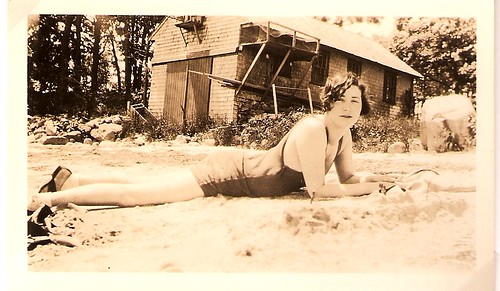
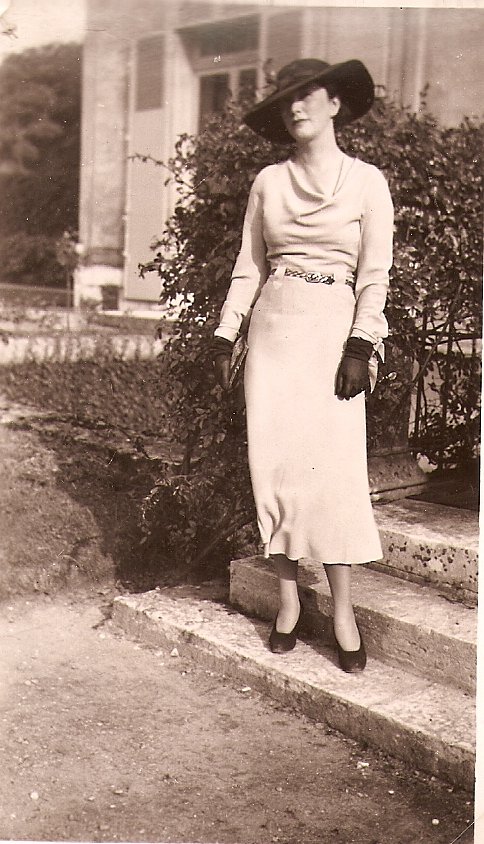
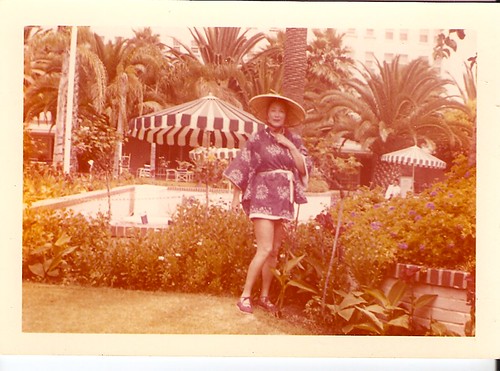
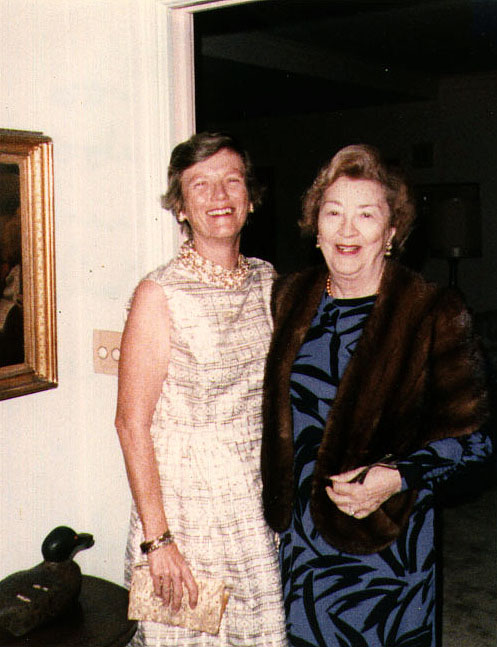
Monday, January 5, was my grandmother's birthday. I owe her a lot. I live in her home now, and it is filled with many beautiful things she collected over the years, as well as some personally valuable family mementoes. Always a stylish, classy lady, I try to aspire to her sense of style, never quite getting there. But I can appreciate her.

Uncle Gydie and Mariette in Italy
On vacation in Italy, c. 1925, with her uncle

bathing beauty Mariette
Bathing beauty

Elegant Mariette2
Très chic, en Paris, c. 1930

exotic Mariette
In Hawaii, one of her favorite places

mom&granmere2
With mom, here, c. 1989, on the way to an event

Tuesday, March 25, 2014

a mirror-lined nursery

While most internet wags are spoofing or critiquing the upcoming April cover of Vogue magazine, featuring Kanye West and Kim Kardashian, another photo, released from the shoot, taken by Annie Leibovitz, has caught my eye. It is a pseudo-candid taken in their baby girl North's nursery, with both mama and papa unable to pry themselves away from digital camera screens.


There is so much to ponder in this photo.

Wall-to-wall white and mirrors for a baby's room?

One tweet that has gone viral posed the question — why isn't Kanye reflected in any of the many floor-to-ceiling mirrors? Is he a vampire? It's impossible to tell from all of the artificial lighting what time of day it really is in the photo.

The baby is cute.

This photo and its screens within screens make me think of these paintings by Diego Velázquez:

Diego Velázquez,  "Rokeby Venus [Venus at her Mirror]," c. 1647–51, National Gallery, London.
Diego Velázquez, "Las Meninas [The Maids of Honour]," 1656, Museo del Prado, Madrid.

Vogue (and America) celebrates celebrity and wealth, and this picture is just an illustration, maybe the ultimate representation, of that. What bothers me the most, however, is the complete absence of joy in the photo. Velázquez, in "Las Meninas," may look a little burnt-out, but there is life and action in his depiction of the Spanish royal family. His "Rokeby Venus" may be vain, but Cupid loves her, and she seems comfortable and happy. Why are Kim and Kanye, in their Givenchy fox stole and Balmain tee, so somber and serious? Life at the top seems closed off and not too much fun, with too many screens and other reflective surfaces.

Sunday, March 02, 2014

oscar fashion

This cute graphic created by London agency Mediarun Digital of every dress worn by the Best Actress Academy Award winners throughout the years has been all over the internets.


I especially like 1930 (Mary Pickford), 1938 (Luise Rainer),  and 1940 (Vivien Leigh).

As far as tonight's award show goes, I have to admit that I'm a lot less interested in the potential fashions to be worn by this years crop of nominees. What I have been wondering (and I'm sure I'm not alone in this) is what hat will Pharrell Williams wear?


Look out fashion gods, here he comes ...

Thursday, June 06, 2013

il quinto elemento


The ultimate guilty pleasure movie, The Fifth Element, or how I like to refer to it, Il Quinto Elemento, is also incredibly entertaining. It also manages to be colorful, funny, and a little scary at times. Its sci-fi roots are definitely in Blade Runner territory, but director Luc Besson has managed to create a wholly original future world, that even upon multiple viewings manages to enchant. This is helped in no small part by the amazing costumes designed by Jean-Paul Gaultier.

The Italian poster
Milla Jovovich as Leeloominaï Lekatariba Lamina-Tchaï Ekbat De Sebat — but you can call her Leeloo
Leeloo: Leeloo Dallas. Mul-ti-pass.
I saw the movie when it first came out in 1997, but started referring to it as Il Quinto Elemento after a trip to Italy, where posters for the movie were plastered everywhere. My pet name seemed appropriately absurd, as much as the bright orange hairstyle of female lead Milla Jovovich or the outrageous character played by Chris Tucker, Ruby Rhod. Besson originally came up with his version of the future when he was just 16 years old. Years later, after he had quite a few successful films under his belt (Subway, La Femme Nikita, Léon: The Professional), he was able to move forward on his pet project and hire comic book artists Jean-Claude Mézières and Jean Giraud to work on the film's production design and help design his future version of New York City.


Taxicabs and police cars in the 23rd century

In The Fifth Element a perfect super being, in the form of a young woman called Leeloo (Jovovich), is sent to 23rd century Earth to determine whether humanity is worth saving. Helping her save the world is a cab driver (and former crack military man) named Korben Dallas (Bruce Willis), a priest who is in a long line of protectors of her alien race (Ian Holm) and a reluctant flamboyant DJ (Tucker). Up against them are a bunch of scary-looking aliens called Mangalores and Jean-Baptiste Emanuel Zorg (Gary Oldman), a crooked arms dealer who also seems to be in league with a terrible evil force, a black planet which is hurtling towards Earth. They are all after four mystical stones, which represent the four essental elements of life.

Chris Tucker's androgynous Prince-inspired DJ Ruby Rhod is an either love him or hate him character. I love him.
DJ Ruby Rhod: And now we enter what must the most beautiful concert hall of all the universe. A perfect replica of the old opera house ... But who cares?
Bruce Willis as Korben Dallas, sporting a rubber Gaultier t-shirt that I still covet
Gary Oldman as Zorg. Clothes for bad guys in the 23rd century — pretty cool. Hairstyles — not so much.
Korben Dallas: Whoa, lady, I only speak two languages, English and bad English. [Leeloo speaks in divine language] 
Korben Dallas: Now, don't get me wrong, I'm all for conversation, but maybe you could just shut up for a moment?
Besson fell in love with Jovovich during the making of the film and the two constructed the "divine language" that Leeloo speaks when she first meets Korben. They married, but were divorced in 1999. Jovovich is not the only fashion model in The Fifth Element who can show off the fabulous wardrobe created by Gaultier. Fans of fashion will recognize some favorite faces in the extras cast, including: Sibyl Buck (Zorgs secretary), Stacey McKenzie (VIP stewardess), and Ève Salvail (Tawdry Girl).

Willis is in his usual wry humor/hero mode and helps the (at least American) audience connect with the fast-moving adventure. I will always have a fond place in my heart for the original Star Wars film, and I love, love, love Blade Runner (especially Rutger Hauer), but if I was really pressed, I think I would have to say that Il Quinto ElementoThe Fifth Element, is my favorite science fiction movie. It's certainly the most re-watchable, and its visuals are hard to beat. It makes so much of the gray exploding CGI buildings that seem omnipresent in recent sci-fi films (The Avengers, Star Trek, etc.) seem dull and lifeless. To quote Ruby Rhod, The Fifth Element is "A hotel of a thousand and one follies, lollies, and lickemollies. A magic fountain flow of non stop wine, women, and coochie coochie coooo! All night long!"

Further Reading — an amusing post about movie:
How 'The Fifth Element' Predicted Lady Gaga And Everything Else About Modern Life—Back in '97

Enhanced by Zemanta

Tuesday, May 14, 2013

vintage '80s

The 1980s, as a style decade, was certainly guilty of some serious fashion faux pas. Some of those trends are even coming back, or they never really left. Day-glo socks and other accessories can be seen all over Target these days. Bi-level and asymmetrical haircuts are strangely still being sported by women all over the country. But one of the trends of the '80s that was dear to my heart, and isn't around that much anymore, was vintage clothing. I don't miss those other trends, but I do miss vintage or "antique" clothing.

I dove headfirst into this trend, and was pretty lucky, because my mom, who had lived in New York in her 20s, had held onto most of her clothes, and I was able to raid her old wardrobe for some great pieces. I wore my mother's old party dresses and fancy attire, mixed in with basic items like jeans or simple skirts. I also shopped in used clothing stores, and even worked in a few of the more famous New York City ones (Canal Jean Co. and Reminiscence), for quite a few years during and post college.

Outside Scribner's bookstore in some typical '80s city garb — antique coat and scarf, cropped jeans, short boots.
In Soho, by the basketball courts
In SoHo, near the basketball courts, wearing my "James Dean Rebel Without A Cause" reversible jacket that used to be my mom's, a vintage scarf that originally belonged to my grandfather, and some antique clip-on earrings.
I remember the gigantic bins full of of old, used, woolen overcoats outside of Canal Jean Company on Broadway, where male and female, young and old, would try them on, looking for the perfect, dramatic winter coat. Most would tend to be oversized, which was of course, fine in the '80s, so one would roll up the sleeves and flip up the collars to come up with one's own version of a '40s-style trenchcoat.

I was always a little leery of those overcoats, some still with an odor of mothballs. I wondered where the store's antiques buyer had found them. Were they really so many old men in Cincinnati no longer in need of their winter overcoats, or were they just from some overstuffed warehouse, where they never sold? And here they were, on the backs of New Yorkers (and New Jerseyans and Long Islanders, etc.) 40 years later. But tons of people bought them, and wore them during the cold winter, and looked pretty cool while doing it. Even as an avid film buff, I couldn't really remember any old black and white movie featuring overcoats exactly like these, but I think a lot of people were buying these sorts of clothes and remaking themselves in what they saw as more modern versions of cinematic superstars of the past, like Humphrey Bogart or Lauren Bacall. I know I was at times.

film shoot
In one of my mom's old party dresses, channeling Kim Novak.
I worked at another clothing store, Reminiscence, after I left Canal Jeans. That became a bit of a schizophrenic "vintage" experience. Reminiscence did sell vintage items, but its real money was made on its own versions and knock-offs of mostly '50 styles. Bright colors and prints were its trademark, appearing on everything from trumpet skirts to Hawaiian shirts, and of course, even jeans. It was probably appropriate, with all of the talk at the time, of simulation and questions of originality in the art world, that art student me worked at a retail store which was simulating styles of the past.

Fashion these days, in comparison, is pretty boring. People seemed to pay a little more attention to putting together a look in the '80s. Maybe their outfits were over-the-top, but they were interesting, too. What current fashion trend is interesting? Certainly not leggings, or the persistent wearing of one's trousers 4 to 5 inches below one's underwear. Where are all the fun clothes?

sc0001046c02
This fun little number probably cost me round $5.00, and the vintage shoes and oversized blue plastic hoop clip-on earrings, not much more. It was a wow at the Warhol opening at MoMA. And more than that, as you can see, it was a lot of fun to wear.
Some of the blame for current boring fashion trends I blame on the obsession first with supermodels, and then designer labels. The inevitable red carpet "Who are you wearing?" question as mostly cookie cutter gowns glide by generates little enthusiasm, and seldom seems to translate to any street wear. As the '80s waned, television shows centering on fashion, style, make-overs, and supermodels, became omnipresent. In the '90s suddenly heels had to be high and thin (no more boots or chunky heels). Skirts and silhouettes also slimmed down (goodbye '50s-style puff skirts). Everything, while certainly stylish, was also uniform. There was no room for mis-matched earrings, or just wearing one earring, bright colors, and prints. Black, always a go-to color in fashion, was certainly as popular in the '80s as any decade, but in the '90s and now in the '00s, black and solid muted colors dominate. Now don't get me wrong, I don't miss all those '80s little floral prints that were also all over the place, but a splash of color, something that even looks a little crazy, something a little fun — where today is the fun in fashion?

I've been wondering if this latest film version of The Great Gatsby will spawn another "vintage glamour is back" moment. These trends never really seem to take hold for long, however. Fashion trends only last from one season to the next. Lots of folks like myself still enjoy shopping at thrift and used clothing stores. It might never be like it was in the '80s, when vintage clothing and style became a bigger trend. I find that a little sad. But I guess you can now be prepared for the sight of me walking down the street in a vintage trumpet skirt or something similar. I warned you.

Enhanced by Zemanta

Monday, January 09, 2012

why marilyn monroe ('s size) still matters

A recent Slate article by Simon Doonan on Marilyn Monroe, "Marilyn Monroe’s Two Secrets," aroused the ire of many readers for its hidden title, "Was Marilyn Monroe Fat?" Doonan claimed to know the answer (No) because he was on hand (as an employee of Christie's auction house) to view some of her last possessions, including clothing:
"Right away, I discovered that Marilyn was shockingly and unimaginably slender. She was sort of like Kate Moss but fleshier on top. Didn’t see that coming, did you? 
When it came to finding mannequins to fit her dresses, I simply couldn’t. M.M.’s drag was too small for the average window dummy. Smaller “petite” mannequins existed, but I could not bring myself to place Marilyn’s iconic garments on these perky fiberglass dollies."
Doonan stacks the deck, because he writes about Marilyn being a size 12, but women's off-the-rack dress sizes have radically changed over the years. What he doesn't address is that most women, Marilyn included, are hardly the same dress size throughout their lives. We put on weight, lose weight, fill out, get pregnant, lose the baby weight, etc. Our teenage bodies are different from our 20s, 30s, 40s, 50s, etc. bodies. If Marilyn had lived past 36, she would have continued to fluctuate in weight as many women do, and most likely in an upward trajectory. Case in point — Elizabeth Taylor. The author implies that Marilyn's curvy Some Like It Hot body would have been wearing the same little black dress she wore when she as Mrs. DiMaggio entertained troops in Korea. Photos show that this probably wasn't the case.


"When you look at Marilyn on-screen and — armed with the information I have just provided — you realize that the busty, ample gal brimming over Tony Curtis in Some Like It Hot is literally one-third your size, you have every right to become suicidal. If she looks like that — zaftig, almost chubby — what on earth would you look like under similar circumstances?"
Way to reinforce body-shaming, Doonan. Just look at the black and white photo. She's gorgeous. Chubby? Why does that word even come up?

He also repeatedly calls her "tiny," based on the dresses he found among her belongings, but Monroe's measurements, according to her dressmaker, were 35-22-35 inches, with a bra size of 36D, and height of 5 feet, 5½ inches. I'm a shade under 5 feet 7 inches and people have always considered me medium height to tall. Marilyn was a classic hourglass, which would have been even more accentuated if she wore a girdle. The Fat Nutritionist has an interesting article about Marilyn, which points out that her "small" dresses might have been a bit of an illusion:
"Also, I’d like to note that a reason occurred to me why Marilyn’s dresses would seem so tiny when viewed in person: Marilyn’s dresses were often sewed onto her and, as Lena Pepitone asserts, her clothes were often so tight that they required regular mending of split seams and zippers. To get her clothing onto a dressform without ripping out seams and re-sewing them, they would have to choose smaller-than-Marilyn dressforms so that the dresses would maintain a normal amount of ‘ease’…though in Marilyn’s lifetime, she wore them without that ease. If you stuffed them as tight as sausage-casings, as she wore them, you could have an accurate 3-D depiction of her nude body size/shape (since it is reported that she didn’t even wear underwear [Lena Pepitone], let alone girdles and other shaping garments popular at the time.)"
But the real question about Marilyn is why oh why should it matter what size dress she wore when? Marilyn was beautiful, unique, and wonderful. No matter how many pounds this way or that. Why are so many people so concerned with the size of a woman instead of the shape? And why do we continue to put up with this sort of discourse? In the article Doonan talks about being gay, and generalizes on how gay men love tragic women, etc., etc. He also claims that gay men are just as obsessed with women being thin as women are. This isn't exactly news, as the fashion industry seems to push a thinner and thinner "ideal" woman every year. Why can't we ignore that pressure?

It is such a difficult situation. I have to admit to wanting to shed a few pounds myself. Who doesn't? We can never be too rich or too thin, right? But where does the simple desire to want to shed a few pounds to be able to get into some old jeans that are now feeling a bit tight, turn into looking at photos of actresses and models and feeling inadequate?


Hollywood and fashion have always favored thinner than thicker. Actresses have always been pressured to diet. Marilyn Monroe, who this year will have been gone 50 years, is still a female icon. She is being mimicked in magazine shoots and portrayed in current movies. Why it would matter to Doonan or anyone so many years after her death what dress size she wore shows how much the Marilyn mystique endures. And how much Marilyn is still viewed as an iconic female. She may really be the modern goddess.

As important as Monroe still is to us, her look, her hourglass figure, is not. Styles inevitably change, but we still seem stuck in the '60s. The fashion industry wants women to aspire to a Twiggy look, which is virtually impossible to achieve without the right bone structure. At the same time, we still seem endlessly fascinated by Marilyn, who had a look that can be more easily achieved — curves can be accentuated, waists can be cinched to approach an hourglass. Yet stick-thin is in, and people are talking about whether Marilyn Monroe was fat.
Enhanced by Zemanta

Monday, November 28, 2011

over one hundred years of fashion images

Article first published as Book Review: Decades of Fashion 1900 to the Present by Harriet Worsley on Blogcritics.

Decades of Fashion 1900 to the Present, a packed coffee table book of over 600 pages, covers more than a century of fashion for the design enthusiast. Black and white and color photography from the Getty Images collection provide a visual timeline of fashion icons and trends.

The book is divided into 10 chapters, each concentrating on a particular fashion trend, with essays written by Harriet Worsely that give a brief overview of the styles in women's clothing and historical context for the period.

Most interesting are the detailed captions that accompany each image in the book. And there are so many fabulous images.


The Belle Époque — Women shed their tight corsets and restrictive multiple layers of clothing and donned softer garments, designed with influences from classical art and Greek statuary. One of the more interesting profiles was of Lady Ottoline Morelli, a member of the Bloomsbury Group, who dyed her hair purple and was described as "that fantastic, baroque flamingo." Top designers of the period included Paul Poiret and Mariano Fortuny.


Suited and Booted — in the World War I era, men's clothing, such as knotted ties and suits, infiltrated women's fashion. This chapter featured many images of women at work. One of the best was of a female Metropolitan Railway worker, with a very short (for the period) — knee-length — skirt.


Boom and Bust — In the post-war '20s, hemlines rose along with expectations. The little black dress entered the fashion lexicon thanks to top designers Coco Chanel and Edward Molyneux. One of the most striking images in this section was of tennis star Suzanne Lenglen at Wimbledon, on the court with rolled-down flapper stockings and tennis outfit designed by Jean Patou.


Glamour Years — Loose-fitting undergarments were replaced by girdles and brassieres, which helped streamline women into the ideal Hollywood silhouette of long, slim and slinky. Women also started wearing trousers, and movie stars like Greta Garbo and Marlene Dietrich became fashion icons. In one of the most iconic images in the book, Dietrich looks amazing in a white man's style suit, complete with bow tie and hat, and still loks completely and alluringly feminine. Popular designers of the time included Elsa Schiaparelli and Cristobal Balenciaga.


Make Do and Mend — Styles became a bit more practical during the Second World War years. Especially interesting is a photo of a Utility design, featuring an original dress and its mass-produced copy.


New World, New Look — Post-war, more luxurious fabrics were once again available and designers like Christian Dior and Hubert de Givenchy took full advantage, with voluminous skirts and sweeping jackets. But jeans and more casual styles were also popular, epitomized in one of the photos by Marilyn Monroe, looking adorable in a casual shirt and Capri pants.


Minis and Mods — The Beatles and Camelot were just some of the pop culture icons that influenced '60s fashion. So many over-the-top, free-spirited fashions are depicted this chapter, but especially striking is an image of a leopard-print-clad Barbra Streisand, photographed at a Chanel fashion show.


The Daisy Age — It was anything goes in the '70s, with designers like Pierre Cardin and Mary Quant raising hemlines even further than ever before. Androgyny, bikinis, and punk rock were all part of the eclectic fashion scene. A photo of Mick and Bianca Jagger, both wearing skirts in St. Tropez, illustrates the era perfectly.


Dress to Impress — Shapes became exaggerated and sculptural in the '80s, embodied in the designs of Issey Miyake and Sonia Rykiel. Miyake used yards of fabric in his draped designs, a quite different, voluminous take on classical statuary.


Back to Basics — Designers like Vivienne Westwood and Jean-Paul Gautier injected their designs with color and imagination in the '90s. Alexander McQueen's designs were as much fine art as fashion, utilizing unusual materials like metal and glass in his unique and beautiful creations.

Decades of Fashion 1900 to the Present is a book fashion-lovers will want as a reference, and even people cursorily interested in fashion will find much to interest them. The book can be enjoyed again and again, one can flip through the years and changing hairstyles and watching hemlines rise and fall as fashion in the past century has reflected art, style, politics, and necessity.
Enhanced by Zemanta

Sunday, August 07, 2011

whatever happened to the monocle?

I have 20/50 vision and have been wondering if a monocle would help or just make things more imbalanced. In the days of monocle wearing, did people want to squint when they read, or did they just want to look super cool?
From Queenie's Bee


The Black Monocle, 1961 [Le Monocle Noir]


From SuperHeroHype
Enhanced by Zemanta

Wednesday, August 03, 2011

pretty baby

A recent Jezebel article tried to stir the exploitation pot by highlighting photos of a young french model, Thylane Loubry Blondeau, who happens to be 10 years old. I am less disturbed by the premise of the article than by the possibility that they may have completely ripped off this one, which posed the exact same question and even some of the same photographs. At least Jezebel cited this other article as a "source." What the hell happened to Jezebel, anyway? It used to be a fun site geared towards women, but now just seems to publish recycled material from other entertainment sites with the purpose of creating flame discussions. Phooey.


The fashion industry has used very young girls in grown-up looking photoshoots before, like Brooke Shields and Milla Jovovich. Jezebel's pointing out that some of the photographs of Thylane Loubry Blondeau verge on the inappropriate by highlighting the most "controversial" — primarily those where Thylane is wearing make-up and heels, or posing without a shirt, may or may not be valid, but it is most definitely an attempt to piss people off and be deliberately inflammatory. If Jezebel was truly outraged at the young girl appearing in inappropriate photos, why are they republising them on their site?

Most of the photos have been borrowed from a tumblr dedicated to the young model. When one scrolls through the many photos the majority are pretty typical of children's fashion spreads and catalogs, and not risqué at all. There are a few exceptions, where I agree that Thylane looks not inappropriately sexy, but absurd — dressed up in dark lipstick and heels. One photo that is trying to be provocative has Thylane posed topless on a rumpled bed, but it could also just be a picture of a kid that is ticked off after a pillowfight.

Instead of trying to focus on one very pretty little girl and how she may or may not be too young for some photographs her parents have clearly consented to having her pose for (her mother, Véronika Loubry, has a children's and maternity clothing line, Double V), why not write and think about how fashion is a reflection of what society desires — that women remain girls and girls be women. Our society is youth-obsessed, and fashion just illustrates the fact. There are so many contrary influences both trying to keep kids young and trying to make them grow up too fast. This is a topic worth considering and one I will certainly be thinking and writing about in future, especially as the mother of a little girl. In the meantime, I may be reading Jezebel less, but I can thank them for steering me towards some pretty photos of a pretty baby.
Enhanced by Zemanta