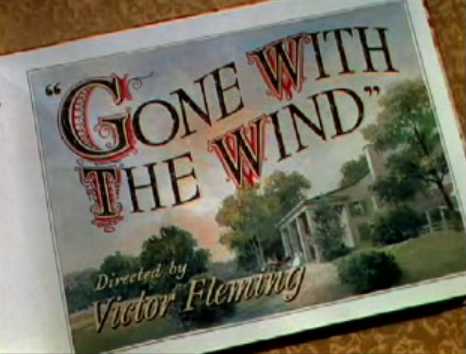
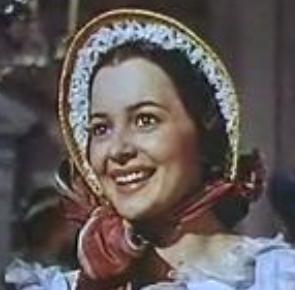
. It's an undeniable classic, and a bit of Hollywood history. But it also had so many melodramatic and unbelievable character behaviors that it tried my patience. But I have been hearing from friends and the internets over the years that I should read the original source—that would make a huge difference in how I viewed the film. Well, I finally did, and they were right. I can't say that it has risen on my list of favorite films, but after reading Margaret Mitchell's opus (on the iPad, yes, I'm a little nutty) and then re-watching GWTW over the holidays I will say that it was a much better, richer viewing experience. Another thing my friends, etc. were right about—it's a great book.
Gone with the Wind is a famous parable of the end of the South and its ways. But what makes Gone with the Wind a classic and has stayed with readers is the complex character of Scarlett O'Hara. One of the most famous heroines in literature, Scarlett makes an art of procrastination.
I can't think about that right now. If I do, I'll go crazy. I'll think about that tomorrow. [Book & Film]I was surprised at how much of the dialogue from the book is used in the film, practically verbatim, but still manages to get the emphasis not exactly wrong, but very, very different. The movie is a romance with a historical back-drop. The book uses romance to thread the reader through the history of the fall of the South and its people's customs, beliefs and dreams. The book was an incredible effort on its author's part, and it is a true slice-of-the past. I highly recommend reading Mitchell's one-and-only published novel for her interpretation of what happened on the Civil War's homefront. And from here on I'll be giving away major plot points, so if you've somehow managed to avoid the book or the movie or the famous line "Frankly my dear ..." consider yourself warned.
As a born and bred Yankee, it wasn't hard at all for me to hear the interminable "damn Yankees" dialogue—the story is told from an entirely Southern viewpoint. But the phonetic speech of the great character of Mammy and the other "darkies" was hard to take. I'm sure for many contemporary readers it will be a deal-killer.
Fo' Gawd, Miss Scarlett! We's got ter have a doctah. Ah- Ah- Miss Scarlett, Ah doan know nuthin' 'bout bringin' babies. [Book]The phonetic speech may have been a technique used by Mitchell to portray the differences in the cultures of the southern blacks and the white plantation folks. But we never get a closer look at the lives of the slaves at Tara or after they're emancipated. The complaisance of Scarlett, and her oft-repeated belief that blacks were better off "in the old days" may have been the prevailing attitude of the day, but it was still alienating and grated on my modern ears. Scarlett's complete non-understanding of the Yankee viewpoint on slavery was a reflection of Mitchell's upbringing and source material.
[Mitchell's] childhood was spent in the laps of Civil War veterans and of her maternal relatives, who had lived through the Civil War. ... Among [Mary Gay's] books, the most famous is Life in Dixie During the War, one of the few eyewitness accounts written by women and a source Margaret Mitchell used for Gone with the Wind. There have also been several recent studies done that show a vast similarity between Gone With The Wind and the Civil War diaries of Mary Chesnut.—Wikipedia
Mitchell almost entirely skipped over the subject of the morality of slavery or whether the South was justified in pursuing war against the North, preferring to allow the reader to decide these issues, based upon the actions or inaction of the novel's characters.—WikipediaMitchell may have sidestepped slavery in her novel, but she isn't just pushing "The Cause," either. Rhett Butler is the walking wake-up call that no character south of the Mason-Dixon line will heed.
Rhett Butler: Why, all we have is cotton and slaves and arrogance.
Scarlett: Fiddle-dee-dee. War, war, war; this war talk's spoiling all the fun at every party this spring. I get so bored I could scream. Besides... there isn't going to be any war. [Film]Scarlett O'Hara has to be one of the most irritating, at times stupid, central characters in an American novel. She is to be admired for her courage and pluck—there's no denying that the girl was a survivor. She was extremely young and unworldly when her world, the whole world, fell apart. But most people grow or at least learn something from great adversity. Scarlett just seems to get more stubborn in her ideé fixe on Ashley Wilkes and bone-headed in her attitudes towards Rhett Butler and just about everyone as she gets older.

As annoying a character as she is, she does make for a good read. I grew up in such a different world and era that it's hard for me to connect to why she holds on to her outdated ideas of Ashley's chivalry for so long. Even Ashley knows that his ship has sailed, the South is no more, but she never listens. She's been married multiple times, had multiple children (not shown in the movie), finally experienced good sex with third husband Rhett—and yet she is deluded enough to turn Rhett out of her bedroom so that she can stay "true" to Ashley? How can she still be naive enough to believe that Ashley and Melanie don't have sex since Doctor Meade cautioned Melanie about the dangers to her health if she tried having more babies? With all that Scarlett has been through, she is still the little belle who thinks if she just bats her eyes enough she will get that elusive man.
After reading it all, and watching the film again I can say, yes, she is that naive. Scarlett's attitude towards men is not too different from the matrimony-obsessed reality show dim-bulbs we are subjected to these days. She is a step above them surely—for her sheer guts, courage and willingness to work hard to get what she wants—but she is selfish and ruthless and doesn't care who she stomps on in her little satin slippers on her path to riches. She births children and then forgets about them completely.
Rhett Butler: A cat's a better mother than you. [Book & Film]Is it the war that has done this to her? Or did the war only pave the way for her to indulge in her most characteristic traits and take them to the extreme? Scarlett's power as a literary heroine is that she is as strong and ruthless as a James Bond or some other mythic hero.
... life was not easy, nor was it happy, but she did not expect life to be easy, and, if it was not happy, that was woman's lot. It was a man's world, and she accepted it as such. The man owned the property, and the woman managed it. The man took credit for the management, and the woman praised his cleverness. The man roared like a bull when a splinter was in his finger, and the woman muffled the moans of childbirth, lest she disturb him. Men were rough of speech and often drunk. Women ignored the lapses of speech and put the drunkards to bed without bitter words. Men were rude and outspoken, women were always kind, gracious and forgiving. [Book]This paragraph from Gone with the Wind is the key for me to Scarlett. She is caught between what her mother taught her, which point-for-point is to be subservient to men but rule the roost—just never let the man know. In essence, as Rhett referes to her, a lovely little hypocrite. But Scarlett's true nature is to be the absolute opposite of everything her mother taught her. Scarlett owns and manages property (Tara, Frank Kennedy's store, and the saw mill). Scarlett drinks secretly, sometimes to the point of getting drunk. Scarlett is always outspoken, and she is never kind, gracious or forgiving. But she is in no way masculine or trying to take on the role of a man in Southern society. Her simple, direct mind just sees that she is as smart as any man, so why shouldn't she do as she pleases? She certainly never intends to wait patiently for anyone else to do it for her. She is a pragmatic feminist, but she would be horrified if that fact was pointed out to her (if she could even understand it), as she holds on to her persistent self-delusion that she is still a Southern belle, modeling herself after her mother.
The film, even more than the book, places great emphasis on Tara, the power and draw of the land for Scarlett.
Gerald O'Hara: Land is the only thing in the world that amounts to anything, for ’tis the only thing in this world that lasts. [Book]Scarlett does feels strongly about saving Tara for her family, but I would argue that it is the concept of "home" and not land that draws her back again and again to Tara. She seemed more than ready to abandon it for the white columns of the Wilkes's grander Twelve Oaks plantation without even a backward glance. When she is truly terrified, when the Yankees have reached where she is staying in Atlanta with Melanie, all she wants to do is go home—home to Tara. But actually, what she wants is to rush home to her mother, where she knows she will feel safe. Unfortunately she discovers when she reaches Tara that her mother has recently died from typhoid, her sisters are still recovering very slowly from the debilitating illness, her father is mad with grief, everyone is almost starving, and Tara is a ruin. Talk about having every dream shattered all at once.
Gerald O'Hara: Do you mean to tell me, Katie Scarlett O'Hara, that Tara, that land doesn't mean anything to you? Why, land is the only thing in the world worth workin' for, worth fightin' for, worth dyin' for, because it's the only thing that lasts. [Film]
Hunger gnawed at her empty stomach again and she said aloud: 'As God is my witness, and God is my witness, the Yankees aren't going to lick me. I'm going to live through this, and when it's over, I'm never going to be hungry again. No, nor any of my folks. If I have to steal or kill—as God is my witness, I'm never going to be hungry again. [Book]
Scarlett: As God is my witness, as God is my witness they're not going to lick me. I'm going to live through this and when it's all over, I'll never be hungry again. No, nor any of my folk. If I have to lie, steal, cheat or kill. As God is my witness, I'll never be hungry again. [Film]Tara is her father's land—it represents how hard the Irish immigrant worked to become part of the American South. Scarlett will do anything to preserve her father's legacy—she sells herself to her sister's fiance Frank Kennedy to do it, with no regard for the feelings of her sister or Frank—but once she's saved it, Tara's pretty much gone from her thoughts until the last page of the book.
Where Scarlett truly finds connection and spends most of the book is the newborn city of Atlanta. They are both shiny and a bit tawdry, and bold and mercenary. They are knocked down by the horrors of war and the Yankees, but unstoppable. They stand up to fight and rebuild themselves. I've yet to visit Atlanta, but I know that it would be impossible not to think of Scarlett O'Hara being synonymous with the city after reading this book.
How wonderful to know someone who was bad and dishonorable and a cheat and a liar, when all the world was filled with people who would not lie to save their souls and who would rather starve than do a dishonorable deed!
A startling thought this, that a woman could handle business matters as well as or better than a man, a revolutionary thought to Scarlett who had been reared in the tradition that men were omniscient and women none too bright. [Book]Scarlett's real refuge is Rhett, that "dishonorable cheat and liar" (just like herself, although she would never admit it.) One of her strongest traits, which provokes shock in her friends and relatives, is her keen and frequently ruthless business sense. She inherited her father's wily mind and her mother's practical nature. Mitchell makes it clear that Mrs. O'Hara was the fine business mind and the strong hand that really ran the plantation. Mr. O'Hara was able to build it, with guile and guts and hard work. But it was the Mrs. that turned it into a successful venture. Scarlett was a perfect combination of her parents, although they both would have frowned on her bold tactics to get what she needs. But Scarlett had to reinvent herself and break or ignore the rules to make any real progress. She may not have been properly ladylike, but she was a damn good businesswoman. Rhett has no problem with Scarlett being an entrepreneur, even a slightly shady one. The only issues he seems to have with her in that regard is that she not be a hypocrite about it.
Rhett Butler: You're like the thief who isn't the least bit sorry he stole, but is terribly, terribly sorry he's going to jail. [Film]What might elicit shock in modern readers is how harshly Scarlett is judged for behavior that is so commonplace for women today—being the sole proprietor of a business, going to the office unescorted, bargaining with "foreigners" (the Yankees), being better at something than a man. Scarlett isn't a feminist heroine, exactly. Her ideas about love and marriage are just too messed-up to applaud, but she is a feminist. She believes in her gut that a woman can not only do the same work as a man, but do it better, and then puts that into action.
Gone with the Wind excels at telling the story of the people who don't go to war. The women who stay behind and run the homes and farms and businesses for their absent men. The younger generation that grows up in a world without men. The elderly parents who are pulled out of their cozy years to slog away in the fields and wait for sons and grandsons that never return.

Clark Gable, 1938 Publicity Shot from Webdesigner Depot
But what about Rhett Butler? Gone with the Wind is undeniably Scarlett's story, but one can't ignore that the only completely likable character is Rhett. I think Rhett's audience-sympathy meter is high, not only because of his character's charm, but because Rhett is the only modern character. Scarlett, although modern in some ways, is still pretty antiquated in her ideas of love and sex and womanhood.
Scarlett: He looks as if... as if he knows what I look like without my shimmy.
Rhett Butler: No, I don't think I will kiss you, although you need kissing, badly. That's what's wrong with you. You should be kissed and often, and by someone who knows how. [Book & film]Scarlett seems to have gained a sliver of self-awareness at the end of the book, but only where it concerns Ashley Wilkes.
I loved something I made up, something that's just as dead as Melly is. I made a pretty suit of clothes and fell in love with it. And when Ashley came riding along, so handsome, so different, I put that suit on him and made him wear it whether it fitted him or not. And I wouldn't see what he really was. I kept on loving the pretty clothes-and not him at all. [Book]But she really blew it with Rhett. And in her usual hard-headed way, refuses to see it.
Rhett: My dear, I don’t give a damn. [Book]I doubt that she could actually win Rhett back, the power of the red earth of Tara notwithstanding. I think he's done. It was a big step for him to give Scarlet the "proper" life that she wanted. He wanted them to live a fun life together. And when he became a father everything changed for him. She never understood how he felt about their children and family. How could she. She never really connected to any of the children except maybe their daughter together, Bonnie, and only because she watched how Rhett behaved with her. She might have finally awakened to the fact that Rhett loves her. She thinks she loves him, although I doubt she is capable of loving anyone. Even if she could reignite their passion, could she, after all the years that have passed, repair her broken or non-existent relationships with him and her children? Would she be able to put aside her vanity and have another child with Rhett? Would he be able to put aside his years and years of pain to allow himself to love her again? My bet is no.
Scarlett: Rhett, Rhett... Rhett, if you go, where shall I go? What shall I do?
Rhett Butler: Frankly, my dear, I don't give a damn. [Film]

Scarlett's best costume, from MovieActors.com
Rhett Butler: My darling, you're such a child. You think that by saying, "I'm sorry," all the past can be corrected. Here, take my handkerchief. Never, at any crisis of your life, have I known you to have a handkerchief. [Film]I think that Scarlett's famous procrastination shows that she is still as stubborn and clueless as ever. She shares that quality with Emma Woodhouse
 and her modern counterpart Cher Horowitz
 .
.I'll think of it tomorrow, at Tara. I can stand it then. Tomorrow, I'll think of some way to get him back. After all, tomorrow is another day. [Book]I'm not trying to rob Scarlett of her triumph. She will never be beaten down. She was sixteen at the start of the story and is only thirty-two as it ends. But for once in her life, she has to take "No" for an answer. She does need to go back to Tara. And reconcile with her sister. And get to know her surviving children. She needs to grow up. She has proved that she can take on the world and then some. She needs to stop grabbing and start living.
Scarlett: Tara! Home. I'll go home. And I'll think of some way to get him back. After all ... tomorrow is another day. [Film]
Quotes: Goodreads and imdb.
Book #3 in reading challenge Cannonball Read 3, sponsored by Pajiba