Showing posts with label Review-xoxoxoe. Show all posts

Thursday, November 17, 2016

cross, cross, cross

As I stated earlier, I have been reading a lot of James Patterson lately. I have so much happening on the home front these days that these mostly mindless mysteries have been somewhat soothing. But I think I'm done for a while. I thought that the books solo-authored by Patterson would be less factory-like, but alas, that doesn't seem to be the case. As much as I liked the first novel featuring his African-American psychologist/detective Alex Cross, in the series, Along Came A Spider, the rest of the books in this series seem cookie-cutter and sooooooo receptive. We get it - Alex is torn between his sugary-sweet family life and his career chasing seriously gruesome serial killers - which he seems to love, because he spends way more time chasing sickos than going to school concerts. I may have checked my mind at the door a bit too much recently. Admittedly, I have been bouncing around in the chronology, based on whatever is available at the library, but I think if I want a cozy bedtime mystery read I'll go back to Agatha Christie from now on.

Here are the books (listed in published order) that I have been tearing through the last month or so:

Cat and Mouse - A sequel to Along Came a Spider of sorts, Alex is once again matching wits with serial killer Gary Soneji, but that's not enough. A really creepy dude who calls himself Mr. Smith is causing mayhem in Europe and the U.S.

Pop Goes the Weasel - A killer dubbed The Weasel is running wild in Southeast D.C. As he is chasing The Weasel Alex also grows closer to his girlfriend Christine, but that puts her in danger ...

Roses are Red - The Mastermind is orchestrating some deadly bank robberies and Alex must work with the FBI to catch him ... except this story is a to-be-continued ... (and must have really pissed off Patterson junkies when it first came out and they read the whole thing, which was really just a set-up for ...

Violets Are Blue - This is a truly terrible book. The Mastermind is still round, but so is a vampire cult of killers. The murders are even grosser than usual, and as always there is no reason or motivation for the heinous crimes. If Alex was my shrink, or detective, or police analyst, I'd fire him. He doesn't find clues, he trips over them.

The Big Bad Wolf - Alex has joined the FBI now, but his problems and modus operandi seem the same. This time the killer is "The Wolf", but don't expect Alex to solve anything. Again, just another set-up for the next book ...

London Bridges - This time Patterson teams up The Wolf with The Weasel to do their worst. Does anyone Alex investigate ever stay in prison?

I don't think there are enough shelves for all of his published books

Mary, Mary - This one was better-than-average, which made me wonder if someone else may have ghost-written the book. While on vacation with his family, Alex is pulled into a serial killer case in Los Angeles that seems to be targeting celebrity moms. Can't his kids and ancient grandma Nana Mama ever catch a break?

Cross Country - Another truly awful one. Alex travels to Africa, against everyone and anyone with a brain's advice, to chase down a brutal killer called the Tiger. He doesn't ever seem to solve his cases. He survives them, making consistently bad decisions at almost every step along the way, while those around him drop like flies.

Cross Fire - The Mastermind is back, putting Alex and his family in danger. Again.

Cross Justice - Alex travels to North Carolina to help his cousin, who has been accused of murder. But in order to solve that case he must also delve into his family's past and unearth some deep dark family secrets.

So ... that's it. I think I have read enough about the "Muhammed Ali look-alike" super detective Alex Cross. I do like how Patterson is pro-reading and my daughter seems to like his Middle School and I Funny kids-book series. So there's that.

Thursday, July 26, 2012

book give-away — julia's child

Sarah Pinneo's debut novel, Julia's Child, is an entertaining read which charts the trials and tribulations of Manhattanite Julia Bailey, a mother of two young boys who is struggling to make a success out of her small start-up organic food business, called Julia’s Child. Julia is torn between wanting to provide the best, healthiest food for her family and starting a demanding business which keeps pulling her away from any quality time she might spend with them.


Pinneo accurately portrays the fear that underlies a lot of modern parenting — what exactly are we offering our children when we take the fast or easy way out to prepare a meal? She isn't afraid to poke a little fun at the extremes of organic products, and whether they are truly organic. The book at times reads more like documentary than fiction, as Julia must surmount many obstacles in order to make her business a success and keep her wares organic. In fact, Julia's struggles with production and distribution of her products makes one wish it were based on a true story, so that we could sample some of the foods mentioned. Luckily, Pinneo also peppers the novel with recipes for Julia's "muffets" and other creations, which not only adds a nice touch, but enables a reader with talents in the kitchen to whip up their own.
From the author's page on Amazon: Sarah Pinneo worked in finance for more than a decade before making the transition from breadwinner to bread baker. Sarah writes about food and sustainability for lifestyle publications including The Boston Globe Magazine and Edible Communities.
Anyone with an interest in organic food and eating in a more healthy, responsible way should be interested in Julia's journey. You don't need to be a mother of young children to enjoy Julia's Child, but some of Julia's encounters and observations of modern mommy culture will be better appreciated if you are traveling or have traveled that road.

. . . . . . .

Plume Books has offered an extra copy for me to give away to a lucky reader, so if you would be interested in your own copy of Julia's Child, here's how to enter the give-away:

By next Friday, August 3, at 8:00 p.m. EST leave a comment on this post to be entered into a drawing to win this book. One person will be chosen at random. Please be sure to include your e-mail address with your comment. Books can only be sent to addresses in the United States and Canada. The winner will be announced on my blog on Saturday, August 4 and I will email them to request a mailing address to send them their copy.

Thanks, and good luck!
Enhanced by Zemanta

Saturday, August 27, 2011

secret florence

Article first published as Book Review: Secret Florence by Niccolo Rinaldi on Blogcritics.

I love Florence. It is my favorite and one of the most accessible of Italian cities. I have been there a few times and was lucky enough to stay for almost a week once and really feel a part of the city.
I walked everywhere, seeking out frescoes by the Fras — Angelica and Filippo Lippi. I crossed the Ponte Vecchio in search of Masaccio and Florentine steak. I found Della Robbia ceramic details on buildings while laundering my clothes at the convenient laundromats. I searched out the little devils painted into so many frescoes in churches — it’s not just about angels in Florence. I tried to find a pair of red shoes, which seemed the right sort of Florentine footwear.


I knew that Florence was more than just the tick-it-off-your-list city with the Uffizi and Duomo, but after reading Secret Florence, I realize that I have only just scratched the surface of this enchanting city. I would imagine that even long-time residents might also find many spots in its pages that they have yet to explore. I’m not quite the insider I hoped I was, but this very different sort of guidebook might help me become one. And it definitely makes me want to start planning my next trip.
Secret Florence is very cleverly organized by city section, adding additional guidance to places where travelers will already be headed: Piazza Della Signoria, Duomo/San Lorenzo, Santa Maria Novella, SS Annunziata, Santa Croce, Oltrarno, and the Outskirts of Florence. But in each section the emphasis is on little details that might easily be missed, while you were preoccupied by the bigger, more-travelled sites.

For example, The Palazzo Vecchio at the Piazza Della Signoria is a frequent tourist spot. Its tall clock tower is not only visually impressive, but it makes it a terrific meeting place. It also is still functioning as the city’s town Hall and has a replica of Michelangelo’s famous "David" sculpture outside (for the real one you need to visit the Accademia). But there is also art inside the Palazzo Vecchio, and Secret Florence doesn’t guide you through the masterpieces by Michelangelo and Ghirlandaio as other guide books might, but instead poses an interesting question regarding a “missing” fresco by Leonardo da Vinci.


Other highlights, suggested points of interest, include:

Artist’s clever and hidden self portraits — Benevenuto Cellini’s face on the back of his famous "Perseus" sculpture, Lorenzo Ghiberti’s head on the bronze doors of the Baptistery

A Florentine fast food delicacy made from a cow’s fourth stomach, lampredotto, if you dare

The astronomical qualities of the Duomo, and how to watch the sun transit the building on the summer solstice to land on a perfect circle of marble on the floor.

A fresco depicting the family of Amerigo Vespucci, from whom America gets its name — with Amerigo, who was only a child when it was painted, shown as a cherub

An equestrian statue of Ferdinando I which features a concentric circle of bees (as a symbol of power, but mostly used as a counting game for children)

Traces of Florentia, Roman Florence

The love nest of English poets Robert Browning and Elizabeth Barrett Browning, Casa Guidi

A Japanese garden in the center of anItalian rose garden, in Oltrarno

The book includes an alphabetic index and an even more helpful thematic index, which helps you pinpoint areas of interest such as architecture, gardens, history, painting, religion, science, etc.
Secret Florence is chock-full of anecdotes, so makes for interesting reading about the city and its art and history. It’s definitely a fresh look at the city and would make for a great resource for some quirky walking tours once you’ve tired of standing in line to get into the Uffizi.
Enhanced by Zemanta

Friday, October 08, 2010

the secret of chimneys

What is with all the perverted Miss Marples? And by that I mean both sexually and just plain off-course from their original Agatha Christie novels. The latest Marple, The Secret of Chimneys, was actually going along fine, all the way through the first murder, with a great group of actors, both familiar (Edward Fox, Dervla Kirwan) and new (to me, at least—Charlotte Salt, Jonas Armstrong), a marvelous setting, the perfect Clue-like atmosphere—"I was in the drawing room when I heard the shot." And then it totally blew it, introducing an unnecessary sexual subplot, changing the motives for murder, and worst of all, changing the murderer. All of this would have been OK if it had been pulled off with good plotting. But no.


Somehow, no matter who is playing Miss Marple since the wonderful and still definitive Joan Hickson did in the eighties and nineties, a sexual element to the stories has been introduced, actually, forced. Because obviously no one would watch Agatha Christie without more sex, right? That's why we tune in, right? Sheesh. It seems that the folks involved in these shows have taken Miss Marple's kitchen-sink mentality—nothing can shock or surprise the little old lady sleuth, whether it be sex, theft, murder, etc.—and completely missed the point of the character. She has managed to view all of life's experiences just by looking (some might say spying) out her garden window in St. Mary's Mead. All the added incest, love affairs, etc. in these productions are just that—added. And unnecessary. They'd do better to spend screen time delving into the characters. Give the actors something interesting to play. But that would require good writing ...

The funny thing is that Christie's novels have never been devoid of sex. Illicit love affairs (The Hollow, The Murder on the Blue Train) are frequently the cause of murders. There is almost always at least one romance blooming, sometimes two, in the backdrop of all the death and crime and murder. Sometimes the hero or heroine even falls in love with the murderer. There have been lesbian couples (A Murder is Announced) and clearly homosexual men (The Moving Finger), maybe not at the forefront of her plots, but as important characters. She was not exactly progressive, but for a writer who started publishing in the 1920s and ended in the 1970s, she wasn't afraid to explore character, no matter what their sexual preference. But the most recent Marples have not only brought sex to the forefront, and added gay characters (more as a token character, as their sexuality never seems to directly affect the story), but worse than anything, all the changes are done at the expense of the mystery. Which is why most tune in in the first place, for a good puzzle. Christie was renowned for her intricate plotting, ingenious twists and surprise murderers—but when the script has been changed to arbitrarily focus on the biggest-name actor in the cast, then it might as well be Murder She Wrote. Jessica Fletcher wouldn't have put up with this crap, so why is Miss Marple?


Admittedly, the original The Secret of Chimneys, written in 1925, had an extremely convoluted and complicated plot (and no Miss Marple, by the way), involving political intrigue and hidden identities, so it could stand some updating and streamlining for television. I don't mind if a Christie (or any book for that matter) is messed with in a creative way if it makes good television. I love that the Poirots have all been set and styled in the 1930s, and that Hercule Poirot's Catholicism, one of many character details in the books, has actually been brought front and center to add real dimension to David Suchet's portrayal of the Belgian detective. Change is good, if it is done well and for the right reasons. But these new Marples—uh uh.
Enhanced by Zemanta

Tuesday, December 22, 2009

frankly my dear . . .

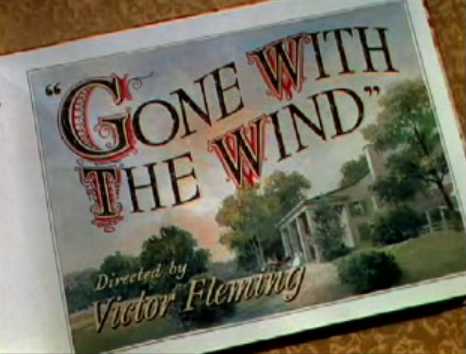
I just want to state here and now that I have never read the book, so this is a critique solely of the film. I watched part of Gone With the Wind for the umpteenth time the other night and was finally able to say without a shadow of doubt that it is a far from great movie. A phenomenon, for sure. A huge undertaking. But a film classic? Hmmm . . .

GWtW is on many lists as one of the best movies ever made.


Voted the number one movie was CITIZEN KANE, Orson Welles' 1941 classic, which he directed, produced, wrote and starred in at the age of 25. The rest of the top ten, in order, are: CASABLANCA (#2), THE GODFATHER (#3), GONE WITH THE WIND (#4), LAWRENCE OF ARABIA (#5), THE WIZARD OF OZ (#6), THE GRADUATE (#7), ON THE WATERFRONT (#8), SCHINDLER'S LIST (#9) and SINGIN' IN THE RAIN (#10).
I actually think #4, GWtW and #5, Lawrence of Arabia are epics and definite must-sees, but both fall short of making it onto my greatest films list. Apart from a few shots of Peter O'Toole in the desert, his eyes the color of the sky and his hair the color of sand and the magnificent score, the rest of the movie is forgotten. There is a difference between a great movie to watch (The Ten Commandments) and whether it also qualifies as a great piece of cinema. At least that's what all those film theory books I read in college said and I agree with. Plus, no Hitchcock in the top ten? Already the list is shot. There are plenty of movies I adore, but only a few of them I think have crossed over into the great art category. Casablanca and Singin' in the Rain definitely.

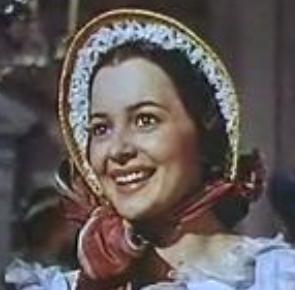
I am not resistant to all of GWtW's charms. There is an amazing crane shot of Scarlett making her way through the thousands of wounded soldiers. Olivia de Havilland gives a truly great performance as Melanie and is the only reason I have toyed with someday reading the book. Clark Gable is Clark Gable, and that is always a good thing. "Frankly, my dear, I don't give a damn." Vivien Leigh does the best she can with a truly impossible character, but her beauty and raised eyebrow can only do so much.

Why am I being so resistant to calling GWtW a great film? Because its plot drags it down, down, down. Underneath all the sets and costumes it is the typical Hollywood romance where men and women do or say impossibly dumb things to keep each other apart for the sake of dragging this thing out for hours (and in the case of GWtW, for hours and hours and hours and hours.) I hate that. Don't get me wrong, much of the movie is fun and entertaining. Scarlett's oblivious cruelty. Rhett's amusement at everything she does (before he marries her). Any scene with Olivia de Havilland. Mammy and the red petticoat. "I don't know nuffin' 'bout birfin' no babies!" But there are also all of the horrible plot points that surround these scenes. Scarlett's stupidity about Ashley & Rhett. The fate of Bonnie Blue Butler. Scarlett's fall down the stairs. Yeesh. Leslie Howard has been great in many things, but apart from looking great in A-1 Hollywood lighting, his Ashley Wilkes is insufferable and it's inexplicable why anyone would want him.


So why does GWtW show up so high on that AFI list? I have to go back to phenomenon. GWtW should be remembered for its box-office power and it's sheer length and ambitions. Hattie McDaniel winning an Oscar. The fuss about selecting its leading lady. But all these things can't help it through those painful scenes while you are actually watching it. At least with a television viewing you can get up and walk away through the dull parts. I remember seeing GWtW in a big theater in New York many years ago, thinking that maybe I'd like it more, experiencing it as it was meant to be, rather than cut up by commercials as I had originally seen it as a kid. Nope, the stuff that I listed above was really the stuff that I liked. The stuff I didn't like I really didn't like. And an intermission was very necessary. It was a test of endurance to view the movie in a theater.

Rather than best film, I prefer how TCM is listing it (and other films)—as an influential classic
7. GONE WITH THE WIND (1939)

If one film epitomizes the Hollywood blockbuster, it's
Gone With the Wind. Made in Hollywood's annus mirabilis, 1939, it remains the most popular film of a sterling crop. Not only has it sold more tickets than any other American made film, but with its box-office adjusted for inflation, it remains the highest-grossing film of all time. Something in the tale of the Southern belle fighting to save her beloved Tara has struck a chord for generations of audiences, from the U.S. of World War II to post-war Europe to Japan in the '80s. Scarlett O' Hara has inspired a legion fiery females caught in the sweep of history, like Nicole Kidman in Cold Mountain and Kate Winslet in Titanic. Gone With the Wind is the definitive producer's film. David O. Selznick defied conventional wisdom to purchase the rights to Margaret Mitchell's novel, personally supervised every detail of the film and spearheaded three years of publicity to raise public interest to a fever pitch. He spent the rest of his life trying—and failing—to top it. And decades of Hollywood blockbusters have drawn on his work to create and sell romantic dreams writ large on the screen.
So will I ever watch GWtW again? Probably. It's impossible not to enjoy watching Vivien Leigh transform from spoiled brat to strong woman of Tara and back again. At least up until Bonnie Blue takes her fateful ride. But when you ask me to compile my greatest films list you'll see Victor Fleming's other film from 1939, The Wizard of Oz, not GWtW. Clark Gable may turn up via It Happened One Night. Vivien Leigh in A Streetcar Named Desire. Olivia de Havilland in A Midsummer Night's Dream or maybe The Adventures of Robin Hood. But that's another post, and a very different list.

Monday, December 14, 2009

rebecca

Probably one of the most well-known openings in fiction . . .

Last night I dreamt I went to Manderley again. It seemed to me I stood by the iron gate leading to the drive, and for a while I could not enter, for the way was barred to me. There was a padlock and a chain upon the gate. I called in my dream to the lodge-keeper, and had no answer, and peering closer through the rusted spokes of the gate I saw that the lodge was uninhabited.
I recently picked up a low-priced reprint of Rebecca. I had never read it before, but was very familiar with Alfred Hitchcock's wonderful film. I was completely and immediately caught up in the lush language and mise-en-scène of Manderley and its inhabitants. I thoroughly enjoyed the book and its twist—it's a bit more complicated, especially morally, than I expected, even knowing the inevitable outcome. The thriller still managed to thrill.


I couldn't help but wonder as I read Daphne Du Maurier's gothic novel, if today's youth would also allow themselves to become immersed in the atmospheric prose. So much of television dialogue is either grammatically incorrect or just plain snark, it seems. Would a kid, age 12 and above be able to get through that paragraph (lodge-keeper, padlock, the concept of a place like Manderley)?

When I was what is now called a tween I was going through my parents' paperbacks like a house on fireeverything from Agatha Christie to Theodore Sturgeon, Ray Bradbury and beyond. Of course I'm no kid now, and it's taken me all this time to run across Rebecca. Maybe I'm worrying unnecessarily. Harry Potter proves that kids have not only intelligence but stamina when it comes to reading a popular series. And J.K. Rowling hasn't dumbed down her prose.

I guess what impressed me most about Rebecca and its no-name heroine was how over-the-top it was in language, plot and drama, while still managing to give the reader a very realistic slice-of-a-very-different-way-of-life. I have always loved old black and white films. People really did live this way. Where the local rich family is thought to be the "head" of the county. Where rituals like tea and dressing for dinner and writing one's letters were the stuff of one's daily existence. Not to mention adultery and murder.

One of the most fun aspects for me in watching films like Hitchcock's Rebecca are the fabulous costumes and how the heroines are always perfectly coifed and put together. I have frequently thought that most women must have become lazy over the years, as no one dresses or grooms themselves like that anymore. But Du Maurier sheds light on the second Mrs. De Winter's life in one quick scene as she marvels during a crisis how the ordinary routines of life continue - the tea table being laid, the tray of cakes and scones, the shoes being set outside the door at night to be polished . . . Of course. Domestic help. Anyone can look perfect if they have someone to polish their shoes each night.


In Rebecca the narrator is always looking in, as the reader is, on a vanished way of life. She watches Maxim De Winter from afar in Monte Carlo, first hearing about him through gossip. After they are married she constantly feels the interloper as she sees traces of Rebecca everywhere - her desk and its accoutrements, her closet and its impeccably kept wardrobe, her dressing table with its immaculate brushes. She is always creating scenes in her imagination of what she thinks has happened, or will happen, as if she is actually a witness, although she is rarely correct or ever allowed to participate. She is a voyeur of her own life, which is why the book leant itself so well to film and undoubtedly why it would have attracted the ultimate voyeur Hitchcock.

If my daughter picks this book up someday and dives in, she will be even a few more steps away from understanding the historical context than I was. But good fiction can still pull you in. And Rebecca is definitely good, haunting, disturbing, enjoyable.

Monday, November 30, 2009

bossa nova

I watched the HBO rock 'n' roll hall of fame special last night and it was a true blast from the past, as it should be. About half-way through I realized that I had seen almost all of the big namers live in concert at one time or another. Which must mean I'm almost as old as these geezers or I used to have a bit of fun. Let's stick with the second choice for now, shall we?

It was an HBO special in the way that the cable channel used to have specials when hardly anyone had cable and the channel was trying to sign people up with the lure of a once-in-a-lifetime event. Every time you thought that the big act on stage must be the finale, another bigger rock legend would hit the stage. I was wondering for a moment when they started talking about Roy Orbison if I should prepare myself for a Lynchian ghost moment, but it turned out to be another Springsteen duo/duet.

I'd like to watch it again and tape parts of it, not all—chacun à sont goût as they say en francais. No offense to Aretha, but her segment gave me time to take a bathroom break, and Annie Lennox, who I love on disc, has never thrilled me live, I'm afraid. In fact, it was when Annie was doing her less-than-amazing thing that it occured to me that I have seen a lot of these folks live.

I saw Annie open for Sting, who I've seen live many times, who played with Stevie Wonder, who I saw at the Obama concert, where I also saw U2, James Taylor, John Legend, Bruce Springsteen and Jackson Browne. Browne I also saw many years ago as a teenager at the No Nukes concert while on a class trip to D.C. Simon and Garfunkle I saw in Central Park and Lou Reed at The Bottom Line. Ray Davies I saw in the same venue, Madison Square Garden, and in much better voice and spirits fronting The Kinks. I saw Mick Jagger in an elevator once...


So not only was it fun to listen to, but I was enjoying my own six degrees of concert bacon, so to speak. I'm not sure if how the concert was edited for HBO was how it was actually performed, as it seemed a little clunky when they brought out Sting once, then again later, and then did the same thing with the Boss. Not everyone always hit the right note every time, but hell, it's rock 'n' roll. Highlights included Sting + Stevie reaching Higher Ground, Bono, Bruce and Patti Smith doing Because the Night, Bruce and Sam of Sam and Dave doing Soul Man and Bruce and Billy Joel having fun being bridge and tunnel doofuses. Hell, it was Bruce's night. I've never been a huge fan, mostly because he comes from my old stomping grounds the Jersey Shore (I was born in Neptune, N.J.) and it was assumed that you were automatically a Springsteen fan at birth. I can't remember a 7-11 wall from my childhood without "Springsteen Rules!" graffiti on it. I've never been much of a joiner, so I tried to avoid that particular fan club. But it's impossible to grow up in Jersey and not know the catalogue, or the names Clarence Clemons, Nils Lofgren, Little Steven, etc. I will admit to loving 10th Avenue Freeze-out. Who doesn't?

So all in all, a good musical time, the Boss included, although I more highly recommend my "director's cut."

Thursday, November 26, 2009

the devil wore Macy's

I recently shared an article on facebook about an owner of a New York restaurant who treated his employees like dogs. A typical restaurant boss, according to my friend Steven. Reading the short article where the guy actually tried to excuse his behavior reminded me of similar New York employment experiences, outside the restaurant field. I have also recently read The Devil Wears Prada, a roman à clef set in the fashion industry, which also brought back less-than-stellar New York employment experiences, which led me to wonder: is it the milieu or the geography that inspires such bad attitude? So Steven, here goes . . .

Every boss is an asshole, at one time or another. It goes with the territory. I've worked for my dad (who drove me nuts), I've even been a boss. There are unpleasant moments. You have to fire people sometimes. Sometimes you're not interested primarily in your employees—your needs come first. But there is something about the fast pace and higher stakes that is life in New York that causes some folks to take such asshole behavior to a whole other level. As if New York and their own ambitions justify—well, just about anything.


When I first got out of art school I purposely avoided jobs that had any artistic bent—I wanted to keep my art pure. A job was just for earning money, making friends, paying the rent. So I mostly worked retail, and in the 80s that meant fun and funky fashion like Canal Jean Co. or Reminiscence. In a job like that you mostly see the crazy boss behavior from afar—temper tantrums, buyers getting chewed out, elaborate lie detector set-ups to reveal a known thief who's part of the boss's family—pretty much Godfather-lite.

A few years later I was experimenting, making movies, so I thought maybe I should try working at a film company. I answered an ad and was immediately hired at Troma Films, home of the infamous Toxie, the Toxic Avenger, if you follow really bad independent film. Critics have always been affectionate to Troma, which I've never quite understood, but I guess it's due to Troma's wholesale embracing (at least on film) of their work's mediocrity. But behind the scenes they were deadly serious—about making money and expanding their empire. The bosses were always freaking out, but it was usually hard to figure out exactly why. It was the first job where a boss made me cry. I have no idea now why he yelled at me or even what he said. All I can remember was that I knew I would quit, because no one had yelled at me like that since I left my father's house, and if I would no longer put up with that from him I sure as hell wouldn't take it from someone who made films I wouldn't ever want to see. I do remember two highlights of that job. I actually was the representative of the company at a film screening of their latest release, Girl School Screamers. The fun part was watching real critics come in and watch the movie, shake their heads in disbelief, and laugh. The not fun part was having to sit through the movie. The other fun memory was a lunchtime screening of a reel of It's a Mad Mad Mad Mad World by a co-worker who collected 35mm reels of really great movies. I never could understand why he stayed, film geekdom aside, as he was at the frequent end of a tantrum. Maybe that sort of behavior doesn't bother some people as much. Maybe they think they have to take it.

The other nightmare boss that comes to mind was a part-time job I took many years later at a downtown legal temp agency. Not a good time. This brand of a-holishness was more indirect, but no less lethal. It became clear after a day or two that the entire staff was completely cowed by it's boss, a woman who was sole proprietor, built the business from scratch (or possibly a payout from a divorce?) I didn't stay long enough to hear too much gossip and she was rarely in the office. She owned an apartment a few doors down, and kept constant tabs on her employees, frequently harrassing and haranguing them on the phone to get more temps placed in more jobs. The girl who was training me one morning covertly wrote down on a company stationery pad that we were being listened to—the boss bugged the office. I was at first perplexed, and then amused by the situation. What purpose did that serve? I imagined her, in her fancy apartment, tied to her intercom system, waiting to hear somebody slack off. Sad. But the girl and apparently other employees were genuinely intimidated, so I guess her tactic was successful. The girl had figured it out one day when she got off the phone and the boss called immediately and ask her an "uncanny" question about the client who had just called. I also remember one of the agents, a jolly sort, who convinced me to rent Glengarry Glen Ross, insisting that I'd love it. I guess he felt he was living it. The end of this job came for me a few days before a Thanksgiving vacation I had planned (and the boss had approved). I was suddenly told the afternoon before I was supposed to leave that I would have to cancel my plans, she'd changed her mind, I would have to work. A display of extreme power. I said no, you already approved it, I have plane tickets, I'm going. She said if you go you're fired. I said fine. Happy Thanksgiving!


This was the job most like The Devil Wears Prada and why I never could have written it. I never would have taken that amount of crap from Miranda Priestly. I have always respected my employers, but will never be abused by one. There is nothing in New York or anywhere else, for that matter, that warrants that sort of behavior. The book had many, many flaws, but it's supreme one seems to me to be how far it falls short of the movie version. This of course has a great deal to do with Meryl Streep, who actually takes the character beyond the petulant, childish behavior I've outlined above and outlines a method to her madness. The movie isn't great, but it has one great scene which almost justifies Miranda's over-the-top behavior. Sadly, the folks mentioned above were neither Meryl Streeps nor even Miranda Priestlys. The devil is in the details.

Sunday, November 08, 2009

is it strange to have a crush on...

...someone no longer alive?
“I got started dancing because I knew it was one way to meet girls”
Last night I was flipping channels and landed on An American in Paris. It has never been one of my favorite Gene Kelly movies, at least I have always told myself that, much preferring Singin' in the Rain. On the Town is always fun, too. But after the kid was long asleep I stuck with it, just past this part or that number that I remembered that I really loved—Embraceable You (just how Kelly holds his shoulders in that dance with Leslie Caron is amazing), Stairway to Paradise, etc. The cap to, and truly, excuse for the entire movie is the spectacular end piece by Gershwin. The concept, costumes and set design to bring to life paintings by Dufy, Rousseau and Van Gogh is wonderful, but my favorite section would have to be the one set in Toulouse Lautrec's Moulin Rouge. Not only has Kelly never looked sexier (except maybe in that fantasy scene from The Pirate), but the lighting and make-up of the extras in the scene are spot-on. Someone did their homework to create art from art. Wonderful.


No offense to his pal Sinatra, but I would have loved to see Gene Kelly in the movie version of Pal Joey, the role he originated on Broadway. Apparently MGM prevented him from appearing in the film due to contractual blah-blah-blah, so we wuz robbed.
“I wanted to invent some kind of American dance that was danced to the music that I grew up on: Cole Porter and Rodgers and Hart and Irving Berlin. So I evolved a style that certainly didn't catch on right awaybut I had some good mentors in New York who encouraged me.”
There is always something a little dark to Kelly—a quality, besides his fantastic form and athleticism, which contributes to his sexiness. The character of Joey Evans in Pal Joey is basically a jerk. In American in Paris Jerry Mulligan is on his way to becoming a kept man, who finally chooses love over fame to run off to an uncertain future with Leslie Caron just in the last few moments of the film. In one of my favorites, It's Always Fair Weather, his character defines cynicism—and tap dances spectacularly on roller-skates. He was the Bogie of movie musicals. Or, according to Kelly:
If Fred Astaire is the Cary Grant of dance, I'm the Marlon Brando.
Musicals are an idealization of the world, and there is something that just brings a smile to one's face when watching someone sing and dance and express the big emotions with all the color, costumes and back-up dancers. Kelly did all that with style, muscularity and intelligence—and he could speak French! Sigh. At least we can still enjoy all that life and energy and dark emotion on film.
I never wanted to be a dancer. It's true! I wanted to be a shortstop for the Pittsburgh Pirates.
Apparently Kelly was also a big New York Yankees fan.

Tuesday, November 03, 2009

...but mad north by Northam...

Jeremy Northam is one of those actors that I don't exactly have a crush on, even though he fits my tall dark and handsome type, but I might as well have. I first saw him in the Sandra Bullock mess, The Net, and if I was flipping channels right now I would probably stick with it long enough to see him in the beginning and then switch away before it all goes to hell, fast.

He has been fantastic in everything I've seen featuring him—The Tudors (his Thomas More was wise, annoying, saintly, heroic—just as I imagined the real man might have been), Emma (a perfect Mr. Knightley), The Winslow Boy (I love this one), Gosford Park (and he sings!), etc., etc. Some resume, huh? There is always a subtle element about his acting, a mystery to the man and the character that I will never quite unravel, which makes me want to watch him again to see if I've got it right. So when a little movie about a "man who thinks he was a dog" called Dean Spanley aired on cable the other day with Northam, Peter O'Toole, Sam Neill and Bryan Brown, I simply had to see it.

Warning: some spoilers follow...

It was the weekend and there was a bit too much talking in the movie at first for my daughter, who was impatient for the dog part of the story to start. When it finally did, and then took some emotional and dramatic twists and turns, I looked over at her and saw her sobbing, at the fate of one of the dogs. Wow. This quirky little movie first bored her and then ripped her heart out. Luckily, the soothing presence of Northam's Fisk Junior and the denouement (and huge hugs and comfort from mommy) helped calm her down.

Dean Spanley is is one of those movies that may appear silly or quiet at first, but by their end reveal something quite a bit deeper. Such a movie reminds us how film, like no other art medium that I have experienced, can take one on an emotional roller coaster, lasting anywhere from a few moments to 2 1/2 hours. My daughter's reaction to the film's ending also reminded me how childhood is a constant ride on that roller coaster—where you can fall in love in a second with a dog in a movie, only to be crushed in the next. Now I know what a betrayal Bambi must have felt to some helpless parent who took their child to see a cartoon in the 40s, only to have them sobbing in the first reel.


Now don't get me wrong, I don't think I should have shielded my daughter from what happened in the movie, or that she should be "protected" from such movies. I do think I should be there to experience it (and the Wicked Witch from The Wizard of Oz or any other scary movie moment) with her at her age. But I am humbled and amazed at how deeply hurt, no matter how transitory, this fictional event was for her. Movies and fairy tales are magic and sinister and wonderful and emotional. It will be interesting to see what affects my sensitive flower next.

Monday, April 20, 2009

movies I'd like to visit, maybe even live there

Hollywood is not really a town, if you've ever visited. Not a town like the small one that some folks come from, or a bigger one, like where I live, here in D.C. But every once in a while Hollywood puts out a movie that takes place in "a small town," just like the ones that we know never really existed, but maybe would like to visit, or at least pretend to live in, for ninety minutes to an hour. And it's clear that the key to the attraction is as much the locals as the remote location.

In Doc Hollywood Michael J. Fox plays his usual smart-ass, this time as a hot-shot doc wanna-be Beverly Hills plastic surgeon who lands smack dab in the middle of the squash capital of the South. After waking to a morning skinny-dipping goddess vision and a pee-in-the-woods mating ritual, he is smitten with the girl, the town and its cast of kooks and so are we. And it's got Woody Harrelson in a good bit part, among others. Anther film with the same small town fish-out-of-water fun is the brilliant Groundhog Day, with Bill Murray reliving a day and getting to know everyone and everything really well until he gets it right. He also is in one of my all-time favorites. What About Bob, where he takes over Richard Dreyfuss's vacation, family and life ably abetted by some helpful neighbors.


Julia Roberts manages to lure Richard Gere from the Big Apple, or is it the other way around, in Runaway Bride? The Maryland town she is supposed to inhabit is full of a bunch of people you'd want to hang out with. Any town that sports Joan Cusack would be worth looking into. There are strange, unexplained details that make you wonder. What's with all the multiples? There are different sets of twins and triplets in many background scenes. Maybe it's something in the water...Housesitter, directed by Frank Oz, is another small-towns-and-romance-go-great-together movie, where Goldie Hawn insinuates herself into Steve Martin's life after a one-night stand. It's interesting, because we watch her fall in love with his house and his life and his family and (most of) his friends and have to wait impatiently for him to catch up. Oz hits another home run with In and Out, which has Kevin Kline slowly but surely discovering his inner homosexual and learning that everyone in town still loves him as much as we do. The final scene where everyone parties down so that his mother can get the "wedding" she always dreamed of is pure fun. And again, Joan Cusack lives there.


Casablanca is a classic, with the magnificent Bogie and an exotic collection of individuals all trying to escape from something. Wartime and romance are major plot points, but as the credits roll, I am secretly glad that Bogie has decided to stay in Casablanca with Louis and fight the good fight. It sure seems like they're going to have a hell of a time.

There are some other excellent movies that have fascinating small towns that I am glad I only have to visit for a little while, as they would be terrifying to live in full-time. Hitchcock must have been fascinated by small-town America, because he depicts it many times, all to sinister effect. Two of my favorite of his movies, Shadow of a Doubt and The Birds turn the safety and familiarity of living in a place where you know everyone on its head, as one town is hosting a serial killer and the other is besieged by unexplained deadly bird attacks. A holiday classic, It's a Wonderful Life, actually shows a town, that no matter how wonderful some of its inhabitants are, would be a pretty rough place to have to live. I'll pass, thanks.

I don't live in New York any more, but once you have, it never quite leaves you. New York is not a small town, but there have been a few film fantasies that somehow manage to get a sense of the city. Guys and Dolls is a real slice of Broadway history, both musical and depicting the sorts of characters that used to hang out near Times Square. A far cry from the Disney theme park that exists there today. And Marlon Brando sings! The Godfather, Part II is a crime classic, but it also gives a slice of what it meant to be an Italian immigrant in this country, coming through New York. Another fun film set in downtown New York is After Hours, the ultimate trip through SoHo in the 80s with Griffin Dunne being dragged from one bizarre situation to the next. Woody Allen is well-known to be in love with his home town New York and has made movies set in the city many times, but as an ex-new Yorker, I don't really get a strong sense of the city, except as travelogue, in his films. Hannah and Her Sisters is one exception, where the SoHo and downtown sequences seem truly "the city," as Michael Caine tries to seduce Barbara Hershey in bookstores, her partner's painting studio, and on the street.

So whenever big city life gets to be a bit much, I know I can retreat to one of these film oases. Any other favorite film fantasy small towns?

Monday, March 30, 2009

one hot Mma

Last night HBO aired the pilot of the new (to the U.S.) series The The No. 1 Ladies’ Detective Agency and for fans of author Alexander McCall Smith's series, of which I am a proud member, it was well worth the wait. The movie captured so much of what is wonderful about the books, including the language, colors and gentle pace of Botswana. What I may have missed just a little, was heroine Precious Ramotswe's (and Smith's) wise and wonderful observations about life, although I missed a bit of the beginning dialogue, as my daughter was so excited by the location and the animals (giraffes! elephants!) Luckily, this is on HBO, so I will get many opportunities to see it again and catch what I might have missed.

Although this show is being reviewed as a detective show, and Mma Ramotswe does indeed unravel some puzzles, that is not what the books or this movie are about. All of Smith's series are concerned with people and life and how we all muddle through it together. In the No 1 Ladies Detective Agency series we are given a slice of what life must be like to lead in Botswana. The values of the "old Botswana" are frequently upheld, with more than a nudge that maybe we could all benefit by re-adopting some of what we seem to have lost in our fast and furious modern world - kindness, courtesy, patience - over a generous slice of raisin cake.

Smith taught law in Botswana, but is now an author full time, and I frankly don't know how he does it. Apart from the No 1 Ladies Detective Agency, he also has other wonderful series of books, two of which I have read, both set in Edinburgh: The Sunday Philosophy Club series and the 44 Scotland Street series. Both have their charms. Isabel Dalhousie is the heroine of the Sunday Philosophy Club and she ponders questions both philosophical and romantic as she explores the finer things that Edinburgh has to offer. 44 Scotland Street is compiled from a series of stories that Smith published in The Scotsman newspaper. The tales follow an assortment of characters who live on the titular street, and in serial fashion we get to follow their exploits. Especially interesting is young Bertie, who has to deal with a smothering mother and the desire to fit in, somewhere.

I saw Smith at a reading here in D.C. a year ago and was delighted to find that he also writes books for children!

A one-man dynamo, surely, his books are not only creating small waves of happiness in the world, but must also be inspiring tourism to Botswana and Edinburgh, as I have added both of those places to my traveler's wishlist - and they were never even on my radar before.

I also just discovered that he has taken the serial novel idea online with his latest, Corduroy Mansions. So excuse me, I've got to get reading!

Tuesday, March 10, 2009

we love Lucy

My daughter has fallen in love with I Love Lucy and I am getting to enjoy all the old shows all over again. It's been a long time since I've seen any of these, and for the most part they still hold up well. Slapstick and people acting silly never really goes out of style. But what was Lucy's strength and what was constantly imitated afterward, was the domestic set-up, the best friends that are always around, and the deep, squabbling relationship that develops between the four main characters. Basically, family.

Everyone remembers Lucy at the chocolate factory, or trying to sell VitaMeataVegamin, or the constant attempts to get into show business via Ricky's night club and beyond. What I had forgotten was how deeply ingrained that flat little world was in my consciousness. Watching the antics in the Ricardos' apartment I realize that really remember it - how it looks, where the bathroom must be, etc. It was a real place to me in childhood. Some of Lucy's classic moments - like when she is forced to tell the truth and all her girlfriends gang up on her and ask all the forbidden questions - how old are you? how much do you weigh? etc., etc., is still a delight to watch, especially as she answers each question and then proceeds to tell each gal what she can't stand about them. Freedom!


After viewing a few episodes that is a new perspective for me about Lucy. She is irrepressible, to the point of dementia and annoyance at times, admittedly, but she has a will that won't be stopped. She is a woman living in the 1950s wearing pants and going where she wants, when she wants, no matter what her Latino husband has to say about it. Of course most of the situations were created for maximum comic effect, but the message is still clear - if Lucy wants to get into the show, get a job, get a new apartment - she will find a way.


The New York location also fed into my childhood desire to get to that city as soon as I could, because that's where everything happens, right? Between Lucy, The Odd Couple and Barney Miller, I was convinced I had it all covered where the big city was concerned. I wonder now, however, if there could be a Mrs. Trumbull in my building, because there might be the occasional night I might want to hit a modern-day Tropicana...

Of course the show is peppered with loads of things that would never be on television today. Lucy and Ricky are constantly smoking. They fight and threaten physical violence. Somehow I don't find these factors too troubling. It's a time capsule. And the music Desi sings and plays is great. Times and mores change, not always for the better. There is something about how the Ricardos and the Mertzes spend their days that I would like to tap into in some way in our modern lives. I don't expect to be donning a Superman outfit for the kid's next birthday, or "soaking up local color" at an Italian winery, but upping the level of silliness is always a good thing. In the meantime, it is fun to watch Lucy and Ethel sing "Friendship" while they tear each other's matching ball gowns apart. It's even more fun watching my daughter giggle while she watches.