Showing posts with label books. Show all posts

Tuesday, December 17, 2019

book to film: the talented mr. ripley

Patricia Highsmith wrote The Talented Mr. Ripley in in 1955. She based it loosely on Henry James’s The Ambassadors (which I now have to add to my to-read list). The lead character, Tom Ripley, proved so popular, that she brought him back for four more novels.
When the reader first meets Tom he is living close to the bone in New York City, subsisting on his “friends,” or running various schemes, including mail fraud. But Tom isn’t really great at his schemes, and he doesn’t like people, and he doesn’t have any true friends, just people he can sponge on. Tom’s prospects begin to look up when he runs into the rich Mr. Greenleaf, the father of an acquaintance, Dickie Greenleaf. Mr. Greenleaf wants his son, who he believes is frittering away his life in Italy by dabbling in painting, to come home, get serious, and work at the family shipping business. Tom exaggerates his friendship with Dickie, and agrees to track him down in the (fictional) Italian seaside port of Mongibello – staked with cash from Mr. Greenleaf.
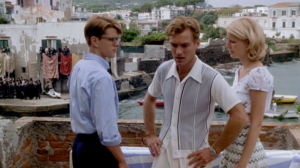
Tom Ripley, (Matt Damon), Dickie Greenleaf (Jude Law), and Marge Sherwood (Gwyneth Paltrow) in the 1999 film The Talented Mr. Ripley
Tom doesn’t seem to have any real desire to fulfill his quest and bring home the prodigal son, but he does head to Mongibello and soon meets Dickie and his friend Marge Sherwood. Marge and Tom take an immediate dislike to each other as Tom tries to ingratiate himself with the open and (initially) clueless Dickie. Tom’s motives aren’t clear, to himself or the reader. His strongest motivating factor seems to be survival and acquiring money. He comes from nothing and is determined to not only be able to live, but live well. Dickie enjoys palling around with Tom at first, as a way to avoid Marge’s not-so-subtle attempts to take their relationship to the next level. In the meantime, Tom has been studying Dickie, to the point of copying his mannerisms and attire. One day Dickie walks into his bedroom to find Tom in his clothes – it is from that moment that their newfound friendship begins to sour. Dickie may not be the brightest bulb on the tree, but he can sense that Tom is not the real deal, not from his side of the tracks.
There is definitely an undercurrent of sexuality to Tom’s obsession with Dickie, which was made more blatant in the 1999 film version, directed by Anthony Minghella, starring Matt Damon (Tom), Jude Law (Dickie), and Gwyneth Paltrow (Marge). I had seen the film years ago and didn’t love it. I will say that Jude Law has never looked better on film. It’s a first-class production, with Philip Seymour Hoffman, Cate Blanchett, and Jack Davenport in supporting roles. I just didn’t find Damon to be very compelling. Ripley may be a cipher, but I felt Damon just played him as a blank space. I rewatched it recently, and it’s better than I remember, but Damon is definitely still its weakest link. There is also apparently a French version of the story, Plein Soleil (Purple Noon), filmed in 1960, directed by René Clément and starring Alain Delon that might be fun to track down sometime.
But back to the book . . . even though Tom bristles at memories of being called a “sissie” and is repulsed by Marge, he seems less attracted to Dickie the man than to Dickie’s lifestyle and all its trappings. Tom is first and foremost a parasite. His love of fine clothes and having money to spend will lead to murder and mayhem as he travels across Italy to escape his past and past identity. Tom Ripley is an anti-hero and sociopath who at times may put off the reader, who may find many of his crimes brutal and unnecessary, but Highsmith is such a gifted writer that she effortlessly pulls us into his thoughts and his fears. Will he avoid capture? Do we want him to? I can’t say I liked Tom Ripley much, but I am looking forward to checking out his further adventures.
p.s. Fleabag’s “Hot Priest” Andrew Scott will be portraying Tom Ripley in a new series, Ripley, on Showtime in 2020. So I have to start subscribing to that channel now?
This post first appeared on Cannonball Read 11

demi moore, inside out


Reading Demi Moore’s memoir Inside Out is like having a seat in the room while she is undergoing therapy. And yoga. And flirting with Bruce Willis. And being abused by her parents. And, strangest of all, not spending much time in Hollywood. But you do get a pretty good picture of her home and life in Hailey, Idaho, which she clearly loves, an oasis she has created for her family and herself.


Demi Moore, Inside Out: A Memoir

Inside Out flows, but it is not exactly an easy book to read. Real pain and trauma is spread throughout its pages. Moore had an extremely difficult childhood, raised by parents (mostly her mother) who at best ignored her, at worst practically pimped her out as a young girl. It is amazing to think how far she has come, considering her rough start. Moore is unflinchingly honest in her revelations and discoveries about her family’s and her own weaknesses. She tends to downplay her own achievements, certainly as an actress, so it is hard for the reader who might want to learn some more details behind how she got her role in Ghost as much as how Joel Schumacher helped her kick her booze and cocaine habit during the filming of St. Elmo’s Fire. She was successful at both, and stayed sober for years. Her substance abuse issues would crop up again later in her life, in her 40s, when she was married to Ashton Kutcher, who apparently enabled bad choices and then chose to look away when things got to be too much for her to handle.
Where Moore allows herself to feel proud of herself and crow a bit are when she talks about her love of being pregnant, a mother, and her love for her daughters. She also toots her own horn a little when she discusses her iconic Vanity Fair (August 1991) cover shoot by Annie Liebovitz, taken when she was seven months pregnant. The cover was quite controversial at the time, and paved the way for women to celebrate their “baby bumps” – wearing more form-conscious fashion, something we take for granted now. Moore also was one of the first actresses to earn $10 million for a single film in Hollywood. She starred in numerous blockbusters in the 90s: Ghost, A Few Good Men, Indecent Proposal, Disclosure, as well as producing If These Walls Could Talk and the Austin Powers movies.

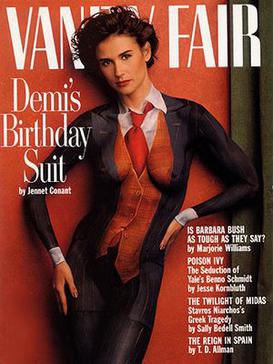
“Demi’s Birthday Suit” Vanity Fair, August 1992

She appeared nude again for Vanity Fair, photographed by Liebovitz, covered in body paint, a year later. The photo was a testament to bouncing back from pregnancy weight as well as highlighting Moore’s intense workout regimen, which was highlighted throughout her movie career, most notably in G.I. Jane and Striptease. Moore describes herself as an obsessive personality, who has not just battled drugs and an eating disorder, but also working out too much, to the point of making herself ill. It is hard to determine how much Hollywood’s fixation with women’s bodies and her own trauma from childhood sexual abuse played a part in her feelings about herself and her body. But she is not afraid to ask the question or try to find the answer.
What might have been the most gossipy part of the book – her relationships with high-profile men like Emilio Estevez, Bruce Willis, and Ashton Kutcher – are less about fun times than highlighting her or their inability to connect. At the end of Inside Out I don’t feel sorry for Moore, but I do feel empathy. And maybe a little hope, as she continues on her path to self-discovery.

This review first appeared on Cannonball Read 11
Tuesday, September 24, 2019

books to film: pal joey and BUtterfield 8

After recently reading Truman Capote's Breakfast at Tiffany's, I decided that I not only wanted to continue with my book-to-film theme, but keep it centered in New York City, too. That led me to John O'Hara's  Pal Joey and BUtterfield 8.

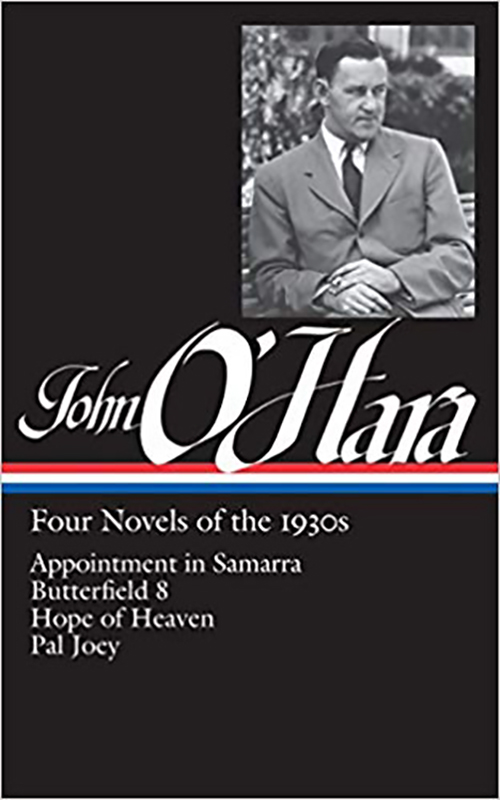
John O'Hara - Four Novels of the 1930s

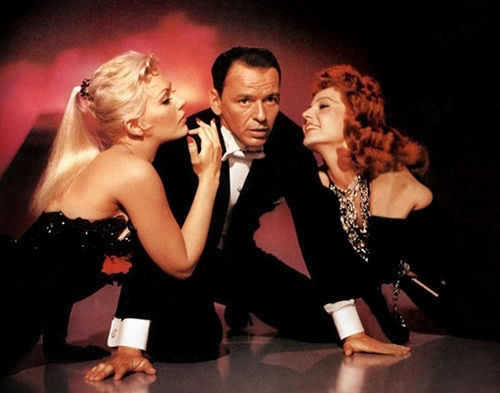
I had heard for years that the 1957 film version of Pal Joey was nothing like the 1940 Rodgers and Hart Broadway musical - Gene Kelly apparently portrayed him as a genuine no-good crumb (as Joey would say). In the film Frank Sinatra isn't exactly an angel, but he has enough of the proverbial heart of gold to win the love of sweet Kim Novak. Not only does the original O'Hara text outline Joey's not-so-nice persona, but it is an epistolary novel, including a series of Joey Evans' missives to his "dear pal Ted." Down on his luck nightclub MC and singer Joey Evans is always trying to get his more successful friend Ted to help him get a job in New York, where Ted seems to be doing very well in his own musical career, but clearly Ted isn't biting. The novel started as a story that O'Hara submitted to The New Yorker, first published in 1938. It was so popular he wrote more and more, until they were compiled published as a novel in 1940. To the delight of the reader, your pal Joey writes like he talks, which, a la Derek Zoolander, is not too good:
Dear Friend Ted
That is if I can call you friend after the last two weeks for it is a hard thing to do considering. I do not know if you realize what has happen to me oweing to your lack of consideration. Maybe it is not lack of consideration. Maybe it is on purpose. Well if it is on purpose all I have to say is maybe you are the one that will be the loser and not me as I was going to do certan things for you but now it does not look like I will be able to do them.
From the 1957 film, Frank Sinatra as your pal Joey with mice Kim Novak and Rita Hayworth

Pal Joey is a mostly funny read. Joey is grasping, but mostly clueless. He does seem to have a pretty good talent for the music and jazz of the time, but his human relations skills are less than zero, especially with the "mice" (Joey's slang for girls) that he encounters along the way. Joey doesn't seem to be doing much better with his career by the end of the novel than he did when it started, which adds to the realism, and even humor of the piece. Joey may have been a heel, but his persona has lived on entertainingly in print, stage, and screen.

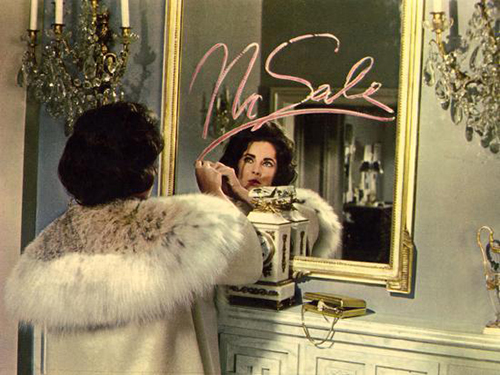
1935's BUtterfield 8 was made into a successful film in 1960, starring Elizabeth Taylor (who won the Oscar for Best Actress) and then-husband Eddie Fisher, right before she went on to make the blockbuster Cleopatra. The story centers on Gloria Wandrous, a young woman who lives her life freely - sleeping with men that she likes, while searching for a meaningful life. Gloria is a complicated person. It is revealed, midway through the novel, that she was a victim of child sexual abuse. She is quite frank and flirtatious with her closest friend, commercial artist Eddie, who seems to be her only true friend. Gloria is getting tired of her itinerant life and believes that she has fallen in love with her latest lover, married man Weston Liggett. But will she be able to get past her malaise and open herself to love and a life with Liggett?

From the 1960 film, Elizabeth Taylor in her Oscar-winning turn as Gloria Wandrous in BUtterfield 8
“On this Sunday morning in May, this girl who later was to be the cause of a sensation in New York, awoke much too early for her night before. One minute she was asleep, the next she was completely awake and dumped into despair. It was the kind of despair that she had known perhaps two thousand times before, there being 365 mornings in a calendar year.”
The book, although interesting to read and progressive for its time, has problems. Gloria is racist and abusive to her mother's black maid as a matter of course. She is the recipient of sexist behavior, which is not surprising, considering the time the story takes place, but that same sexism is also ultimately worked into the plot. Why is Gloria made to "pay" for her choices and behavior while her partner, Liggett, seems to get off scot free? That can happen frequently in life, but did the reader in 1935 accept her fate as unjust or inevitable? Events in the 1960 film may have been depicted as tragic, but seemed equally cliché. BUtterfield 8 seems a precursor, almost a companion story to Breakfast at Tiffany's. The authors each presented interesting, free-spirited women as their protagonists, but in the end, don't seem to know what to do with them.


This post also appears on Cannonball Read 11

Monday, September 23, 2019

i loved laura, except for . . .

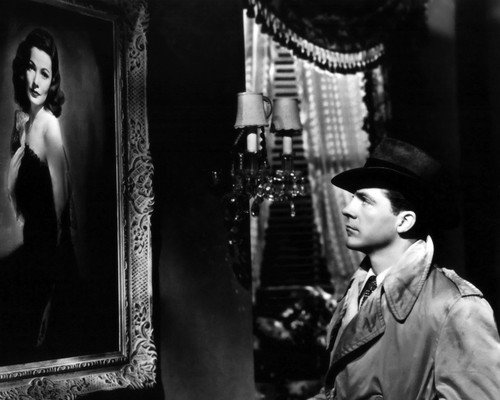
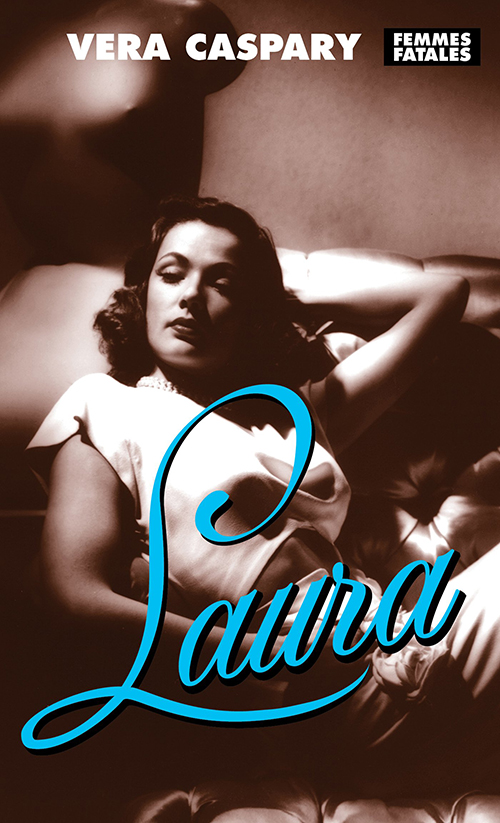
Another book from my personal challenge of reading the source material for favorite classic movies: Laura, by Vera Caspary. This book is a detective noir, as hard-boiled and cynical as any of the genre, but written by a woman. It was originally published, a la Dickens, as a serial, "Ring Twice for Laura," in Colliers Magazine in 1942/43. The  classic film noir, starring Gene Tierney as Laura and Dana Andrews as a detective who finds himself falling in love with a dead woman as he investigates her murder, came out a year later—so Hollywood was right on this as the perfect tale for a hit movie.

Detective Mark MacPherson (Dana Andrews) contemplates a portrait of Laura Hunt (Gene Tierney)

The story is told from the viewpoint of several main characters, including Detective Mark MacPherson, esthete and friend of the deceased Waldo Lydecker, and Laura's unfaithful fiancé Shelby Carpenter. It is up to the reader to piece together the stories about this fascinating woman and race along with Mark to solve the crime. The murder is actually a quite brutal one—ostensibly Laura went to answer her doorbell and was killed with a shotgun blast to the face. The method of the crime is in stark contrast to the glamorous New York City apartments and surroundings of Laura's life as an advertising executive, an impressive job for a young woman in 1942. We learn quite a bit about Mark, Waldo, and Shelby, too. Laura, a romantic thriller, is a great book with great characters, and I loved it - with one major caveat. Spoiler alert—read no further if you haven't seen the movie . . .


Laura, by Vera Caspary

SPOILER:

It is discovered more than halfway through the book that the body of the murdered woman in Laura's apartment was not Laura, so the reader finally gets to meet her and see if other's descriptions of her square with the genuine article. And at first, she does, beautifully. She is honest, earnest and even shows some interest in Mark, so things seem to be going quite smoothly to a romantic finish—as long as Laura isn't the murderer. But the real problem for me is that Caspary has Laura casually drop the "N" word in conversation and it completely soured my interest in her character. I understand that such casual racism was probably quite common in the 1940s, but . . . yuk.

I did a little research on the author, who led a quite interesting life, but found no clues as to her thoughts about race. She dabbled in Socialism and Communism, even going so far as visiting Russia to see if the country lived up to her expectations. She lived openly with her married British lover for years before finally marrying in 1948. She led an unusual life, like her protagonist, for a woman of the time.

Apparently the publisher of this reprint series, actually subtitled Femmes Fatales, and published by The Feminist Press at CUNY, didn't see any reason to add an editor's note about Laura's outburst. It's a single, strange event that happens and never occurs again in the text, by her or any other character.
Sigh. It's best to be honest about our past to go forward into the future. This is not the only instance of racist language that I have encountered in my recent book-to-film adventures. So far the 40s and 50s American popular literature is proving quite problematic.

This post also appears on Cannonball Read 11

Sunday, September 22, 2019

the uninvited: ghosts like us

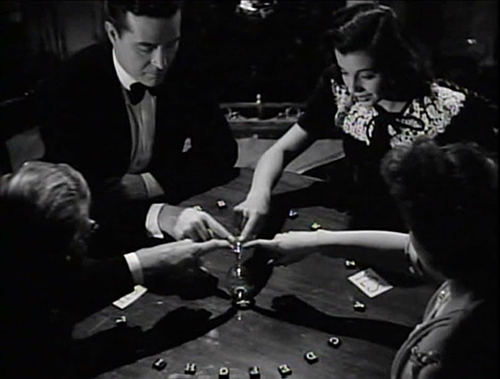
I love old black and white movies, especially mysteries and horror movies. I was watching one of my all-time favorites, The Uninvited, a ghost story starring Ray Milland recently (it's a really superior film - I highly recommend it if you've never seen it) and I started to wonder where the idea for the movie had come from. Was it an original screenplay? A short story? A novel? A quick internet search revealed that the film, directed by English director Lewis Allen was based on a 1941 novel written by Irish author Dorothy Macardle. If I had these idle thoughts a few years ago I would have been out of luck, as the book had long been out of print. But luckily The Uninvited, or as it was originally titled in Britain, Uneasy Freehold, is now available in a reprint paperback, and even luckier, it is also a great ghost story in print.


Siblings Pamela and Roddy Fitzgerald (Ruth Hussey and Ray Milland) suspect they might not be alone in their new home

Brother and sister Roderick (Roddy, played by Ray Milland in the film) and Pamela Fitzgerald (played by Rich Hussey in the film) are on their way back to London from Devon (Cornwall in the film) when they are drawn to an old, abandoned house on the side of a cliff. The house is in great condition and unbelievably inexpensive. The pair decide to buy it and leave the city for the country. They soon discover the reason why it's a bargain. The house, called "Cliff's End," has a reputation for strange sounds and occurrences. The siblings try to unravel the history of the house and soon discover it may be centered around their lovely neighbor, Stella Meredith (Gail Russell in the film).


Trying to contact their uninvited guest

The film version definitely streamlined some of the characters (most notably, Dr. Scott), but it is as subtle and full of dread as its source. What struck me the most was how people talked to one another. People were just so much more polite and refined in their language. There is nothing stuffy about how these characters speak, they come across as very real people, they're just . . . more willing to listen to one another? The book is good at presenting how the average person might deal with a supernatural experience, and what it might really mean when you've sunk all your savings into a haunted house.
The Uninvitedhas compassion for its protagonists and even its ghosts. A great read.

This post also appears on Cannonball Read 11

fire & blood: blah, blah, blah, blah, blah…

I loved Game of Thrones from its very first episode. I was as shocked as any non-reader of the series at its Psycho-like twist in its penultimate first season episode. As soon as I could I grabbed a copy of the first novel. I read the rest and watched the series rush to its inevitable conclusion. I wasn’t as put off as some folks by plot turns that I felt I had seen coming, or at least had been hinted at as very possible outcomes. During the course of the show I probably even thought that some background of the dragon-loving Targaryan clan might be interesting to read. Boy, was I wrong about that. Fire & Blood, George R.R. Martin’s “history” of the Targaryan clan is a long, long, long read, and not a very good one. And to top it off, in typical GRRM fashion, this doorstop of a tome doesn’t even take us to the era of the television Targaryans. There’s another book to come, I fear. Or maybe even more than one. But they won’t be read by me.

To be fair, there were a few episodes, mainly about female Targaryans, in Fire & Blood that were fun stories, engaging the reader in classic GoT form. But they are surrounded by so, so many lists of characters with funky names and genealogies that even the invested GoT enthusiast can’t be expected to remember or care about any of them. After slogging through this mess of a book I’m not sure anymore what GRRM is up to. Does he have an editor? Does he want to even finish his unfinished GoT book series? Does it even matter? With an HBO prequel and teased additional GoT universe adaptations in the works maybe he has lost interest. I would suggest that he pick up a copy of Malory’s Le Morte d’Arthur and do a re-read. I’m sure that tale of King Arthur and his knights and their ladies was one of his original inspirations for GoT. It is an entertaining, at times sexy and bloody medieval saga. It has everything that the first GoT novel had, with no filler. It is not a boring history, like Fire & Blood, either.


Fire & Blood’s best feature are illustrations by Doug Wheatley


This post also appears on Cannonball Read 11

Saturday, December 01, 2018

favorite movie #96 - holiday edition: how the grinch stole christmas!

Picking up with my favorite movies list, just in time for the holidays ... Let's see if I can come up with 25 ... I'm giving myself a little leeway here, as I'm allowing TV specials as well as feature-length films. It's my list, my rules, so there.

Favorite movies that have had an impact on me - #96 - How the Grinch Stole Christmas! (1966) - This is the only Grinch as far as I'm concerned. The narration by Boris Karloff, the animation by Chuck Jones (inspired by its Dr. Seuss source), the vocals by Thurl Ravenscroft and songs by Albert Hague — all perfection.


You're a mean one, Mr Grinch
You really are a heel
You're as cuddly as a cactus
You're as charming as an eel
Mr. Grinch!
You're a bad banana
With a greasy black peel!


You're a monster, Mr. Grinch!
Your heart's an empty hole
Your brain is full of spiders
You've got garlic in your soul
Mr. Grinch!
I wouldn't touch you
With a thirty-nine-and-a-half foot pole!


You're a vile one, Mr. Grinch!
You have termites in your smile
You have all the tender sweetness
Of a seasick crocodile
Mr. Grinch!
Given the choice between the two of you
I'd take the seasick crocodile!


You're a foul one, Mr. Grinch!
You're a nasty, wasty skunk!
Your heart is full of unwashed socks
Your soul is full of gunk
Mr. Grinch!
The three words that best describe you
Are as follows, and I quote
"Stink, stank, stunk!"


You're a rotter, Mr. Grinch!
You're the king of sinful sots!
Your heart's a dead tomato
Splotched with moldy, purple spots
Mr. Grinch!
Your soul is an apalling dump-heap
Overflowing with the most disgraceful
Assortment of deplorable rubbish imaginable
Mangled-up in tangled-up knots!


You nauseate me, Mr. Grinch!
With a nauseous super naus!
You're a crooked jerky jockey
And you drive a crooked hoss
Mr. Grinch!
You're a three-decker sauerkraut
And toadstool sandwich
With arsenic sauce!

Lyrics by Theodor "Dr. Seuss" Geisel, Music by Albert Hague


Link to Christmas: What's more Christmassy than the Grinch?

Wednesday, November 14, 2018

madness, illness, grief, and the haunting of hill house

Beware of mild spoilers ...

I recently finished watching The Haunting of Hill House on Netflix. But it is still with me. It was at times an uncomfortable watch, but it also may be one of the best things I've seen in a long time. It can't really be called an adaptation of the immortal Shirley Jackson novel. That classic book could be considered more of a jumping-off point for this, an original, deeply-felt horror story.


The original novel, first published in 1959, concerns a group of disparate people who have come together to study a house with a bad, even evil reputation: the organizer of a paranormal study, Dr. Montague; Luke, a descendant of the original owners of the house; Theodora, who seems to have run out of fun things to do and is there on a lark or a dare; and the fragile Eleanor, who is ready for something, anything, to happen in her life. The house's only two caretakers, a cook and her husband, adamantly refuse to stay in the house after dark — if only the quartet paid closer attention to that fact ...

Jackson's prose is poetic, and helps to weave a spell around the characters and the reader as they follow Eleanor through the halls of Hill House.
No live organism can continue for long to exist sanely under conditions of absolute reality; even larks and katydids are supposed, by some, to dream. Hill House, not sane, stood by itself against its hills, holding darkness within; it had stood so for eighty years and might stand for eighty more. Within, walls continued upright, bricks met neatly, floors were firm, and doors were sensibly shut; silence lay steadily against the wood and stone of Hill House, and whatever walked there, walked alone.
The mini-series uses many of the same character names but makes them a family — a family held together, but also blown apart, by grief and madness. Interesting moments in the book are given a new twist on film.


Eleanor looked up, surprised; the little girl was sliding back in her chair, sullenly refusing her milk, while her father frowned and her brother giggled and her mother said calmly, "She wants her cup of stars."
Indeed yes, Eleanor thought; indeed, so do I; a cup of stars, of course. 
"Her little cup," the mother was explaining, smiling apologetically at the waitress, who was thunderstruck at the thought that the mill's good country milk was not rich enough for the little girl. "It has stars in the bottom, and she always drinks her milk from it at home. She calls it her cup of stars because she can see the stars while she drinks her milk." The waitress nodded, unconvinced, and the mother told the little girl, "You'll have your milk from your cup of stars tonight when we get home. But just for now, just to be a very good little girl, will you take a little milk from this glass?" 
Don't do it, Eleanor told the little girl; insist on your cup of stars; once they have trapped you into being like everyone else you will never see your cup of stars again; don't do it; and the little girl glanced at her, and smiled a little subtle, dimpling, wholly comprehending smile, and shook her head stubbornly at the glass. Brave girl, Eleanor thought; wise, brave girl.

No Human eye can isolate the unhappy coincidence of line and place which suggests evil in the face of a house, and yet somehow a maniac juxtaposition, a badly turned angle, some chance meeting of roof and sky, turned Hill House into a place of despair, more frightening because the face of Hill House seemed awake, with a watchfulness from the blank windows and a touch of glee in the eyebrow of a cornice.

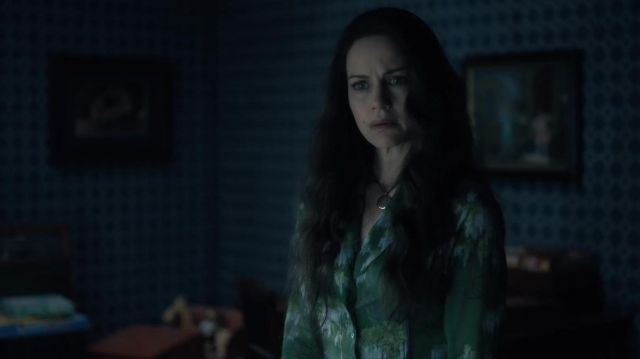
Carla Gugino is amazing as Olivia

Timothy Hutton as Hugh Crain: family together, yet apart
The best horror is based on real-life fears. Slasher and vampire movies are tied to sex. Zombies and ghost stories to death. But The Haunting of Hill House mini-series takes a scary-enough-on-its-own ghost story and ups the ante by becoming a meditation on madness, illness, and grief.

Art provides one of the best outlets for grief and loss. When my father died in 1993 I was drawn to Sting's 1991 album, The Soul Cages, where many of the songs touched on what he had experienced after his own father died. Comedy movies that we had shared together while he was alive, like 1991's What About Bob, were also a balm. My mother died two and a half years ago and I am still struggling to come to terms with what that means and what it is like to live in a world with such a vast void — the invisible wall between life and death that my parents represented is now gone forever.

My mother had dementia, so it was a slow, heartbreaking decline to at first care for, and then helplessly witness. As I watched The Haunting of Hill House I recognized so many of my own feelings on display by the Crain family siblings — fear, grief, guilt, even loathing, of family members' conditions — possible madness, drug addiction, suicide. In this version Hugh and Olivia Crain (Henry Thomas and Carla Gugino) move their young family of seven into the dilapidated Hill House on the early 90s — with hopes to refurbish and flip it and make their own family fortune. But Hill House seems to already be inhabited — by ghosts — who menace the family — especially its youngest and most vulnerable inhabitants, the twins Luke and Nell. The story flashes forward to the present, and the estranged adult siblings and their father (Timothy Hutton) who are haunted by that summer and what happened there.

The Haunting of Hill House plays with truth and belief. If you look closely, there are things that live in the shadows — or are there? Are we watching the fractured break-down or haunting of Olivia? There are hints that her madness was already there — the way she doesn't seem to notice or react to her children being terrorized — but how one reads that behavior can depend on one's own perspective or reading of the story. Like a Choose You Own Adventure book, I think the filmmakers have left interpretation open-ended for the viewer. Shirley Jackson treated Eleanor in a similar fashion. Did she see what she thought she saw?

Shirley Jackson's book was also brilliantly and faithfully adapted in 1963 as The Haunting, starring Julie Harris as Eleanor
For me The Haunting of Hill House is a powerful meditation on illness and grief. And hope. Olivia's illness and death may have splintered, even destroyed her family for a time. But when they go back to revisit Hill House and the events that led to her death they are also able to close that chapter of their lives and move on. There is light to be found in the shadows of grief. There is life after someone's death.

All quotes from The Haunting of Hill House, by Shirley Jackson, 1959.


This post also appears on Cannonball Read 10

Saturday, October 20, 2018

just in time for halloween ... walk at night ... my new graphic novel

Just in time for Halloween ... My new graphic novel, Walk At Night, is now available on Amazon and Kindle!

Walk at Night


This is my THIRD book — check it out!

"Walk At Night is a modern love triangle with an old-fashioned twist of horror."

Also available:

Alice and Johnny and Sex and Violence and Bob

Unfinished: A Graphic Novel of Marilyn Monroe

Wednesday, October 10, 2018

and then there were satanists ... the legacy

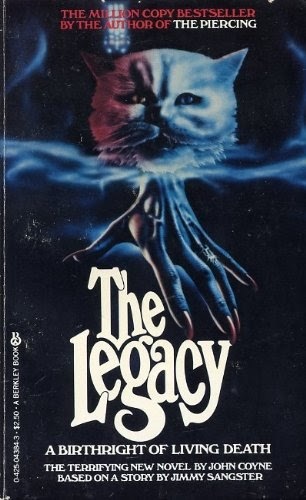
The Legacy, by John Coyne, is a mixture of an Agatha Christie whodunnit, as members of a house party are knocked off one by one, and an occult thriller. It's not always clear how much of the menace is due to dark magic or just plain old greed, as six people have been elected to inherit a legacy — of vast wealth, property, and possibly, supernatural power. Coyne wrote the novel as a tie-in to the successful film starring Katharine Ross and Sam Elliot (and The Who's Roger Daltrey in a small role). He wrote a number of other horror novels before switching to golf novels, which is his current genre.

I liked the film when I saw it as a kid, so thought I'd give the book a try. It's a good read for a few spooks and thrills, but much of it seemed very dated — especially how the relationship between the main couple, Maggie and Pete (Ross and Elliott in the film) is handled. It was hard not to roll my eyes while Pete took fragile Maggie in his strong arms again and again. I remember Katharine Ross being pretty kick-ass and spunky in the movie, so I put those scenes down to the author's own attitudes about the sexes and their roles. There were a few occasions where Coyne could have added some more background, as to why Maggie and Pete found themselves at an English palatial estate, and how Maggie's family tree might be a factor. But after one fevered dream sequence that Maggie has halfway through the book, he seemed to drop it.

So, honestly, there is not much to be gained by reading the book versus seeing the original film, which is just some cheesy fun (complete with a Sam Elliot shower scene — bonus). That's the way to go, in my opinion.


Novelization or film? Film all the way. Plus, it's fun to watch these two fall in love (and they're still together 40 years later!)

Wednesday, October 03, 2018

wonderful, lyrical, practical magic

I saw the movie Practical Magic with Sandra Bullock and Nicole Kidman quite a few years ago. It's one of those movies that I wanted to be better than it was — it seemed to have so much potential, but it just didn't work, even with the wonderful Aidan Quinn as Bullock's love interest.

I have been in the mood lately, Halloween coming up I guess, to read some witch-related books, so even though I didn't love the movie I had heard good things about the book by Alice Hoffman, so I thought I'd give it a try. I am so glad I did. The book is, from start to finish, a delight. Hoffman tells the story of Sally and Gillian Owens, two orphan sisters that are raised by their eccentric aunts in a wonderfully creaky old family home in Massachusetts. Their aunts, and the girls, too, are looked on with suspicion and fear by their neighbors — but that doesn't stop the townswomen from showing up at their kitchen door night after night in search of a charm or something that the old ladies can brew up to help their love lives. All through their childhood Sally and Gillian eavesdrop on these goings-on with fascination, while also realizing that this might not be the best atmosphere to grow up with a healthy view of romantic relationships ...


Hoffman's prose is lyrical, and the girls, their aunts, and all the other characters are wonderfully depicted. I really didn't want it to end. The good news is that Hoffmann recently published a "prequel," The Rules of Magic, centered around the aunts in their youth. Looking forward to reading that next. She also has a book written about the mother of painter Camille Pissarro, who was the mentor of the French Impressionists — The Marriage of Opposites. That sounds great, too.

Tuesday, October 02, 2018

it was a pleasure to burn - fahrenheit 451

The kid is in high school now, and although her getting older must mean that I, too, must be getting older (yikes!), there are a few perks. One of them is getting to watch her discover things, like some great books that I read when I was around her age. First up is Ray Bradbury's Fahrenheit 451, a dystopian masterpiece. The story of a society, perhaps our own, that has decided that the ideas included in books are dangerous, seems eerily prescient. The floor-to-ceiling view screens that most of society, including the protagonist Guy Montag's wife Mildred spend their days and nights glued to easily double for our large-scale flat screen televisions, tablets, and smart phones. And "The Family," the drivel that appears on the screen every day is simply reality television and YouTubers. Fahrenheit 451 was first published in 1953. Montag is a fireman, whose job it is to burn books, but is growing increasingly disillusioned with his job and his place in society.

I listened to the audiobook version, narrated by Tim Robbins. He did a good job with the voices, and seemed to especially have fun voicing Mildred. Maybe it was hearing the book out loud, but  I was struck by how poetic Bradbury's prose sounded, how rhythmic. I'm looking forward to introducing my daughter to some more Bradbury (and re-reading some myself). I'm impressed with this book as a first choice. I wonder what she will be asked to read next ...


BTW — If you are interested in seeing a film adaptation of the novel, please avoid at all costs the recent HBO "adaptation" of the novel. It shared the title, but not much else. A huge disappointment. The Francois Truffaut film, starring Oskar Werner and Julie Christie, from 1966, is the way to go.

Monday, September 17, 2018

the truth about cats and werewolves

I've been in the mood for classic horror paperbacks lately. I recently read Whitley Strieber's Hunger trilogy and liked the first book, so thought I'd try two more of his earlier works. His first book. The Wolfen, was written in 1978. It follows two New York City police officers, Rebecca Neff and George Wilson, who try to solve a seemingly unsolvable case — the brutal attack of two fellow officers. All the signs seem to point to an animal attack, but not just any ordinary animal. The book is fast-paced, and for the most part a great read. Strieber tries to force an uncomfortable and implausible romance between Neff and Wilson. This was handled much more smoothly and believably in the movie version of the book starring Albert Finney in 1981. That movie, although with some changes, like bringing in a Native American mystical element, helped underscore the book's commentary on the state of the city — especially the burned-out Bronx and other abandoned areas and their homeless populations. Disposable people can easily become prey. But I really did enjoy the book, especially the sections where the reader gets to follow the wolf pack and get into their heads.


Albert Finney in Wolfen
Finney and Gregory Hines
Finney gets up in the world to talk to Edward James Olmos, with the WTC (sniff) in the background
In 1986 Strieber released Catmagic, an interesting take on Wicca. It must have seemed quite strange at the time. Reading it today, some of the actions of the coven seem quite benign, and their rituals not that far from your average Renaissance Faire. But of course Strieber takes it to another level, mixing (not aways successfully) the white magic of the coven and the not very benign scientific efforts of a messed-up doctor to stop a life and then bring it back — a la Frankenstein. Add to the mix a perverted evangelical  preacher and things really get crazy. And did I mention the huge black tomcat who just might be an agent of Death? As wacky as things get, the book is never boring and there were some sections I liked a lot.


Previously published on Cannonball Read 10

a book series from hunger

Whitley Strieber wrote The Hunger in 1981. It was his second novel and featured Miriam Blaylock, a glamorous female vampire, her current companion John. A third side to the triangle is a brilliant young doctor, Sarah Roberts, whose research may provide an answer to Miriam's immortality and what it might mean to the human race. The book was memorably made into a sexy, campy feature film by Tony Scott in 1983 with Catherine Deneuve, David Bowie, and Susan Sarandon as the trio. What makes The Hunger different from other vampire novels is how Strieber presents a scientific approach to vampirism — the answer to what makes Miriam different might be in her blood, and therefore could possibly be harnessed in the lab somehow. The day-to-day practical aspects of being a vampire — how to select victims, what to do with the bodies after feeding — are presented as a way to plausibly insinuate that vampires have been successfully and glamorously operating in the shadows of our society from time immemorial.

Miriam is a fascinating creature. She views humans as her food source, but she is also obsessed with their talents and inventions — music, poetry, painting, design. She is also extremely lonely. She periodically creates a companion by giving them the "gift" of her own blood through transfusion. Their ability to stay young "forever" alongside her is only temporary, however, as John is finding out. After 200 years or so they begin to age — rapidly. Could Sarah Roberts help Miriam halt this deterioration? And what is up in the attic of her fabulous Sutton Place brownstone?


David Bowie and Catherine Deneuve in The Hunger (1983)
There is nothing wrong with an author revisiting an old theme, as Stephen King has proven with Doctor Sleep. But it is imperative that the author respects the memories of their readers, and at the very least goes back to re-read their original novel as a refresher. Unfortunately this is not the case with Strieber's two follow-ups to The Hunger. Twenty years after the first novel can out Strieber decided to revive Miriam and her world in The Last Vampire, in 2001. Not only did he either fudge or completely forget what happened in the original novel, including stories of Miriam's origin, but he introduced a third character, intrepid vampire hunter and CIA operative Paul Ward, a truly annoying character. Ward's age doesn't seem to compute — visual and anecdotal clues seem to suggest he's in his 40s, but his behavior at other times seems much older, and then, later, during some truly bizarre sexual encounters, much younger. Plus, he doesn't seem to do any detecting at all, but just ends up right where he needs to be most of the time. Science had been thrown out the window this time around. There is no interest on how or what vampires exist or what they might have to teach us, but just kill or be killed. Strieber's second shot at Miriam isn't much better. The brilliant, elegant, and overly cautious vamp (how else did she survive all this centuries?) is no more. She seems to do one stupid thing after another, and in the last third of the novel is presented as a nubile young woman who is running a downtown sex club in New York City who is just hungering for a vampire baby? Yikes.

Things don't get any better in the third, and one can only hope final book in the series, Lilith's Dream, which came out in 2002. Miriam was still alive at the end of The Last Vampire, but Strieber seems to have forgotten that. This book instead follows an uber-ancient vampire, Lilith, who may have ties to the Old Testament. But who knows? And guess who's back — Paul Ward, going off half-cocked across the world in search of this creature.

If you run across any of these books I highly recommend The Hunger. The other two you would be better off skipping.

First published on Cannonball Read 10

Tuesday, September 04, 2018

this perfect day, this perfect society?

This Perfect Day, by Ira Levin

Wow, This book. I had never heard of it before, but I am a completist, and I have been reading a lot of Ira Levin lately. I found this copy at a used book store. But I don’t think I’ll be trading it back. I might like to re-read sometime.

This Perfect Day was first published in 1970, but the dystopia depicted in the novel may sound eerily familiar. The story follows Chip from the age of about 6 until around 37 or so. He has been born into a world that is controlled by one large, global computer system, Unicomp. Uni, as members of the Family (citizens) like to call it, takes care of everything. Food has been simplified to something called total cakes, and everyone drinks Cokes. The world population is controlled – Uni decides if someone can procreate. They are also controlled through drugs, which inhibit disease as well as the growth of facial hair in men and breasts in women. There are only four names for men (BobJesusKarl and Li) and women (AnnaMaryPeace and Yin). These names are derived from the four “engineers” of this society, Bob Wood, Jesus Christ, Karl Marx, and Wei Li Chun. Members all have “namebers,” long strings of their names, birth year, etc. Chip’s (a nickname given him by his grandfather) nameber is Li RM35M4419. Members are also only allowed to live to the ripe old age of 62.

Family members are indoctrinated into their society from an early age through playground rhymes:
Christ, Marx, Wood and Wei,
Led us to this perfect day.
Marx, Wood, Wei and Christ,
All but Wei were sacrificed.
Wood, Wei, Christ and Marx,
Gave us lovely schools and parks.
Wei, Christ, Marx and Wood,
Made us humble, made us good.
What makes the story exciting is how Chip struggles with his lot in life and his attempts to break out of his state and his various backsliding into conformity. The sheer size of Uni is definitely 70s-era, which will amuse folks in the iPhone era. There are also some strange attitudes about sex, although that’s just as much a part of the Family as it is the time it was written. This Perfect Day is definitely a good, sometimes fascinating read, in the tradition of Fahrenheit 451 and 1984. And modern readers can’t help but relate to the prevalence of mind numbing drugs and a government who thinks it knows what’s best to keep its citizens distracted and placated.

Originally published on Cannonball Read 10

Thursday, April 19, 2018

still in the mood for thrillers

Here are some recent reads:

And Then There Were None, 1939, by Agatha Christie

This one is unlikely to be reimagined by Kenneth Branagh, but you never know. And Then There Were None is one of Christie's grimmest, and most famous tales. Due to its original title, it is also one of her most controversial. Christie loved to use nursery rhyme references in her book titles, and this book actually incorporates an entire rhyme in the book as a twisted framework for a crime:

Ten little Indian boys went out to dine;
One choked his little self and then there were nine.
Nine little Indian boys sat up very late;
One overslept himself and then there were eight.
Eight little Indian boys travelling in Devon;
One said he'd stay there and then there were seven.
Seven little Indian boys chopping up sticks;
One chopped himself in halves and then there were six.
Six little Indian boys playing with a hive;
A bumblebee stung one of them and then there were five.


Five little Indian boys going in for law;
One got in Chancery and then there were four.
Four little Indian boys going out to sea;
A red herring swallowed one and then there were three.
Three little Indian boys walking in the zoo;
A big bear hugged one and then there were two.
Two little Indian boys sitting in the sun;
One got all frizzled up and then there was one.
One little Indian boy left all alone;
He went and hanged himself and then there were none.

["Ten Little Indians" - based on "Ten Little Injuns" written in 1868 Septimus Winner to be performed in minstrel shows]

Ten people, strangers to each other, are invited to a remote island for a holiday weekend. Once there they are each accused of a crime, a murder, for which they had never been charged. As one after another guest is found dead, paranoia reigns, as the remaining people on the island suspect one another and fear for their lives.


And Then There Were None could be viewed as the precursor of modern horror movies, where each character is bumped off in succession. It was also spoofed in the classic comedy film Clue. The book, although ingenious, is a bit of a downer. Clearly even Christie thought so herself, and changed the ending when she adapted her novel into a play in 1943. That ending is followed in the 1949 film version of the tale, And Then There Were None, directed by Rene Clair (which I recently viewed and liked on Amazon Prime). I prefer that take on the story, although a more by-the-book adaptation was recently filmed in 2015, starring Aidan Turner.

Deathtrap: A Thriller in Two Acts, 1978, by Ira Levin

Continuing my Ira Levin binge, my local library had Deathtrap: A Thriller in Two Acts. I had only seen the movie version, starring Michael Caine and Christopher Reeve. Maybe taking a nod from Ms. Christie, there is really no innocent person in Deathtrap. A twisty-turny puzzle of a play, Deathtrap centers on playwright Sidney Bruhl, whose last play was a huge flop, and who seems burnt out, humiliated, and out of ideas.


A draft of a play is sent to him by a former student, and a diabolical light bulb goes off over Sidney's head ... as he tells his wife, Myra, "It is a thriller in two acts. One set, five characters. A juicy murder in Act One, unexpected developments in Act Two. Sound construction, good dialogue, laughs in the right places. Highly commercial." Levin has a ball winking at the audience, and the play, written in 1978, was deservedly a big hit on Broadway. It reads well, too.

Button, Button: Uncanny Stories, 2008, by Richard Matheson

This is an eclectic collection of stories by the author of What Dreams May Come and Stir of Echoes. The title story has been adapted twice - as a Twilight Zone episode and a feature film, The Box. I have yet to see either one, but I liked the story, which features a fun and creepy twist ending. Another of the stories in the book, "Dying Room Only," is a great, tense read, but may discourage the reader from ever stopping again at an out-of-the-way spot to grab a bite while on a road trip. Most of the stories were written and published previously in the '60s and '70s. They are a bit of a mixed bag - some good ("Clothes Make the Man"), some humorous, some dated ("The Creeping Terror"), some some just strange ("A Flourish of Strumpets," "'Tis the Season to Be Jelly"). Button, Button is a diverting read, but makes me wish the library had I Am Legend or Hell House instead.

By the Pricking of My Thumbs, 1968, by Agatha Christie

Agatha Christie's most famous detectives were Hercule Poirot and Miss Marple. But she also wrote five books featuring the detective couple Tommy and Tuppence Beresford. They met in The Secret Adversary (1922), were married in the collection of short stories Partners in Crime, on the track of German spies during WW2 in N or M? (1941), were retired with grown children in By the Pricking of My Thumbs (1968), and elderly in the last novel she wrote, Postern of Fate (1973).


In By the Pricking of My Thumbs the Beresfords visit Tommy's elderly Aunt Ada in a nursing home. While Tommy is with his aunt, Tuppence meets a strange old lady, Mrs. Lancaster, in the common room, who points at the fireplace and asks her, "Was it your poor child?" The next time they visit the home Aunt Ada has died and Mrs. Lancaster has disappeared.

The title comes from Shakespeare's Macbeth: "By the pricking of my thumbs, Something wicked this way comes." She is not kidding. This is one of Christie's creepier mysteries. It is also, like its writer and her detectives, a little bit older and unfocussed. But there are enough thrills and a truly sinister ending to make this book not one of her greats, but definitely worth a read.

speaking of mustaches ...

I have been into thrillers lately ...

Murder on The Orient Express, by Agatha Christie, 1934

I had to re-read this classic Agatha Christie novel after recently seeing the Kenneth Branagh movie version. I have always been a huge fan of David Suchet and his version of Christie's most famous detective, Hercule Poirot. I was initially horrified at the promotional photos of Branagh's take on the inimitable Belgian's famous 'stache, but I actually enjoyed his lively take on the character. Maybe some of that enthusiasm carried over when I was reading the novel, which is not as smooth or fast-paced as its many screen versions. But I found myself not getting caught up in Christie's clues and red herrings (a dropped pipe cleaner, monogrammed handkerchief, etc,) and instead enjoyed his conversations with a train full of suspects and his unique take on the solution of the crime.

Can Branagh's Poirot and his magnificent mustaches solves the case?

The Mystery of the Blue Train, by Agatha Christie, 1928

Christie didn't just set one murder on the famous and luxurious Orient Express, or Blue Train, as it was sometimes called. Poirot shows up about halfway through the book, written before Murder on The Orient Express. The mystery features plenty of adultery and romance, centering on a married couple who are both involved with other partners. Christie is said to have not liked this book, but that may be because she was writing it both before and after her infamous disappearance and the dissolution of her first marriage. Whether she liked it or not, Poirot is at his most charming - flirting with young ladies on the Riviera while he tracks down a murder and solveds the disappearance of a famous ruby known as the "Heart of Fire."


Agatha Christie, by Mary S. Wagoner

This is an O.K. biography of Agatha Christie. The author gives a brief biography of her life, leaning heavily on Christie's own autobiography for the majority of her quotes. Readers who are not familiar with all of the author's intricately plotted books might want to steer clear of this one, as major plot points and solutions are revealed. It is a fun but slim read for the Christie-phile who might want to learn a little bit more about the author, including lesser known features of her life, like the numerous long-running plays she wrote when not cranking out her best-selling mysteries, and the romance novels she wrote under the pseudonym Mary Westmacott.

Lori, by Robert Bloch, 1989

This book was just ... strange. It tells the story of Lori Holmes, definitely no relation to Sherlock, who comes home from college with her boyfriend/fiance to find out that her parents are dead and her childhood home has burnt down. Bloch, the author of Psycho, seems to not know whether this should be a supernatural thriller or murder mystery. Not that a book can't be both, but this book never seems to find its voice. Lori has strange, sometimes disturbing dreams, but she seems to be more a girl of the 50s than the almost-90s. She passively accepts tons of tranquilizers from the men in her life who just want to shut her up. And most of those said men have mustaches, and similar attitudes, so seem hard to tell apart. Were mustaches really a thing in 1989? I remember men being more clean-shaven. Anyway, it's not horrible, I got through it, but not so good, either. It was more than a little hard to hang in there to find out if any of Lori's dreams or hallucinations would pay off.

Saturday, March 31, 2018

down the rabbit hole with ira levin

My latest writing project is of a spooky nature, so I thought I might get a little inspiration from one of my favorite horror movies, Rosemary's Baby. It didn't disappoint and holds up after many viewings.

Mia Farrow is having a tough trimester in Rosemary's Baby

After the umpteenth time of watching poor Mia Farrow find out what was really behind her linen closet, I got to wondering about the source material. A trip to the library resulted in a bag full of Ira Levin thrillers:

Rosemary's Baby (1967)

While reading this thriller I was surprised to discover that pages of word-for-word dialogue made its way into the film version. This book is as tightly, subtly plotted as the film. Book Rosemary may seem slightly more naive than Movie Rosemary, and the sinister characters a bit more sinister. But there is also quite a bit of humor in it, too. And it was and still is absolutely brilliant of Levin to take the state of being newly wed and newly pregnant and turn that into horror, with its built-in nine-months of build-up. I really enjoyed this book, maybe appreciated it even more when I knew what was happening between the lines.

Son of Rosemary (1997)

Levin wrote this sequel decades after Rosemary's Baby. It starts off with Rosemary waking up from a coma, which she fell into in 1973. She soon reunites with her now 32 year-old son Damien, I mean, Adrian, I mean Andy - and it goes downhill from there. Rosemary doesn't exhibit nearly enough awe or interest in how things have changed in the 30-odd years she's been comatose, not to mention how she's up and at 'em in record time with no physical side-effects, except shock at her reflection in the mirror, which reminds her of her 50-something year old aunt. To make matters worse, there is absolutely no suspense or any surprises in this book. If you can't predict just about every turn the plot takes, then I have a bridge in Brooklyn that I can get for you real cheap ...

The Stepford Wives (1972)

This book was definitely a palate cleanser after Son of Rosemary. It is another cult classic, which has generated movie adaptations good (starring Katharine Ross) and bad (Staring Nicole Kidman). NOt to mention countless mediocre TV movie adaptations featuring Stepford wives, husbands and children. It is very similar to Rosemary's Baby in that it has a female protagonist, Joanna, who finds that certain conventions that she has taken for granted (marriage, life in the suburbs) may not be all that they seem. You have to hand it to Levin, whose book has coined a term that we are now all familiar with, a Stepford wife, and the scary perfection that term implies. But I still think readers will be surprised and horrified when they read about Joanna's life in Stepford, and interested to discover how deeply entwined this book was with the Women's Lib movement of the time. The Stepford Wives is a thriller and a relatively quick read, but its story has echoes which are eerily reminiscent of some of the "let's go back to the good old days" rhetoric that is being spewed today.

Sliver (1991)

Sliver is a very creepy book. It is not in the same league as Rosemary' Baby or The Stepford Wives, but it is just as tuned in to its time as they were. It features another female lead, New Yorker and book editor Kay Norris, who after two bad break-ups moves uptown with her amazing cat Felice into a huge, new, shiny, silver building, a "sliver." What she and the hundreds of other tenants don't know and we find out from the first sentence (so no spoilers) is that they are being watched, recorded, and taped, 24-7, by the building's owner. Ick. The book is set up as a murder mystery, but the real suspense is not so much whether Kay will find out who is behind the snooping and/or the killing, but what she will feel or do about it/them when she finds out. This book was written before cell phones or smart phones were a part of our daily lives, and reality television the norm. The intrusiveness of the Peeping Tom and his justification for spying on his tenants - It's so real and it can't hurt them if they don't know you're watching - has real echoes for our current obsession with screens and over-sharing and reality television. It's also got a ridiculously implausible ending, but readers might find its predictions of the Big Brother era we now seem to have no trouble inhabiting, interesting.

Ira Levin didn't write many novels. What he did write has proved fodder for many films on the large and small screen. I don't have any interest in trying The Boys from Brazil, but the two others, A Kiss Before Dying (his first, written in 1953) and The Perfect Day (1970) are still out there, waiting to be read. My local library has his play Deathtrap, too, so that could be fun.