Showing posts with label Hitchcock. Show all posts

Thursday, August 22, 2013

hitchcock's true romance

Last week was Alfred Hitchcock's birthday. One of my all-time favorite filmmakers, Hitchcock was funny, talented, and more than a little bit quirky. This past year two films attempted to tell behind-the-scenes stories of the man and his films. A made-for-cable movie, The Girl, premiered on HBO and focused on Hitch's obsession with actress Tippi Hedren during the filming of The Birds. Not to diminish what Hitch may have put Ms. Hedren through, but it was not a great film, focusing on hearsay of the most prurient kind. Also released this year was Hitchcock, based on Stephen Rebello's book, Alfred Hitchcock and the Making of Psycho. The film does include some fun peeks into the making of the famous horror film, but the true center of the story is the relationship between Hitch (Anthony Hopkins) and his wife, screenwriter and editor Alma Reville (Helen Mirren).

Alma Reville
Helen Mirren as Alma
Hitchcock is a far better film than The Girl (which isn't really saying much). But true Hitchophiles may wish for a bit more "making of" footage than the filmmaker's inserted dream sequences, where the great director talks to Wisconsin serial killer Ed Gein, the inspiration for the book by Robert Bloch and the film. Film buffs will enjoy being reminded how completely unusual Psycho was for its time. Because of its graphic subject matter, Hitch's studio, Paramount, wouldn't finance the film, so the director (and his wife) had to put up the money. Hitchcock used his television crew from Alfred Hitchcock Presents to film Psycho. When the studio would only releas the film to a very limited amount of theaters, Hitchcock countered with some brilliant publicity gimmicks — buying up all copies of the Bloch book, so that no one would know how the story ended, and by decreeing that absolutely no one would be allowed into the theater after the movie had started.

Hitch swears the cast and crew to secrecy on the set of Psycho - L-R: Jessica Biel as Vera Miles, Scarlett Johansson as Janet Leigh, and James D'Arcy as Anthony Perkins
Hopkins may not look exactly like Hitch, but he does a great job with his voice, especially his over-enunciated speech. He could have slowed down some of his phrasing even more. Mirren gives a wonderful, acerbic performance as Alma. She may not closely resemble Mrs. Hitchcock, but she captures the frustrations involved in being married to a man who always had to have a "Hitchcock blonde" standing by. The pair bicker and try to one-up each other throughout the film, but they also manage to convey their great love for one another. Alfred Hitchcock and Alma Reville were married 54 years, from 1926–1980, when Hitch died. Alma died two years later, in 1982.

Hitchcock and Alma on vacation
Alma (Mirren) helps Hitch (Hopkins) edit Psycho
Hitchcock tries to amp up the drama by having Alma indulge in a flirtation with fellow screen writer Whitfield Cook (Danny Huston) who wrote Stage Fright and Strangers on a Train. Their collaboration on a new project while Hitch is working on HIS film inflames Hitch's jealousy and inspires his rage, which he channels into the famous shower scene. Maybe. It's pretty well-known that the shower scene was completely story-boarded and not a spontaneous expression of Hitch's personal rage on the set. What the film does do is underline how essential Alma was to Hitch and his films. It may slightly overplay her contributions to Psycho, but it does show how her discerning eye and opinion was Hitch's absolute first and last stop during his creative process.

Although the film and romance belongs to Hopkins and Mirren, the supporting cast does a good job with their interpretations of well-known actors. Jessica Biel especially stands out as Vera Miles, a woman, who like Tippi Hedren, was being groomed to be a star, a Hitchcock blonde, but who fell out with the director after becoming pregnant prior to his starring her in Vertigo (the part then went to Kim Novak). James D'Arcy is an uncanny Anthony Perkins. Scarlett Johannsson tries to charm as Janet Leigh, but apart from her figure, doesn't really suggest the actress or the era.

Janet Leigh (Johansson) and Vera Miles (Biel)
Quibbles aside, Hitchcock is an entertaining peek into the relationship between Hitch and Alma and Hollywood's first slasher film. After viewing this biopic one might want to screen the original and reflect on all that went into making this black and white horror classic.
Enhanced by Zemanta

Tuesday, March 12, 2013

happy alfred hitchcock day!

Today is National Alfred Hitchcock Day. I'm not sure exactly why, but I really don't care, as any opportunity to celebrate Hitch is appreciated. My movie-buff parents introduced me to the master at a young age, via his movies on television. I'm not sure which one I saw first exactly, but suspect it was Shadow of A Doubt, with Joseph Cotton as Uncle Charlie. Still one of my favorites, and probably why I prefer the black and white, atmospheric Hitchcock films to big screen confections like To Catch A Thief.


Hitchcock was such a meticulous artist that it is hard to pick a favorite film. He started making films in the 1920s, and many of them are definitely worth a look, but the ones I hold dear and that have forever influenced the art of cinema are from the mid-'30s and onwards. Here are twelve of his absolute best (I couldn't narrow it down to ten):

Rebecca (1940) - Hitchcock may have had problems working with demanding producer David O. Selznick on his first major Hollywood studio film, but the result is flawless, and a Best Picture winner to boot.

On the set of Suspicion

Suspicion (1941) - This may be considered a minor Hitchcock, in part because the director himself complained for years how he had to alter the ending to suit the studio, but Cary Grant and Joan Fontaine are wonderful together, and Hitch does allow Grant to indulge in his dark side, while maintaining his humor and charm — the perfect anti-hero.

Shadow of a Doubt (1943) - Joseph Cotton helps the director turn the usual depiction of small-town America inside out. With someone like Uncle Charlie on the loose in our towns and our homes, no one is quite safe. And Teresa Wright makes a winning female heroine, a young girl who rescues her family while having to grow up fast and watch her dream man turn into a nightmare. This is such a great, creepy film.

Filming Shadow of a Doubt
Notorious (1946) - The ultimate Hitchcock romance, with Cary Grant as an abusive lover and Ingrid Bergman a woman who has hit such depths that she is willing to marry another man (Claude Rains, a Nazi) to please him. It also includes one of the sexiest, longest kisses in screen history, as Grant and Bergman try to accomplish a spy maneuver in her husband's wine cellar, but can't hide their passion for one another.

Strangers on a Train (1951) - When Robert Walker says "Criss Cross" to Farley Granger as they share a train compartment the movie takes Granger down the rabbit hole and the audience with him. Walker has come up with the idea for the perfect murder — two complete strangers each perform a murder for one another. And he's not joking. The film includes so many wonderful Hitchcock details and set pieces — a woman's eyeglasses, the clue of a cigarette lighter, the ending on a fairground carousel. A masterpiece.

Dial M for Murder (1954) - Hitchcock was experimenting with 3D with this film, his first starring screen muse Grace Kelly (and his first in color). But it is Ray Milland who steals the show as her murderous-plotting husband. He is ruthless, but also sympathetic and unfailingly polite throughout the proceedings. A bit stagy, but still incredibly entertaining. Cary Grant wanted to play the role of the husband, but the studio didn't want him to portray a murderer.

Backstage on Rear Window
Rear Window (1954) - Hitchcock had the entire New York City apartment building courtyard where Jeff (James Stewart), who has broken his leg lives, constructed on the studio lot. It is the ultimate voyeuristic exercise, as a bored Jeff looks out his window at his neighbors and the audience eagerly joins him. What starts at first as spying on pretty girls and squabbling couples soon becomes looking in on a possible murder, with girlfriend Lisa (Grace Kelly) and nurse Stella (Thelma Ritter) eagerly joining the chase for clues. Hitchcock has a lot to say in Rear Window about how people live and how we observe each other. Each window in Jeff's apartment complex holds an interesting story, and a potential parallel or outcome to Jeff and Lisa's on-again, off-again relationship.

Vertigo (1958) - Many consider this Hitchcock's ultimate masterpiece (I might go for Rear Window), but it is certainly his most artistic, and probably most personal. He plays with the idea of female identity, as he allows Jimmy Stewart to make over Kim Novak in the vision of a dead love. Themes of love and death and sex abound, as Hitchcock has his actors take us through a dizzying, hypnotic tour of San Francisco. The film had been out of release for many years, and I saw it for the first time in a New York City theater in an '80s re-release. If only everyone could experience this film on a huge screen. It's time for another re-release!

Directing Kim Novak on Vertigo
North by Northwest (1959) - Cary Grant is the ultimate Hitchcock "wrong man" in this cross-country, wide-screen adventure. There are so many fabulous set-pieces, including the scene in the field with the crop-dusting plane, the face-off at the U.N. building, the climax at Mount Rushmore. Fun, fun, fun.

Psycho (1960) - So many horror films owe Psycho a debt, but most of them have never come close to the shock and brutality of this film. Hitchcock returned to black and white, as the famous shower scene would have been too much for 1960 audiences in color. Anthony Perkins turns in the performance of a lifetime as Norman Bates, while Janet Leigh's role helped redefine what could happen to a movie's leading lady.

The Birds (1963) - Hitchcock dabbles in horror and maybe even science-fiction with this wonderful, still-scary film. The tables are turning, and our avian friends are deciding that maybe they want the planet to themselves. But Hitchcock keeps everything personal, following a young, spoiled woman (Tippi Hedren) pursuing a romance with a man she has just met (Rod Taylor) in a small California seaside town. Their story becomes the backdrop for the much larger question — what is happening with all of the birds?

On the set of The Birds
Frenzy (1972) - A serial rapist/killer is on the loose in London. Hitchcock identifies the villain (Barry Foster) right away, and the audience can only wonder if he will be caught or if the "hero," the not-too-likable Richard Blaney (Jon Finch), will go to jail for his crimes instead. Frenzy was considered quite racy at the time, Hitchcock's first film to feature female nudity.

So now my only problem is which Hitch to view to honor the master today?
Enhanced by Zemanta

Tuesday, December 22, 2009

frankly my dear . . .

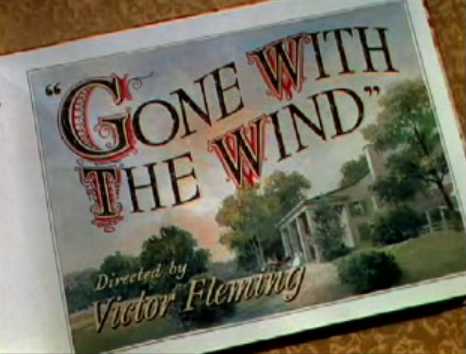
I just want to state here and now that I have never read the book, so this is a critique solely of the film. I watched part of Gone With the Wind for the umpteenth time the other night and was finally able to say without a shadow of doubt that it is a far from great movie. A phenomenon, for sure. A huge undertaking. But a film classic? Hmmm . . .

GWtW is on many lists as one of the best movies ever made.


Voted the number one movie was CITIZEN KANE, Orson Welles' 1941 classic, which he directed, produced, wrote and starred in at the age of 25. The rest of the top ten, in order, are: CASABLANCA (#2), THE GODFATHER (#3), GONE WITH THE WIND (#4), LAWRENCE OF ARABIA (#5), THE WIZARD OF OZ (#6), THE GRADUATE (#7), ON THE WATERFRONT (#8), SCHINDLER'S LIST (#9) and SINGIN' IN THE RAIN (#10).
I actually think #4, GWtW and #5, Lawrence of Arabia are epics and definite must-sees, but both fall short of making it onto my greatest films list. Apart from a few shots of Peter O'Toole in the desert, his eyes the color of the sky and his hair the color of sand and the magnificent score, the rest of the movie is forgotten. There is a difference between a great movie to watch (The Ten Commandments) and whether it also qualifies as a great piece of cinema. At least that's what all those film theory books I read in college said and I agree with. Plus, no Hitchcock in the top ten? Already the list is shot. There are plenty of movies I adore, but only a few of them I think have crossed over into the great art category. Casablanca and Singin' in the Rain definitely.

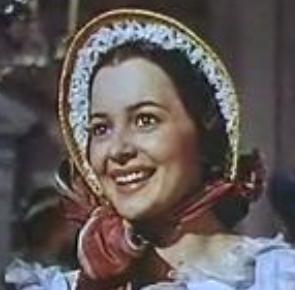
I am not resistant to all of GWtW's charms. There is an amazing crane shot of Scarlett making her way through the thousands of wounded soldiers. Olivia de Havilland gives a truly great performance as Melanie and is the only reason I have toyed with someday reading the book. Clark Gable is Clark Gable, and that is always a good thing. "Frankly, my dear, I don't give a damn." Vivien Leigh does the best she can with a truly impossible character, but her beauty and raised eyebrow can only do so much.

Why am I being so resistant to calling GWtW a great film? Because its plot drags it down, down, down. Underneath all the sets and costumes it is the typical Hollywood romance where men and women do or say impossibly dumb things to keep each other apart for the sake of dragging this thing out for hours (and in the case of GWtW, for hours and hours and hours and hours.) I hate that. Don't get me wrong, much of the movie is fun and entertaining. Scarlett's oblivious cruelty. Rhett's amusement at everything she does (before he marries her). Any scene with Olivia de Havilland. Mammy and the red petticoat. "I don't know nuffin' 'bout birfin' no babies!" But there are also all of the horrible plot points that surround these scenes. Scarlett's stupidity about Ashley & Rhett. The fate of Bonnie Blue Butler. Scarlett's fall down the stairs. Yeesh. Leslie Howard has been great in many things, but apart from looking great in A-1 Hollywood lighting, his Ashley Wilkes is insufferable and it's inexplicable why anyone would want him.


So why does GWtW show up so high on that AFI list? I have to go back to phenomenon. GWtW should be remembered for its box-office power and it's sheer length and ambitions. Hattie McDaniel winning an Oscar. The fuss about selecting its leading lady. But all these things can't help it through those painful scenes while you are actually watching it. At least with a television viewing you can get up and walk away through the dull parts. I remember seeing GWtW in a big theater in New York many years ago, thinking that maybe I'd like it more, experiencing it as it was meant to be, rather than cut up by commercials as I had originally seen it as a kid. Nope, the stuff that I listed above was really the stuff that I liked. The stuff I didn't like I really didn't like. And an intermission was very necessary. It was a test of endurance to view the movie in a theater.

Rather than best film, I prefer how TCM is listing it (and other films)—as an influential classic
7. GONE WITH THE WIND (1939)

If one film epitomizes the Hollywood blockbuster, it's
Gone With the Wind. Made in Hollywood's annus mirabilis, 1939, it remains the most popular film of a sterling crop. Not only has it sold more tickets than any other American made film, but with its box-office adjusted for inflation, it remains the highest-grossing film of all time. Something in the tale of the Southern belle fighting to save her beloved Tara has struck a chord for generations of audiences, from the U.S. of World War II to post-war Europe to Japan in the '80s. Scarlett O' Hara has inspired a legion fiery females caught in the sweep of history, like Nicole Kidman in Cold Mountain and Kate Winslet in Titanic. Gone With the Wind is the definitive producer's film. David O. Selznick defied conventional wisdom to purchase the rights to Margaret Mitchell's novel, personally supervised every detail of the film and spearheaded three years of publicity to raise public interest to a fever pitch. He spent the rest of his life trying—and failing—to top it. And decades of Hollywood blockbusters have drawn on his work to create and sell romantic dreams writ large on the screen.
So will I ever watch GWtW again? Probably. It's impossible not to enjoy watching Vivien Leigh transform from spoiled brat to strong woman of Tara and back again. At least up until Bonnie Blue takes her fateful ride. But when you ask me to compile my greatest films list you'll see Victor Fleming's other film from 1939, The Wizard of Oz, not GWtW. Clark Gable may turn up via It Happened One Night. Vivien Leigh in A Streetcar Named Desire. Olivia de Havilland in A Midsummer Night's Dream or maybe The Adventures of Robin Hood. But that's another post, and a very different list.

Monday, December 14, 2009

rebecca

Probably one of the most well-known openings in fiction . . .

Last night I dreamt I went to Manderley again. It seemed to me I stood by the iron gate leading to the drive, and for a while I could not enter, for the way was barred to me. There was a padlock and a chain upon the gate. I called in my dream to the lodge-keeper, and had no answer, and peering closer through the rusted spokes of the gate I saw that the lodge was uninhabited.
I recently picked up a low-priced reprint of Rebecca. I had never read it before, but was very familiar with Alfred Hitchcock's wonderful film. I was completely and immediately caught up in the lush language and mise-en-scène of Manderley and its inhabitants. I thoroughly enjoyed the book and its twist—it's a bit more complicated, especially morally, than I expected, even knowing the inevitable outcome. The thriller still managed to thrill.


I couldn't help but wonder as I read Daphne Du Maurier's gothic novel, if today's youth would also allow themselves to become immersed in the atmospheric prose. So much of television dialogue is either grammatically incorrect or just plain snark, it seems. Would a kid, age 12 and above be able to get through that paragraph (lodge-keeper, padlock, the concept of a place like Manderley)?

When I was what is now called a tween I was going through my parents' paperbacks like a house on fire—everything from Agatha Christie to Theodore Sturgeon, Ray Bradbury and beyond. Of course I'm no kid now, and it's taken me all this time to run across Rebecca. Maybe I'm worrying unnecessarily. Harry Potter proves that kids have not only intelligence but stamina when it comes to reading a popular series. And J.K. Rowling hasn't dumbed down her prose.

I guess what impressed me most about Rebecca and its no-name heroine was how over-the-top it was in language, plot and drama, while still managing to give the reader a very realistic slice-of-a-very-different-way-of-life. I have always loved old black and white films. People really did live this way. Where the local rich family is thought to be the "head" of the county. Where rituals like tea and dressing for dinner and writing one's letters were the stuff of one's daily existence. Not to mention adultery and murder.

One of the most fun aspects for me in watching films like Hitchcock's Rebecca are the fabulous costumes and how the heroines are always perfectly coifed and put together. I have frequently thought that most women must have become lazy over the years, as no one dresses or grooms themselves like that anymore. But Du Maurier sheds light on the second Mrs. De Winter's life in one quick scene as she marvels during a crisis how the ordinary routines of life continue - the tea table being laid, the tray of cakes and scones, the shoes being set outside the door at night to be polished . . . Of course. Domestic help. Anyone can look perfect if they have someone to polish their shoes each night.


In Rebecca the narrator is always looking in, as the reader is, on a vanished way of life. She watches Maxim De Winter from afar in Monte Carlo, first hearing about him through gossip. After they are married she constantly feels the interloper as she sees traces of Rebecca everywhere - her desk and its accoutrements, her closet and its impeccably kept wardrobe, her dressing table with its immaculate brushes. She is always creating scenes in her imagination of what she thinks has happened, or will happen, as if she is actually a witness, although she is rarely correct or ever allowed to participate. She is a voyeur of her own life, which is why the book leant itself so well to film and undoubtedly why it would have attracted the ultimate voyeur Hitchcock.

If my daughter picks this book up someday and dives in, she will be even a few more steps away from understanding the historical context than I was. But good fiction can still pull you in. And Rebecca is definitely good, haunting, disturbing, enjoyable.